North Atlantic Whales Show 60% Drop in Forever Chemicals
Scientists studying whales in the North Atlantic found that levels of toxic "forever chemicals" have plummeted more than 60% since 2011, proving that global regulations can actually reverse pollution in even the most remote ocean waters. It's the first major evidence that phasing out these indestructible compounds really works.
For decades, scientists warned that PFAS chemicals would poison our oceans forever. Now whales swimming in the North Atlantic are proving them wrong.
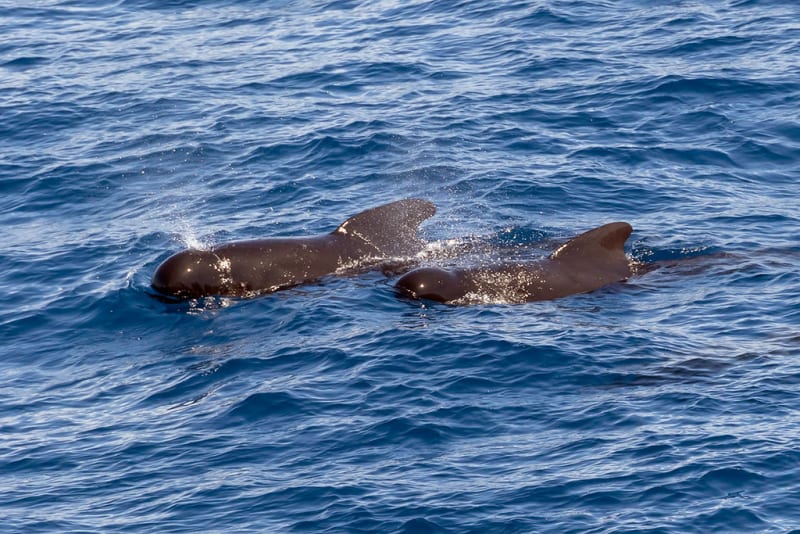
Researchers analyzing tissue samples from long-finned pilot whales near the Faroe Islands discovered something remarkable. Concentrations of legacy PFAS compounds, the toxic chemicals once deemed indestructible, dropped more than 60% between 2011 and 2023.
The study tracked whale samples collected over nearly four decades, from 1986 to 2023. Total organofluorine levels, which measure overall PFAS exposure, climbed steadily until around 2011, then began a dramatic decline.
The timing tells the real story. Major manufacturers started phasing out long-chain PFAS in the early 2000s after mounting evidence of their dangers.
These chemicals lurk in everything from nonstick pans to firefighting foam, and their stability allows them to persist almost indefinitely in water, soil, and living tissue. Marine predators like whales accumulate the highest concentrations, which makes them perfect barometers of ocean health.
The decade-long delay before whale levels dropped reflects how slowly these chemicals move through ocean currents into the open North Atlantic. That lag also explains why this finding stands out from similar studies.
Human blood samples haven't shown the same encouraging decline. Newer replacement PFAS seem to accumulate near populated areas rather than dispersing into deep ocean waters.
Lead researcher Jennifer Sun emphasized the significance: production phaseouts have been effective at reducing concentrations in both near-source communities and remote ecosystems.
The Bright Side
This discovery offers concrete proof that international chemical regulations can reverse pollution, even in the planet's most distant waters. When governments and manufacturers commit to phasing out harmful substances, the effects ripple across entire ecosystems.
The whales demonstrate that "forever" doesn't have to mean permanent when we take coordinated action.
The victory isn't complete, though. While older PFAS compounds declined, at least one replacement chemical continued rising in whale tissue over two decades.
This pattern of substituting banned substances with chemically similar alternatives has become a familiar challenge in environmental regulation. It suggests that future policies should target entire chemical classes rather than playing whack-a-mole with individual compounds.
Still, the whales swimming in cleaner waters today prove that even our biggest environmental mistakes can be corrected when we choose to act.
More Images




Based on reporting by Mongabay
This story was written by BrightWire based on verified news reports.
Spread the positivity!
Share this good news with someone who needs it