North Carolina Trains Nearly 20K People in CPR in One Day
Almost 20,000 North Carolinians learned lifesaving CPR skills in a single day as part of a world record attempt and medical research trial. The mass training could help save thousands of lives from cardiac arrest, America's leading cause of death.
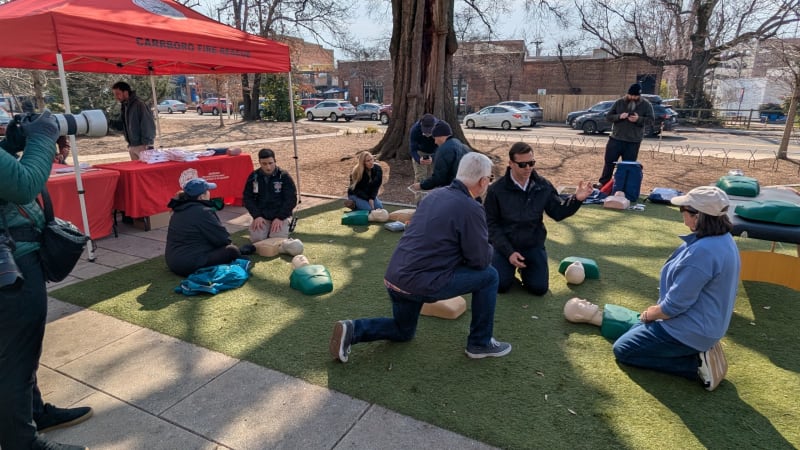
Grabbing coffee in Carrboro, North Carolina last Wednesday meant you might have also learned how to save a life.
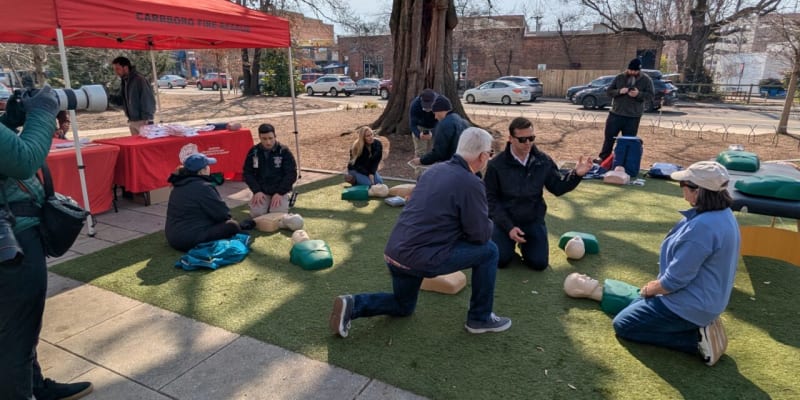
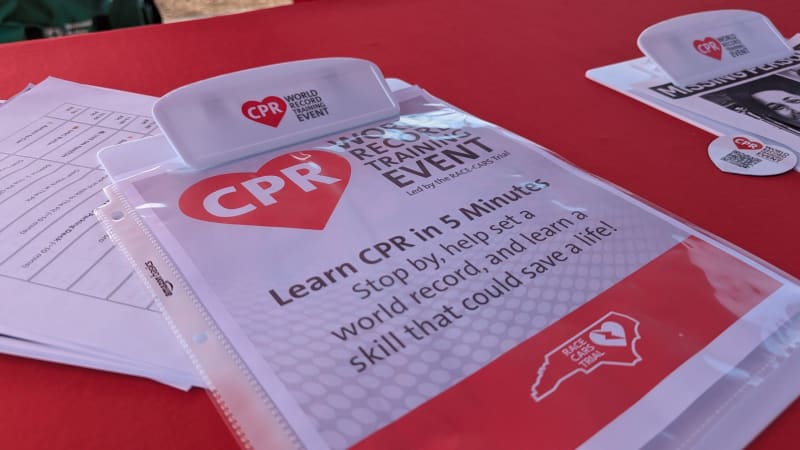
As shoppers walked past Weaver Street Market, researchers from Duke University invited them to join a world record attempt. The goal was to train more than 28,500 people in CPR in a single day, breaking a record set by an Indian university.
By the end of the day, 19,773 North Carolinians had learned hands-only CPR at over 50 locations across the state. While they didn't quite break the record, they accomplished something potentially more important: equipping thousands with skills that could save lives.
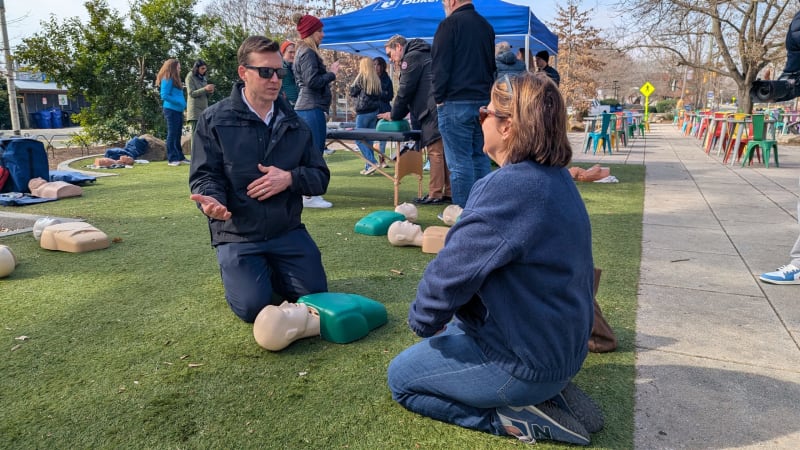
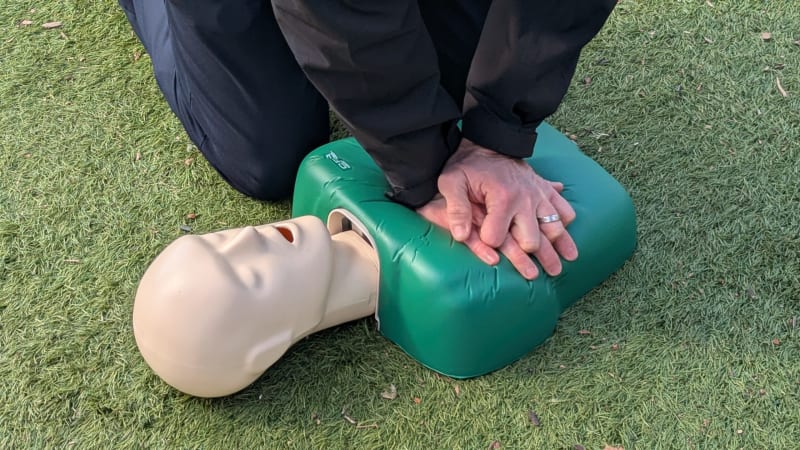
The training took just five minutes. Emergency responders taught the Four C's: check if someone is responsive, call 911, start chest compressions, and connect an automated defibrillator (AED).
The timing matters more than most people realize. "Every minute, your chance of survival goes down 10%," explained Carrboro Fire Chief Will Potter, who helped train participants.
The event was organized by Tyler Cope, a PhD student working on the RACE-CARS Trial at Duke Clinical Research Institute. The trial aims to save an additional 10,000 people each year from cardiac arrest through better training and faster response times.
Dr. Christopher Granger, who leads the research, points out that 80% of out-of-hospital cardiac arrests happen at home. That means family members and neighbors become the first line of defense.
The trial has already partnered with Orange County churches to install AED machines in dozens of congregations. Research shows 7% of public cardiac arrests happen in churches, where survival rates could jump from 8% to 50% with proper equipment and training.
The Ripple Effect: This single day of training represents four years of research and preparation across 30 North Carolina counties. The trial has worked with 911 operators to improve phone instructions and trained first responders on best practices.
Now, nearly 20,000 more people know that chest compressions should happen at two per second (the beat of "Baby Shark" or "Staying Alive"). They know how to apply AED pads and when to call for help.
Each trained person becomes a potential lifesaver in their home, workplace, or community. When cardiac arrest strikes, bystanders who act immediately give victims the best chance of survival because every second counts.
The research team will now study whether their training efforts improve survival rates across the state, building a model that could save thousands nationwide.
Almost 20,000 North Carolinians are now ready to be heroes when someone needs them most.
More Images
Based on reporting by Google News - World Record
This story was written by BrightWire based on verified news reports.
Spread the positivity!
Share this good news with someone who needs it