Norway's Youth Soccer Revolution Reaches World Cup Quarters
A nation the size of Scotland transformed into a football powerhouse through grassroots coaching and year-round play. Their secret? Keeping kids with local clubs longer and asking one question: do they love the game?
Norway is about to face England in a World Cup quarter-final, and the story of how they got there starts with 11-year-old Martin Odegaard dribbling a soccer ball two decades ago.
The Scandinavian nation, with just 5.5 million people, now has 17 players competing in Europe's top four leagues. It's a dramatic turnaround for a country that spent 28 years away from the World Cup and was once known more for winter sports than football.
"When I started with the football federation in 2010, it was my dream that Norway could compete at the World Cup," said Hakon Grottland, head of player development at the Norwegian Football Federation. That dream became reality through two game-changing investments.
First came the pitches. Between 2016 and 2025, Norway built 539 artificial turf fields and renovated 586 more, funded partly through state-regulated gambling proceeds that pour $150 million annually into sports facilities. Those all-weather surfaces turned football from a summer pastime into a year-round obsession, and the style of play evolved from workmanlike defense to fluid, technical football.
Then came the coaching revolution. After missing Euro 2012, Norway launched the National Team School in 2013, connecting grassroots clubs, regional programs, top teams, and the national federation into one unified development pathway. The approach breaks from the early-selection model used in England, where Premier League academies recruit eight-year-olds.
Norwegian kids stay with their local clubs until age 12. Of the 15 players who beat Brazil 2-1 in the knockout rounds, 14 came through national youth teams and 11 through this patient development system.
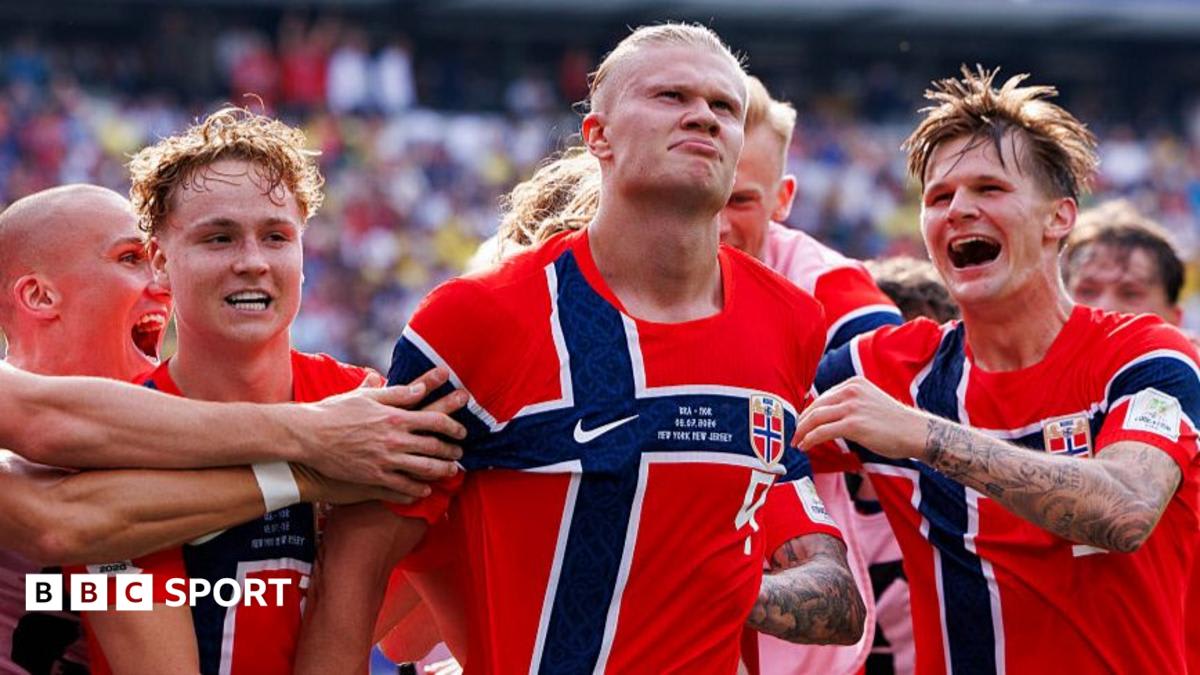
Even Erling Haaland, now 25 and scoring freely at the World Cup, wasn't considered the best talent in his age group at 14. "Nobody thought he would become the best player," Grottland admitted.
The Ripple Effect
The Norwegian system measures talent differently than most countries. Speed tests and ball-handling drills take a back seat to one essential question: does this player love the game?
That philosophy came from watching young Odegaard, who joined Real Madrid at 16 after European giants competed for his signature. "I've never seen anyone like Odegaard as a child," Grottland said, and that 11-year-old's passion inspired an entire national approach to player development.
Before the World Cup, Norway's squad posed wearing jerseys from their first clubs, honoring the grassroots system that shaped them. It's a reminder that world-class players don't need early selection or elite academies from childhood.
They just need great coaching, quality fields, and communities that nurture their love for the beautiful game.
More Images



Based on reporting by BBC Sport
This story was written by BrightWire based on verified news reports.
Spread the positivity!
Share this good news with someone who needs it