Norwegian Man HIV-Free 5 Years After Stem Cell Transplant
A 63-year-old Norwegian man has been living without HIV medication for three years after receiving stem cells from his brother who carried a rare genetic mutation. His case offers crucial clues for researchers working toward an HIV cure.
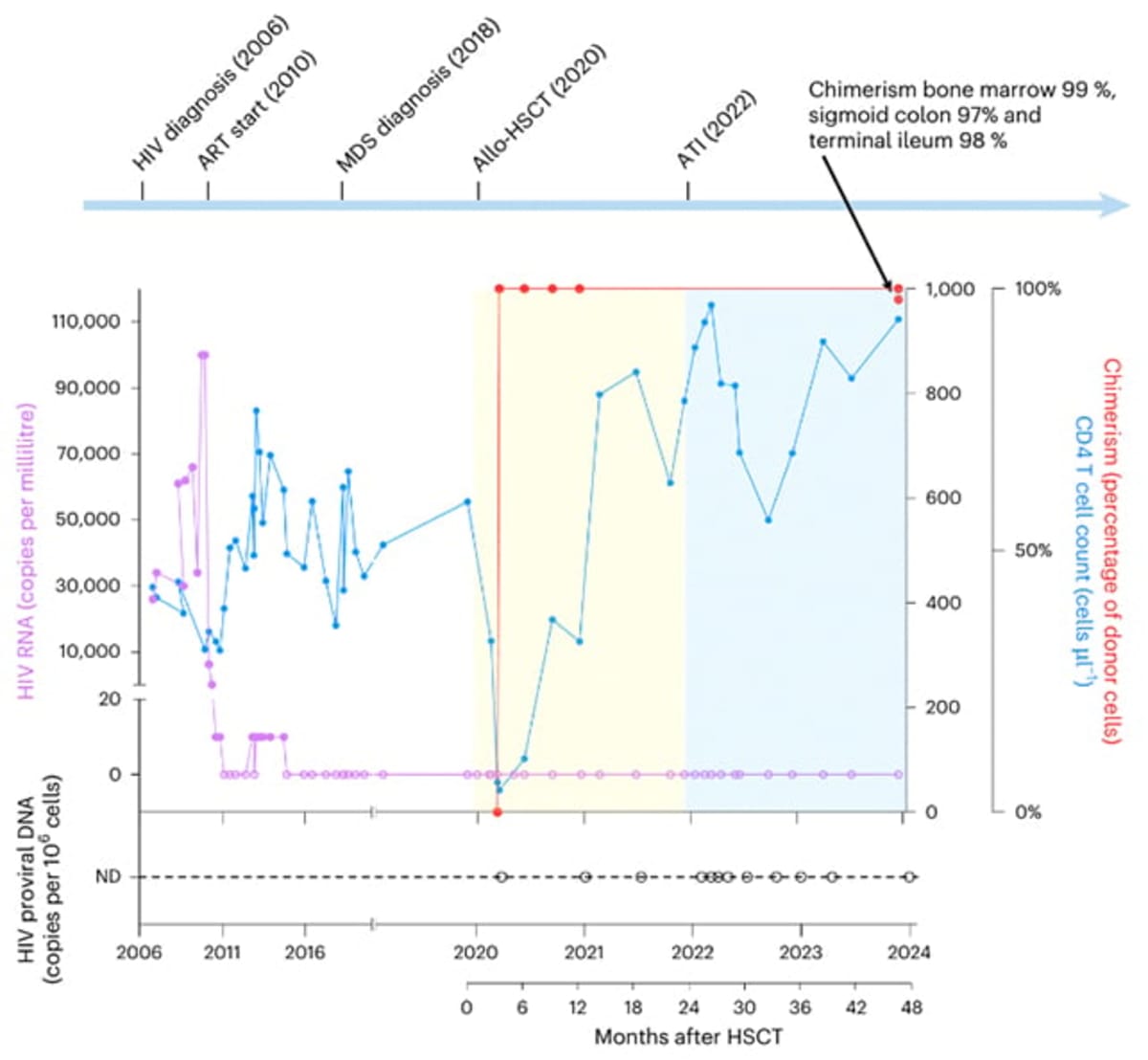
A stem cell transplant from his brother has put a 63-year-old Norwegian man's HIV into complete remission for five years, making him one of fewer than ten people worldwide to achieve this milestone.
The Oslo patient, as he's known in medical literature, was receiving treatment for a rare blood cancer when doctors made a last-minute discovery. His brother carried a genetic mutation called CCR5Δ32/Δ32 that naturally blocks HIV from entering immune cells.
Four years after the transplant, every trace of functioning HIV DNA had disappeared from the patient's body. He stopped taking HIV medication two years after the procedure, and three years later, the virus still hasn't returned.
What makes this case especially remarkable is what researchers found in the gut, where HIV typically hides in its dormant state waiting to reemerge. Extensive testing showed the area was completely clear of working HIV DNA.
The transplant did more than eliminate the virus. Tests revealed that HIV antibodies declined and the patient's immune cells stopped responding to any HIV threat. His body had essentially forgotten the virus ever existed.
The Ripple Effect
While stem cell transplants aren't a practical cure for most people with HIV because of their serious risks, each remission case teaches scientists something vital about defeating the virus. The Oslo patient's case is particularly valuable because researchers from Oslo University Hospital tracked his progress in unprecedented detail.
About 10 to 20 percent of people who undergo these transplants don't survive the first year, which is why they're only performed for life-threatening conditions like cancer. The Oslo patient himself experienced a severe immune reaction called graft-versus-host disease, though he recovered.
Researchers believe that reaction, combined with the mutation-carrying stem cells, may have worked together to wipe out the HIV. Understanding exactly how could open new pathways for treatment.
The team now plans to compare data from all known HIV remission cases to identify the most effective combination of factors. By studying what these rare patients have in common, scientists hope to develop treatments that could help the millions of people living with HIV worldwide.
Each case brings hope closer to reality for a future where HIV can be cured, not just controlled.
More Images
Based on reporting by Google News - Health
This story was written by BrightWire based on verified news reports.
Spread the positivity!
Share this good news with someone who needs it