Nvidia Partners With Robotics Firms on Work-Ready Humanoid
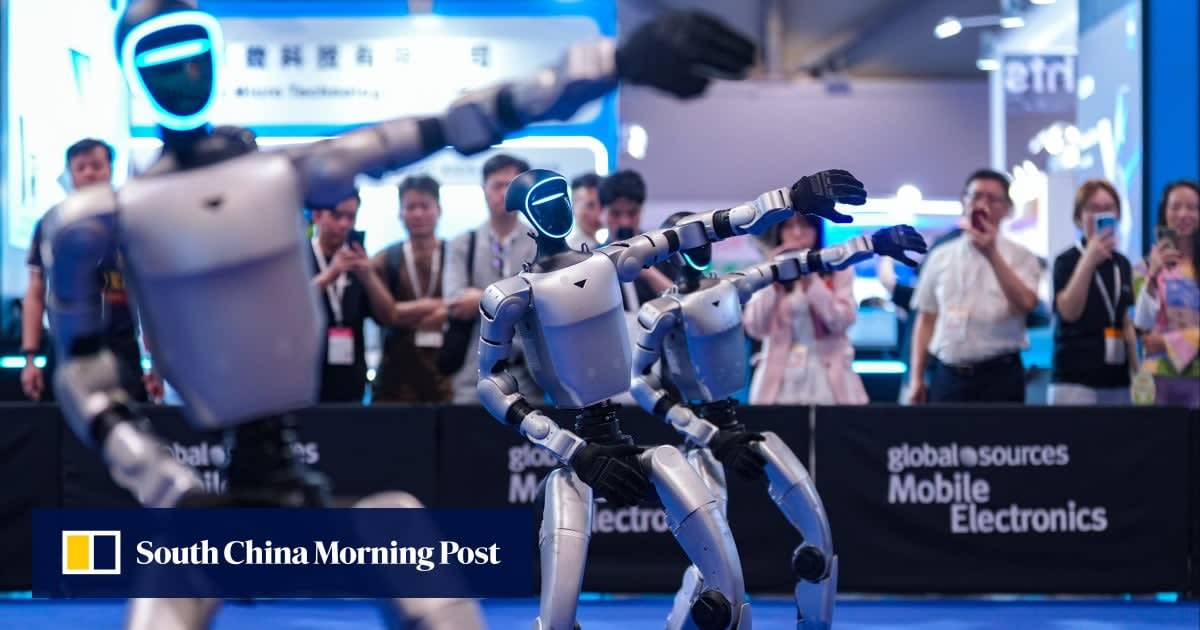
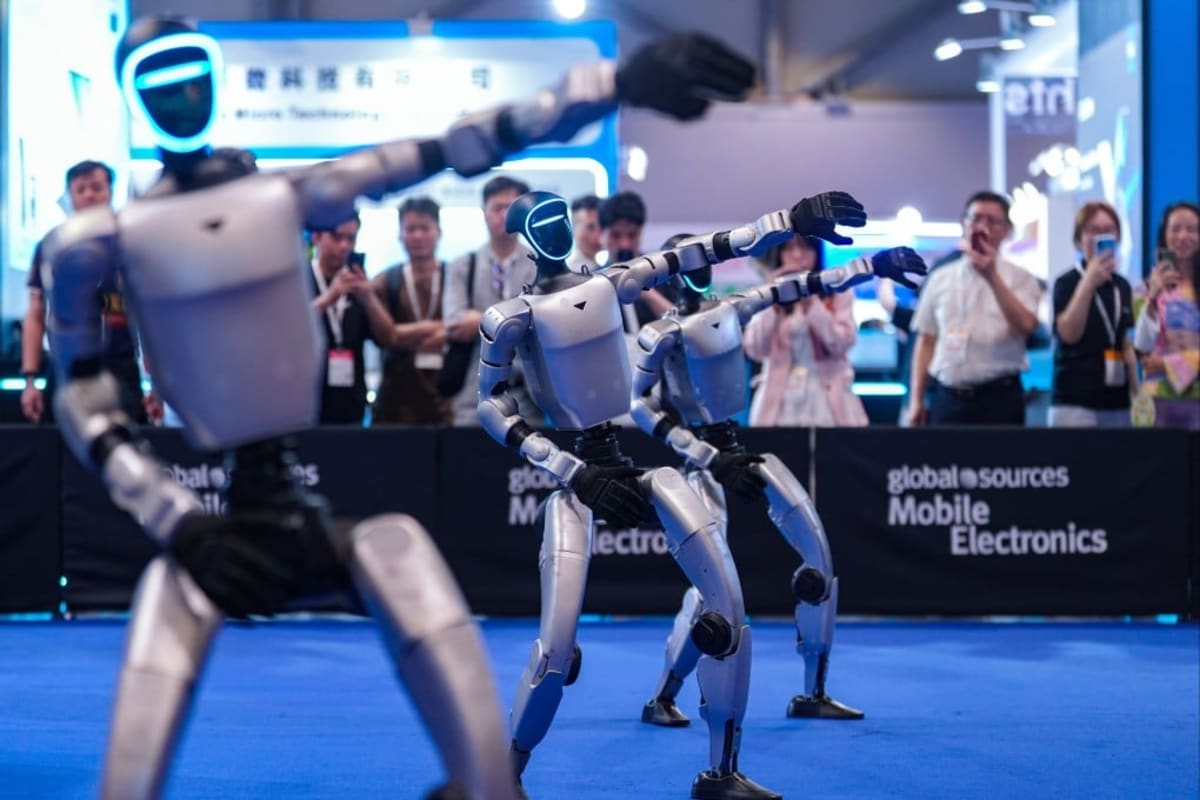
Three tech companies just unveiled a robot designed to perform real jobs in the real world. The collaboration between AI giant Nvidia, Chinese robotmaker Unitree, and Singaporean hand specialist Sharpa could accelerate the future of work.
📺 Watch the full story above
Nvidia CEO Jensen Huang just announced a game-changing partnership that could bring helpful humanoid robots into workplaces faster than anyone expected.
The AI chip giant teamed up with Chinese robotics champion Unitree and Singapore's Sharpa to create H2+, a human-sized robot equipped with remarkably dexterous five-fingered hands and advanced reasoning capabilities. Huang unveiled the collaboration at Computex in Taipei, Asia's biggest tech expo, calling it a breakthrough for "physical AI."
What makes this different from other robot announcements is the focus on real work. The H2+ combines Unitree's human-sized body, Sharpa's Wave hands (which can deal blackjack cards and assemble pinwheels), and Nvidia's Isaac GR00T AI models that serve as the robot's "brain."
The design works like a blueprint that researchers and developers worldwide can customize for their own needs. By providing an off-the-shelf solution, the companies are removing major barriers that slow down robotics innovation, from data collection to training to real-world testing.
Sharpa's Wave hands are particularly impressive, featuring 22 active degrees of freedom that allow human-like manipulation of objects. The Singapore-based startup, founded just two years ago in 2024, made waves at CES in Las Vegas with live demonstrations of the hands' precision and adaptability.
Powering the whole system is Nvidia's Jetson AGX Thor T5000, built on a Blackwell GPU with 128 gigabytes of memory. This computational muscle gives the robot the processing power to make complex decisions in real time.
The Ripple Effect
China's humanoid robot market is exploding. Morgan Stanley predicts the country will sell around 28,000 units this year, more than double last year's numbers and the highest in the world.
Several other Chinese robotics companies, including AgiBot, Galbot, and UBTech Robotics, have already adopted Nvidia's technology to power their latest robots. This collaborative approach is creating an ecosystem where innovations spread quickly and costs come down faster.
The partnership also reflects a broader shift in AI development. Nvidia simultaneously launched Cosmos 3, a foundation model that helps robots understand the physical world from both third-person and first-person perspectives, solving a critical data problem in robot training.
"This is a meaningful step towards deploying robots that can perform real work, in real settings," said Sharpa founder David Li Yifan. The focus isn't on flashy demonstrations but on practical applications that could genuinely help people in factories, warehouses, and other workplaces.
As these companies work together to refine the technology, the dream of helpful humanoid assistants handling dangerous or repetitive tasks moves closer to reality.
More Images


Based on reporting by South China Morning Post
This story was written by BrightWire based on verified news reports.
Spread the positivity!
Share this good news with someone who needs it