NYC Opens First Worker-Designed E-Bike Battery Station
New York City just launched the nation's first rest hub designed by delivery workers, featuring safe battery swapping stations that could prevent deadly fires. The City Hall Park station marks a turning point in protecting workers who've faced hundreds of battery-related fires.
📺 Watch the full story above
Delivery workers in New York City now have a safer way to power their e-bikes, thanks to a first-of-its-kind hub designed with their input at City Hall Park.
The station solves a deadly problem. Between 2022 and 2025, unsafe e-bike battery charging at home caused hundreds of fires across the city, killing 30 people and injuring 400 more.
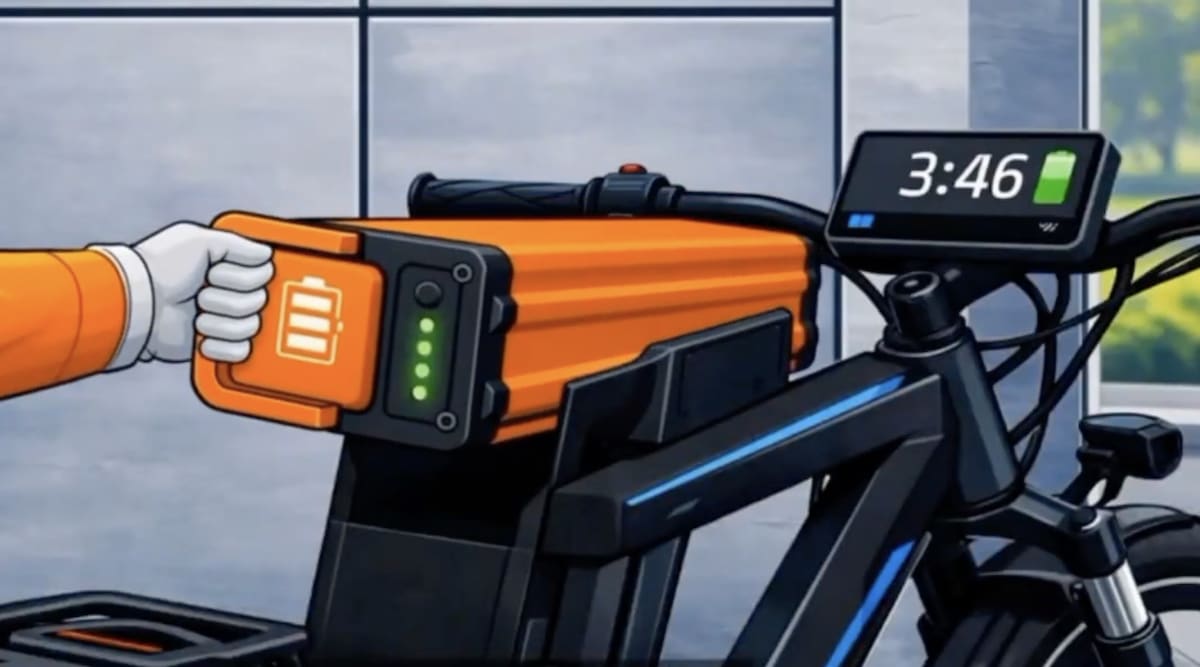
Instead of risking dangerous home charging or lugging backup batteries through their shifts, delivery workers can now swap depleted batteries for fresh ones in seconds. The new hub also gives them a place to rest between deliveries, something they've never had before.
Mayor Zohran Mamdani launched the station in April alongside Senator Chuck Schumer and the Worker's Justice Project. NYC Parks provided the former newsstand location near City Hall Park, while the Department of Transportation added bike parking and street access.
The station uses technology from Swobbee, a battery swapping company that ran a successful pilot program in 2024. After proving the concept worked, the city greenlit 24 more locations across New York.
Community boards are now reviewing proposed sites. Manhattan's Upper East Side already approved two locations at East 79th Street and Second Avenue, and East 73rd Street and First Avenue. The Transportation Committee chose spots that won't block pedestrians or interfere with fire hydrants or trees.
If approvals continue on schedule, workers could see new stations opening as early as 2028. Honda is joining the movement too, launching its Mobile Power Pack battery system in the US this year after successful rollouts in Japan.
The Ripple Effect
This isn't just about preventing fires. Delivery workers, many of whom are immigrants working long hours for low pay, finally have infrastructure built around their needs. They helped design these hubs, ensuring the stations actually solve their daily challenges.
The model could spread to other cities facing similar safety issues. Battery swapping stations cost less to install than building new charging infrastructure, and they work immediately without construction delays.
Other countries already embrace this technology, with thriving battery swap networks across Asia, Africa, and South America. Now America is catching up, starting with the workers who need it most.
One station might seem small, but it represents something bigger: cities listening to workers and building solutions that protect lives while making jobs easier.
More Images

Based on reporting by CleanTechnica
This story was written by BrightWire based on verified news reports.
Spread the positivity!
Share this good news with someone who needs it