NYC's Clean Air Win: Congestion Pricing Cuts Pollution 22%
New York City's groundbreaking congestion pricing program slashed air pollution by 22% in just six months while reducing traffic deaths to record lows. Despite clear wins for public health and safety, the program now faces legal threats that could end it before researchers can measure its long-term impact.
For the first time in American history, a major city is proving that charging drivers to enter crowded areas doesn't just ease traffic. It saves lives.
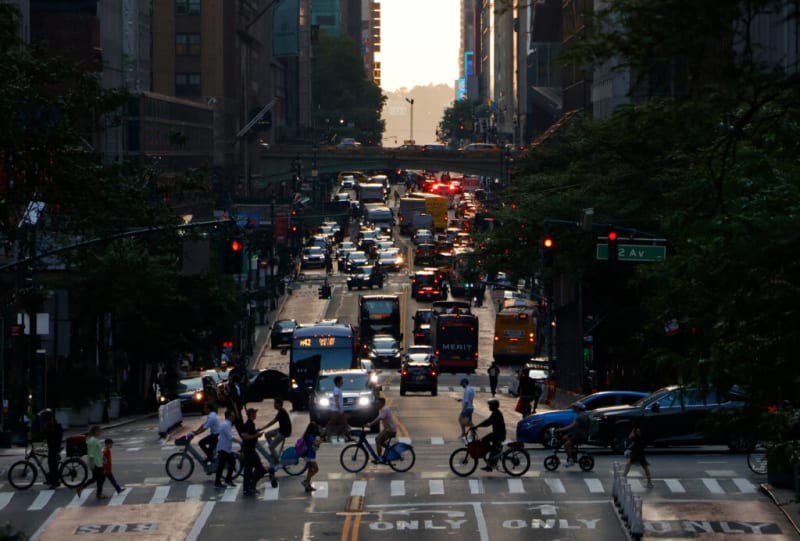
New York City launched its congestion pricing program just over a year ago, adding tolls for vehicles entering Manhattan's busiest zones. The goal was simple: reduce gridlock, fund public transit, and give New Yorkers cleaner air to breathe.
The results exceeded even the optimists' expectations. A Cornell University study tracking 42 air monitors across the metro area found that toxic particulate matter dropped 22% in the toll zone during the program's first six months.
These aren't abstract numbers. The particles measured, called PM2.5, are 30 times smaller than a human hair and a leading cause of premature death. A 3 microgram per cubic meter drop, as researchers documented, represents a major public health victory.
"If we had seen a 5 percent drop, all the congestion pricing enthusiasts would have been thrilled," said Cornell researcher Timothy Fraser. "But to see that we actually saw better improvements than in European cities? Wow."
The benefits spread beyond Manhattan's tolled streets. Air quality improved across all five boroughs, even in the South Bronx where residents had worried about drivers cutting through their neighborhood to avoid fees.
The numbers tell a compelling story of progress. Roughly 27 million fewer vehicles entered the toll zone in 2025, an 11% traffic decrease. New York City recorded its fewest traffic deaths in history last year, though researchers haven't yet confirmed the program's role in that milestone.
Even suburban commuters report faster trips to destinations outside the toll zone entirely. Meanwhile, subway and bus ridership has climbed as more people choose public transit over driving.
The Ripple Effect
Cities worldwide are watching New York's experiment closely. London, Singapore, and Stockholm have run similar programs for years, but America's car-centric culture made success here uncertain.
Boston University professor Jonathan Buonocore called the Cornell study "solid" and the air quality improvements "a pretty big deal." The challenge now is gathering long-term data to see if these gains last, as London saw some benefits fade over time.
That research may never happen. The Trump administration has fought the program in court since before it launched, with Transportation Secretary Sean Duffy threatening to withhold billions in federal highway and transit funding unless New York ends the tolls.
A federal judge blocked the administration's initial attempt to halt the program and heard arguments last week about making that protection permanent. Nonprofit advocacy groups and New York transit officials are defending congestion pricing in court.
"This is a really important program, and it's disappointing to see the federal government try to stop it when it's been successful in every measure," said Dror Ladin, an attorney with Earthjustice representing the advocacy groups.
The judge's upcoming decision will determine whether America's boldest experiment in urban air quality continues or becomes a brief chapter in transportation history.
Based on reporting by Inside Climate News
This story was written by BrightWire based on verified news reports.
Spread the positivity!
Share this good news with someone who needs it