Oʻahu's Parking Lots Could Power the Entire Island
Hawaii's most overlooked solar opportunity isn't on rooftops or farmland. It's hiding in plain sight above millions of parking spaces that could generate enough clean energy to power all of Oʻahu.
📺 Watch the full story above
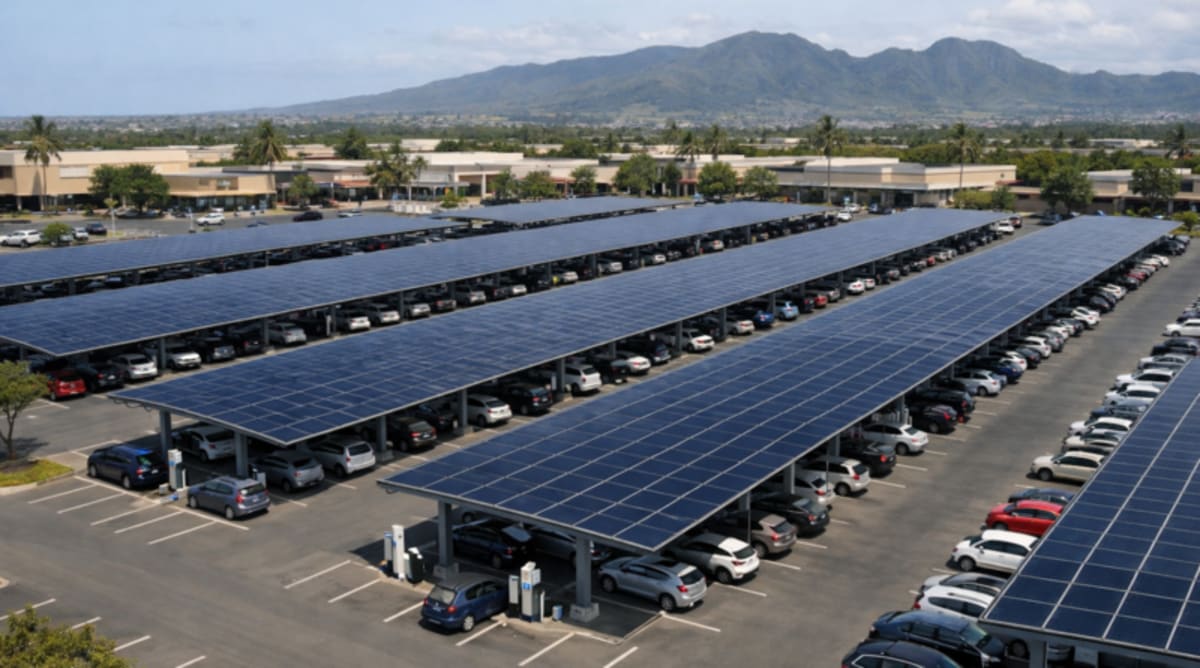
Imagine if every parking lot on Oʻahu became a power plant while still being a parking lot. Scientists just mapped the island's solar potential and discovered something remarkable: covered parking structures alone could generate more electricity than the entire island needs.
The numbers tell an incredible story. Oʻahu has nearly 792,000 registered vehicles and an estimated two million parking spaces across the island. Each space takes up about 30 square meters when you include driving lanes.
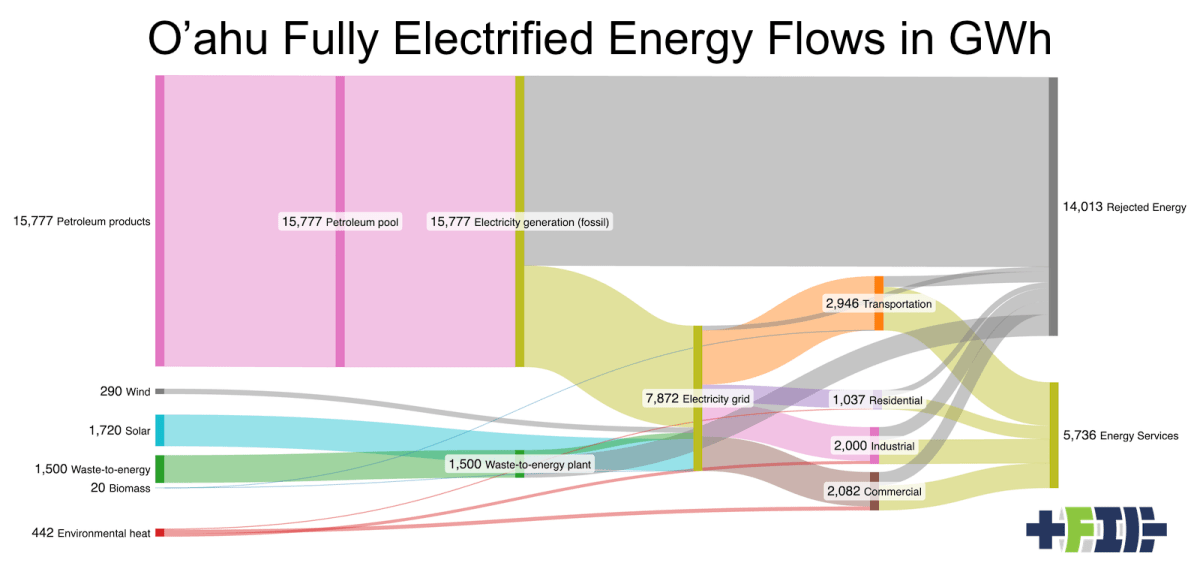
Researchers calculated that covering just 40% of existing parking areas with solar canopies could produce about 6,900 gigawatt hours of electricity annually. That's more than the 6,000 gigawatt hours Oʻahu would need in a fully electrified economy where cars, buildings, and industry all run on clean power.
Even more exciting: this wouldn't require sacrificing a single acre of farmland or natural habitat. The parking lots already exist.
The solar resource on Oʻahu is exceptionally strong. Fixed rooftop systems achieve capacity factors between 18% and 20%, while utility scale installations with tracking reach around 23%. The island sits near 21 degrees north latitude and receives consistent sunlight year round, with day length varying from eleven hours in winter to thirteen and a half in summer.
Hawaii has already made impressive progress. Nearly half of single family homes on Oʻahu have rooftop solar, a remarkable achievement by global standards. But commercial buildings, warehouses, schools, and government facilities still have hundreds of megawatts of untapped rooftop potential.
The Ripple Effect
Solar parking canopies solve multiple problems at once. They generate clean electricity while providing shade that keeps parked cars cooler in Hawaii's tropical climate. The covered walkways protect pedestrians from sun and rain.
These structures also create perfect locations for electric vehicle charging stations since they're already located near retail centers, offices, and transit stops. In a car dependent city, this infrastructure could accelerate the transition to electric vehicles while making daily life more comfortable.
The technical potential is already mapped. Researchers from the Hawaiʻi Natural Energy Institute and National Renewable Energy Laboratory identified about 1,862 megawatts of utility scale solar potential on suitable open land. Add several hundred megawatts of remaining rooftop capacity to the parking canopy potential, and Oʻahu has more than enough solar resources to power a clean energy future.
The path forward combines all three approaches: utility scale installations on appropriate land, continued rooftop deployment on commercial and institutional buildings, and a major build out of parking canopy systems across the island.
Oʻahu is proving that island communities don't have to choose between energy independence and preserving their landscapes when the solutions are already paved over and waiting overhead.
More Images
Based on reporting by CleanTechnica
This story was written by BrightWire based on verified news reports.
Spread the positivity!
Share this good news with someone who needs it