Ocean Cleanup Proves We Can Remove 80% of Garbage Patch
Scientists just confirmed that the massive North Pacific Garbage Patch can actually be cleaned up in just ten years. Real data from 72 collection missions shows we finally have a working plan, a price tag, and a realistic deadline to tackle the world's largest ocean trash zone.
The world's biggest ocean trash problem just became solvable, and it won't take a century to fix.
A new study confirms that ten years of focused cleanup could remove more than 80 percent of the floating plastic trapped in the North Pacific Garbage Patch. This turns what seemed like a permanent environmental disaster into a project with a clear timeline and proven technology.
The breakthrough comes from The Ocean Cleanup, a Rotterdam-based organization that spent years testing their system in real conditions. Across 72 collection periods, crews repeatedly pulled debris from the same remote waters between Hawaii and California, gathering hard data instead of just making predictions.
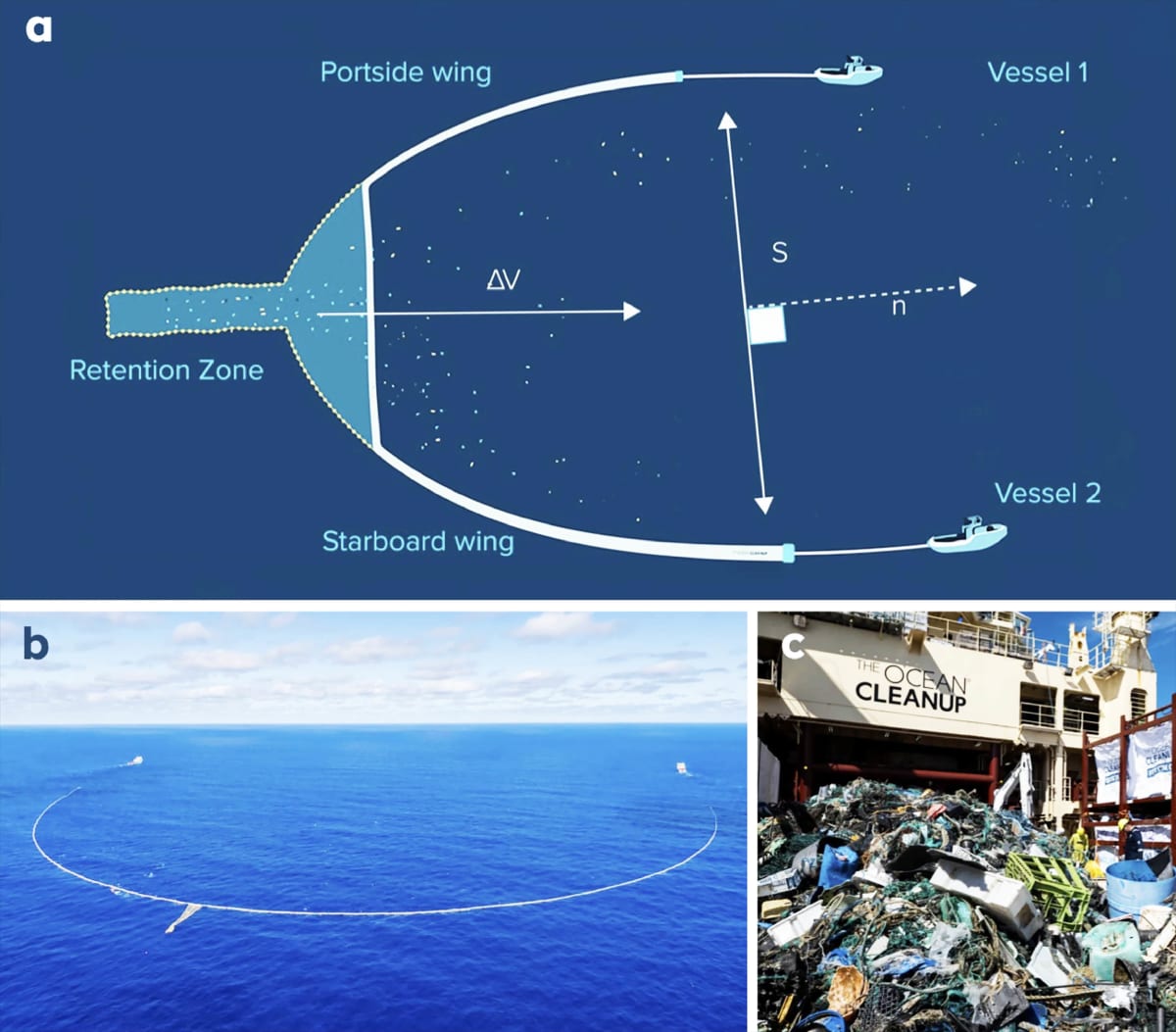
Their method works surprisingly well. Two ships tow a wide U-shaped barrier that corrals floating debris toward a central holding section, where plastic gets trapped while water flows through. The system moves slowly enough that marine animals can avoid it, and crews can open escape routes when needed.
But here's the game changer: steering matters more than anything else. Random towing barely made a dent because the garbage patch isn't evenly spread. When ships targeted the densest lanes using ocean forecasting, they removed plastic years faster and billions cheaper.
The patch currently holds about 1.8 trillion pieces spread across 620,000 square miles. Most of the mass comes from larger debris, not tiny specks, which is why offshore capture actually works. The nets catch pieces bigger than half an inch, though smaller microplastics remain the toughest challenge.
Cost has always been the big question. The Ocean Cleanup now puts the optimal campaign at 1.8 billion euros, far below earlier estimates. "Clean oceans can be achieved in a manageable time and for a clear cost," said founder Boyan Slat.
The research also tackled environmental concerns head-on. A 2025 assessment found marine life faces greater risk from the plastic already floating there than from careful cleanup operations. Field data shows bycatch typically makes up well under 1 percent of collected weight.
The Ripple Effect
The study reveals something crucial: cleanup and prevention must work together. Even cutting new pollution by 80 percent won't drain the patch without physically removing what's already there. A 2022 study found that 75 to 86 percent of larger floating debris came from fishing activity, not just land-based sources.
This means waiting carries a real cost. The patch grows between 1 and 3 percent annually, so whenever removals fall below new arrivals, progress stalls or reverses. The model tested both scenarios and the message is clear: legacy pollution keeps causing damage until someone takes it away.
The technology works, the math checks out, and marine life can be protected during operations. What seemed impossible a decade ago now has a proven path forward, transforming the world's largest ocean trash zone from a symbol of failure into a winnable engineering challenge.
Based on reporting by Google News - Ocean Cleanup
This story was written by BrightWire based on verified news reports.
Spread the positivity!
Share this good news with someone who needs it