Ocean Solar Farm Beats Land Solar by 12% in Taiwan
A floating solar farm off Taiwan's coast produces 12% more electricity than land-based solar panels, offering a breakthrough for space-strapped nations. The ocean installation also delivers higher profits while cutting emissions.
Solar panels floating on the ocean just proved they can outperform their land-based cousins, and the results could change how coastal nations think about clean energy.
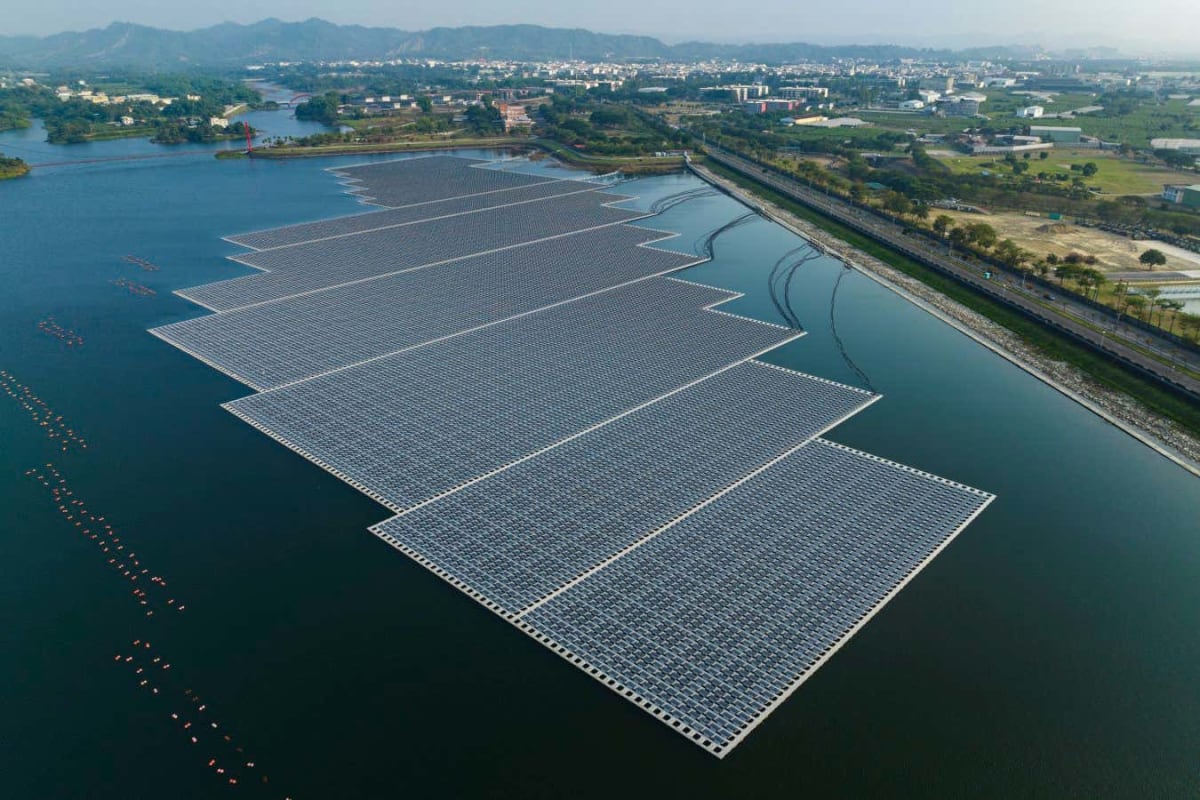
Off the coast of Taiwan, a massive floating solar farm is generating 12% more electricity than a similar installation on land nearby. The 181-megawatt ocean project, built by Chenya Energy in 2020, sits on 1.8 square kilometers of water in a protected bay.
Taiwan faces a challenge familiar to many island nations: it's roughly the size of the Netherlands but mostly mountainous, with 5 million more people and very little open space. Traditional solar farms compete with homes, farms, and businesses for precious land.
The floating solution solves that problem while delivering an unexpected bonus. Lead researcher Ching-Feng Chen from the National Taipei University of Technology found the ocean panels also generate 11% net profit compared to 8% for land-based solar.
The secret lies in temperature. Solar panels lose efficiency as they heat up, but conditions over water run 2-3 degrees Celsius cooler than over land. Strong ocean winds provide extra cooling, keeping the panels running at peak performance.
More than 1,100 floating solar systems already operate on lakes and reservoirs, mostly in China and other densely populated Asian countries. Ocean installations remain rare because they're trickier to build and maintain, with salt spray, bird droppings, and driftwood requiring regular cleaning by crews on jet skis.
The higher installation costs, about 30% more than land-based systems, pay off over the project's lifetime through increased electricity output. The panels rest directly on the seabed when the tide goes out and float on buoys when water levels rise.
The Ripple Effect
The potential reaches far beyond Taiwan. A 2024 study found that combining floating solar with offshore wind farms on just 1% of suitable ocean surface could provide almost 30% of global electricity demand by 2050.
Countries like Japan, Indonesia, and Caribbean nations with lots of sunshine but limited land are ideal candidates. Dutch and German companies are already testing systems that have survived waves up to 10 meters high since 2019.
Researchers are still studying impacts on marine life, since the panels create shade and reduce wind mixing in the water below. Keeping installations closer to shore minimizes ocean ecosystem disruption while maximizing the technology's benefits for people.
For sunny, space-starved coastal communities worldwide, the ocean might just be the next frontier for clean energy.
More Images


Based on reporting by New Scientist
This story was written by BrightWire based on verified news reports.
Spread the positivity!
Share this good news with someone who needs it
%2Ffile%2Fattachments%2Forphans%2FWhatsAppImage2026-08-19at1527412_771386.jpeg)