Ocean Water DNA Now Reveals Dolphin Population Health
Scientists can now measure dolphin population health by sampling DNA floating in seawater, a breakthrough that makes ocean conservation faster and cheaper. This method reveals genetic diversity without needing to track down individual animals.
Scientists just cracked a way to check on dolphin populations without ever getting close to the animals themselves.
Researchers at NOAA's Southwest Fisheries Science Center discovered that DNA floating freely in ocean water contains enough genetic information to measure dolphin population health. Until now, environmental DNA could only tell scientists which species were present, not how healthy their populations were.
Dr. Frederick Archer and his team tested their method around Santa Catalina Island off Long Beach, California in 2021. They followed 15 schools of dolphins in small boats, collecting two-liter water samples from the surface whenever they spotted a group.
The samples revealed 836 different genetic variants from 126 water samples. About 60% of the DNA came from toothed whales, and 29% matched the specific dolphin species swimming nearby.
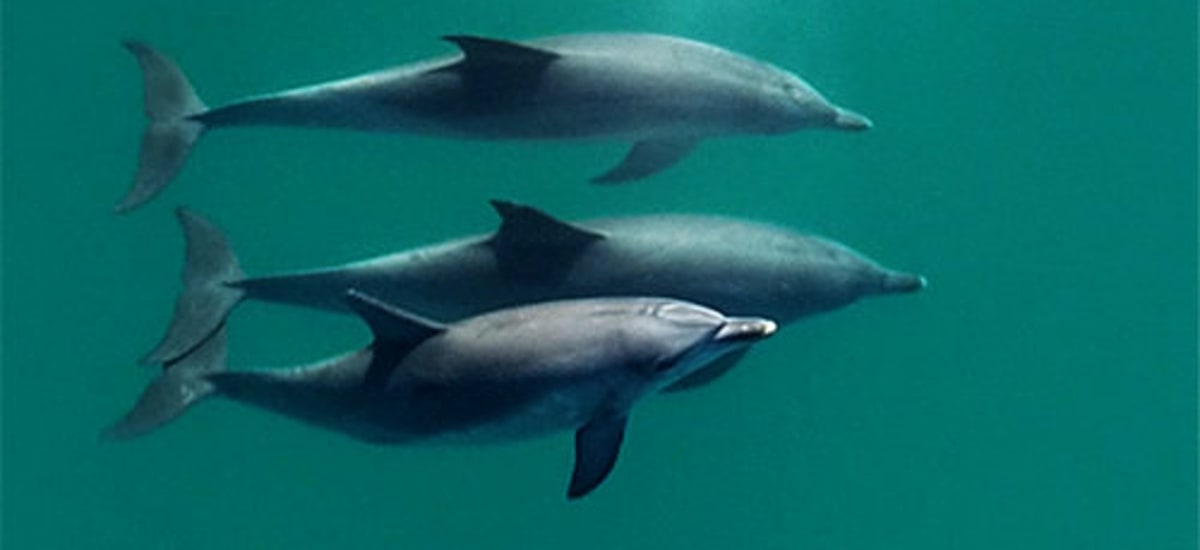
Four species dominate the waters around Santa Catalina: long-beaked common dolphins, short-beaked common dolphins, bottlenose dolphins, and Risso's dolphins. Long-beaked common dolphins showed the greatest genetic diversity, while Risso's and bottlenose dolphins had much less variety in their genes.
Genetic diversity matters because it shows how large a population is and how well it can adapt to environmental changes. Populations with low genetic diversity struggle more when conditions shift.
The Ripple Effect
This breakthrough transforms ocean conservation. Traditional methods require expensive boat time, expert observers, and luck in finding animals that move constantly through vast waters.
Water sampling costs less, works in deeper waters where rare species live, and can track seasonal changes in small areas. Scientists can now monitor rarer species that visual surveys rarely detect.
Archer plans to launch year-round monitoring programs that were impossible before. The method will reveal how pollution and underwater noise affect where different species travel and live.
Conservation teams worldwide can now protect marine mammals more effectively with tools that work as simply as scooping water from a boat.
More Images




Based on reporting by Good News Network
This story was written by BrightWire based on verified news reports.
Spread the positivity!
Share this good news with someone who needs it