One Stem Cell Creates 14 Million Cancer-Fighting Cells
Scientists in China have discovered how to turn a single stem cell into 14 million powerful cancer fighters, potentially making lifesaving treatment available to thousands more patients. The breakthrough slashes costs and could transform how we treat leukemia and other cancers.
Imagine if one tiny cell could become an army of 14 million soldiers, each trained to hunt down cancer. That's exactly what researchers at the Chinese Academy of Sciences just accomplished, and it could change everything about how we fight this disease.
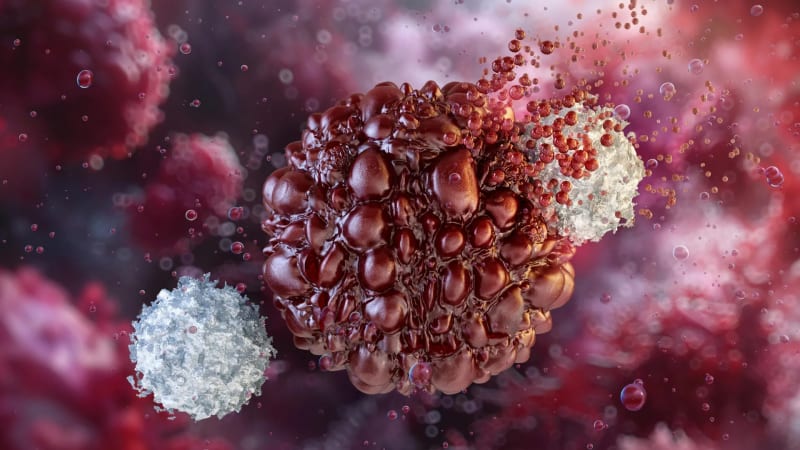
The team figured out how to mass-produce natural killer cells, the body's own cancer-fighting immune warriors. Instead of trying to modify mature cells (the old, expensive way), they started earlier in the process, working with stem cells from donated cord blood.
Here's why that matters. Traditional methods of creating these therapeutic cells were like trying to retrain adult soldiers. It was costly, time-consuming, and you never got many troops. The new approach is like training recruits from day one. You end up with way more fighters, and they're better at their job.
The numbers are staggering. From just one-fifth of a single cord blood donation, scientists can now produce enough cells for thousands of treatment doses. That's not a typo. Thousands.
The process happens in three stages over about seven weeks. First, the stem cells multiply by about 1,000 times. Then they're guided to become natural killer cells using special support structures the team calls "artificial hematopoietic organoid aggregates." Finally, these committed cells mature and multiply even more.
But it gets better. The researchers also created CAR-equipped versions of these cells. Think of CAR technology as giving each cell a GPS system that locks onto specific cancer markers. These souped-up cells can hunt down particular types of cancer with laser focus.
Testing in mice with human leukemia showed dramatic results. The engineered cells didn't just slow tumor growth. They extended survival times significantly.
The Ripple Effect
The cost savings alone could be revolutionary. This new method uses up to 600,000 times less viral vector (the tool needed for genetic engineering) than traditional approaches. That's not just a small improvement. It's the difference between experimental treatment and something hospitals could actually afford to offer widely.
Right now, cutting-edge cancer immunotherapies often cost hundreds of thousands of dollars per patient. Many people simply can't access them. This breakthrough could finally make personalized cancer treatment available to regular folks, not just the wealthy.
The team tested their approach specifically on B-cell acute lymphoblastic leukemia, a blood cancer that often affects children. But the same principles could apply to many other cancers. Each cord blood unit that might have treated one person could now potentially help tens of thousands.
Professor Wang Jinyong and his team published their findings in Nature Biomedical Engineering, one of the most respected journals in the field. The work received support from China's Ministry of Science and Technology and the National Natural Science Foundation.
Cancer treatment has come so far, but it's still too expensive and too limited for too many people. This discovery might just be the key to changing that.
Based on reporting by Science Daily
This story was written by BrightWire based on verified news reports.
Spread the positivity!
Share this good news with someone who needs it