Only 12 People Saw This Antarctic 'Ring of Fire' Eclipse
A scientist at Earth's most remote research station improvised a camera filter from old materials to capture the only photograph of a rare solar eclipse—after discovering his tiny crew were the sole witnesses on the planet.
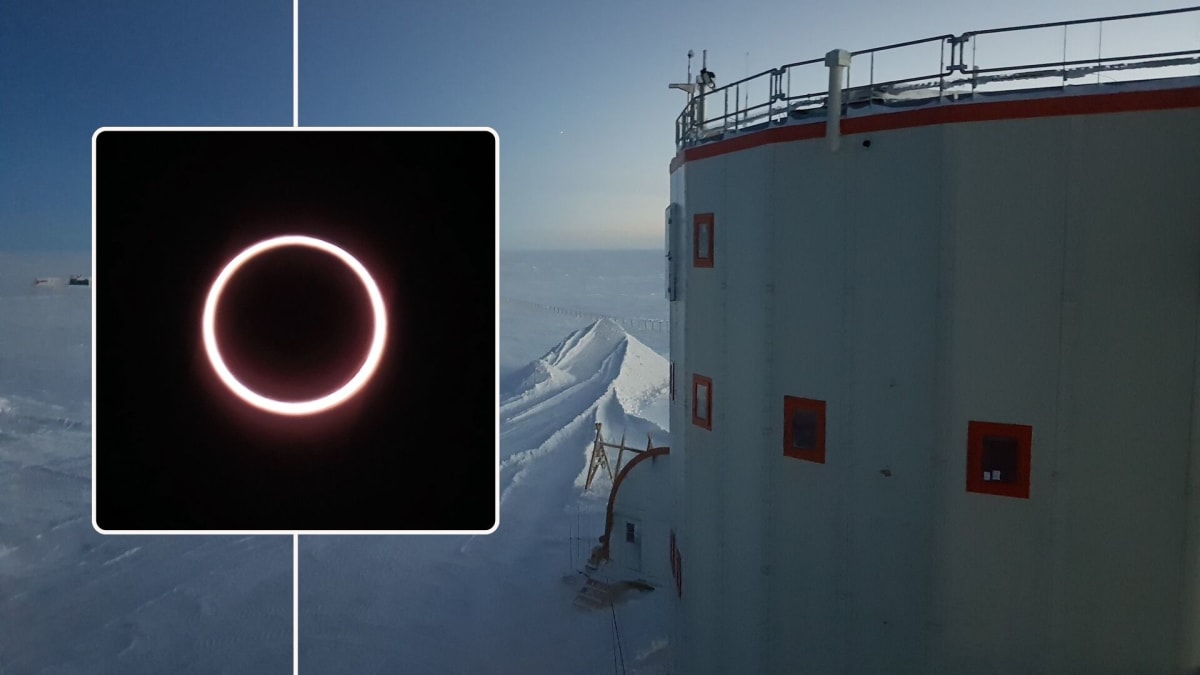
When Andrea Traverso opened his window at Antarctica's Concordia Research Station on February 17, he had no idea he was about to photograph something no one else on Earth could see.
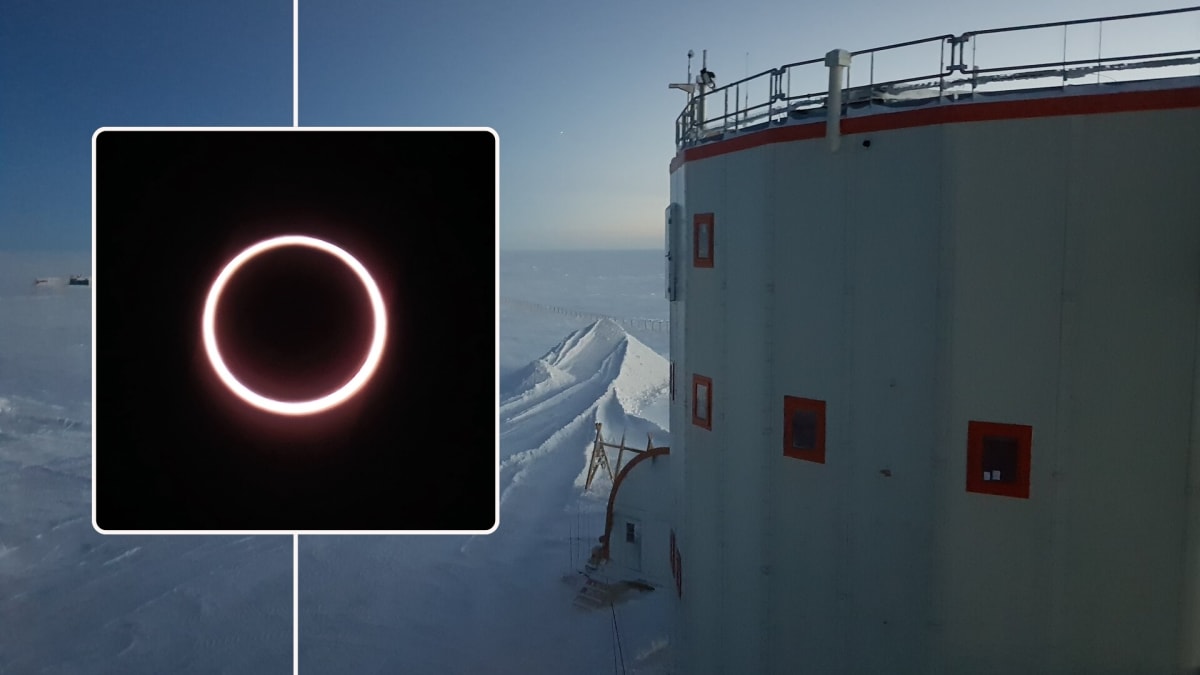
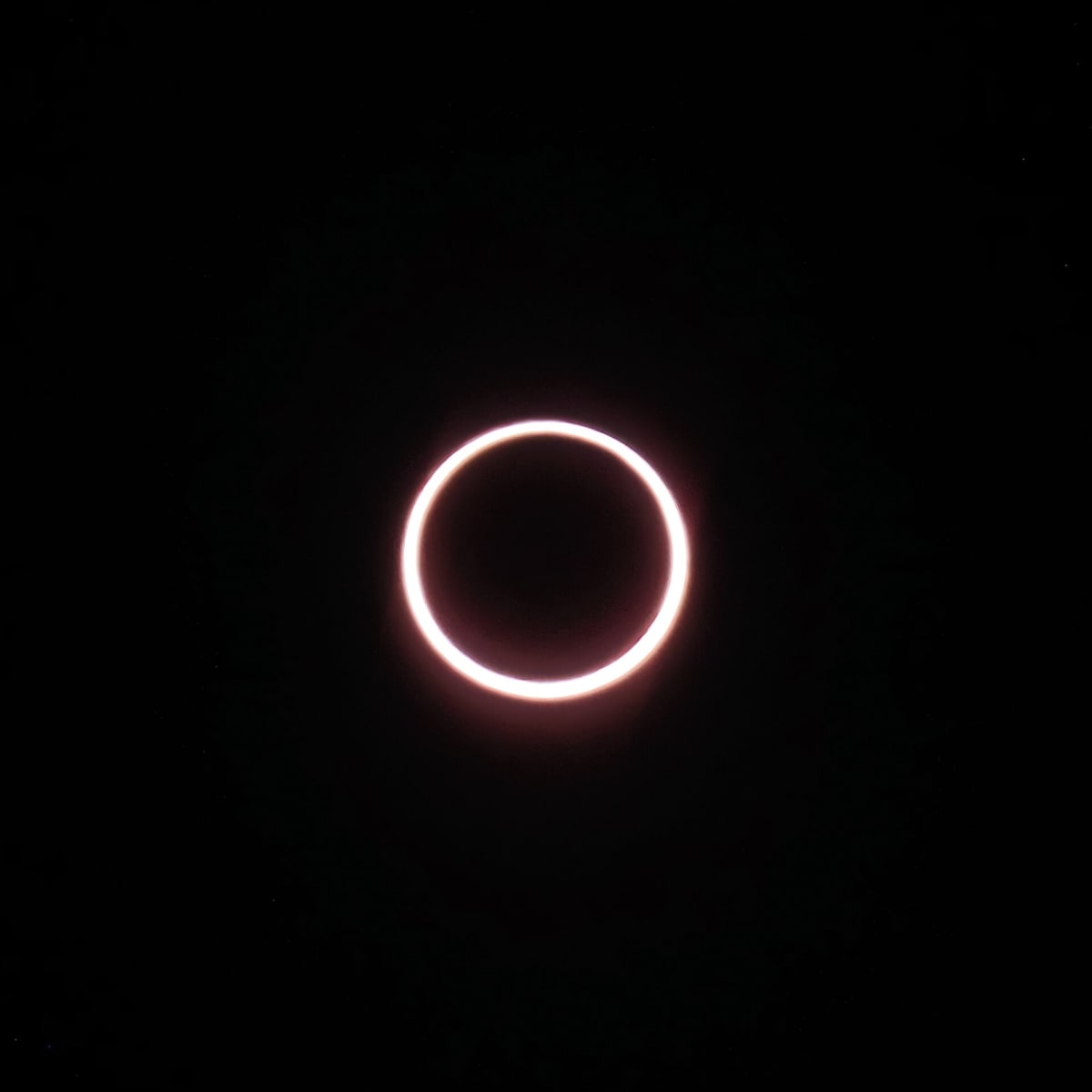
The small team of 12 people stationed 750 miles inland from Antarctica's coast witnessed a rare annular solar eclipse. During these "ring of fire" events, the moon passes in front of the sun but appears slightly smaller, leaving a brilliant ring of sunlight glowing around its dark edges.
The eclipse path crossed just two inhabited locations in Antarctica that day. Clouds blocked the view at Russia's Mirny Station, leaving only Concordia's crew as witnesses to the complete spectacle.
Traverso, who oversees scientific experiments at the station, wasn't even aware the eclipse was coming. When he realized what was happening, he faced an immediate problem: capturing an eclipse requires special solar filters to protect camera equipment from the sun's intensity.
The station had no filters prepared. Instead, Traverso searched through stored materials and found old sheets of mylar film from previous solar observations. Using cardboard and glue, he quickly built a makeshift filter for his camera lens.
He positioned himself at a window perfectly aligned with the eclipse's path. Opening it to avoid reflections, he began photographing while sheltered from temperatures that average negative 58 degrees Fahrenheit during winter.
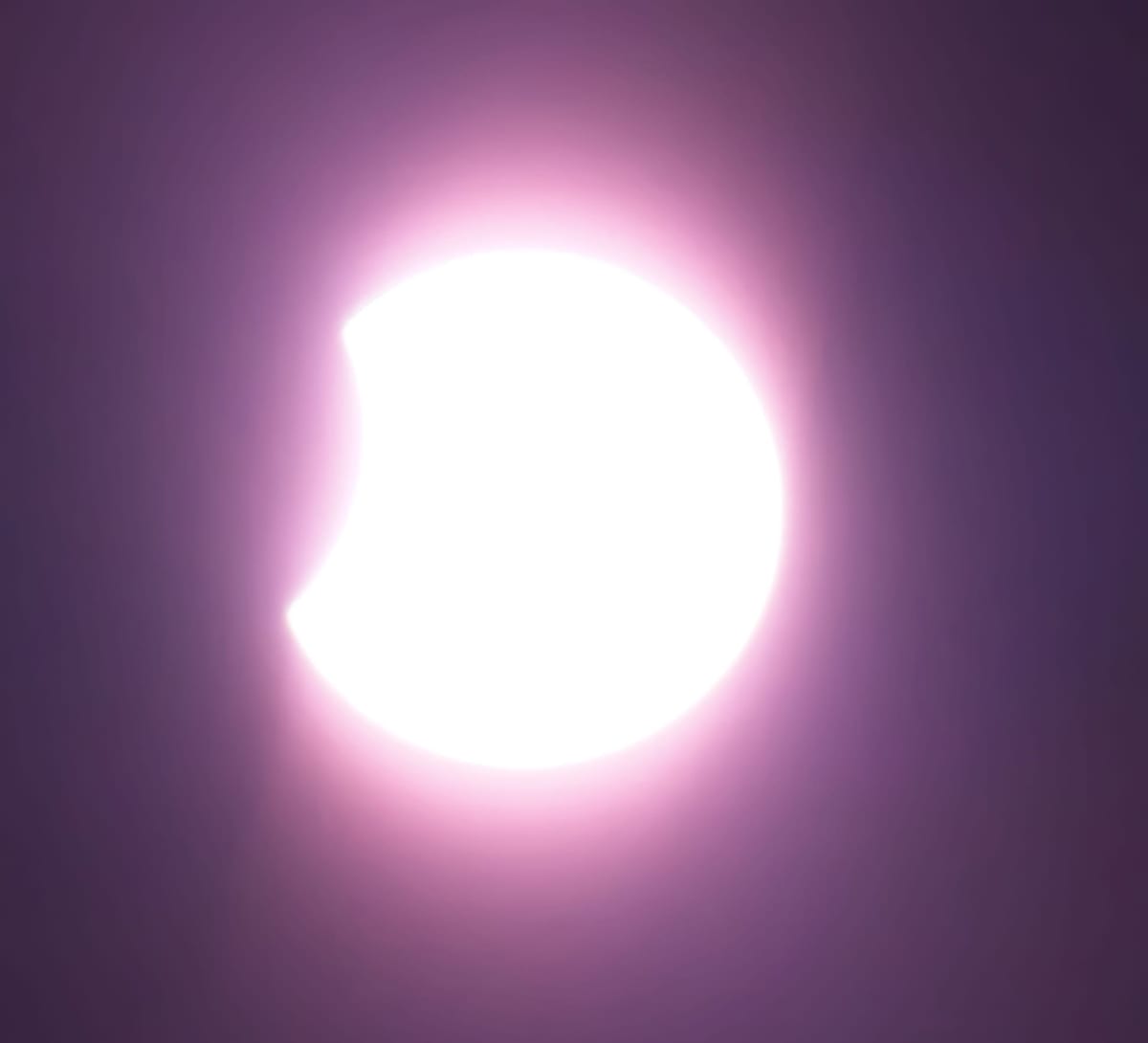
The improvised solution worked beautifully. Traverso captured stunning images of the fiery ring suspended above the endless white Antarctic plateau.
Why This Inspires
It wasn't until afterward that Traverso understood the full significance of his photos. He contacted other Antarctic stations to compare notes about viewing conditions and weather patterns.
No one else had seen it clearly. His images represented the only photographic record of the eclipse from anywhere on Earth.
"I became aware of the uniqueness of my observation," Traverso said. In a Facebook post, he wrote about how his "wonderful white lady" of a research station gave him a spectacle "that only me and my 11 companions could enjoy live."
The European Space Agency later shared his photographs widely. What began as a spontaneous moment of scientific curiosity became a gift to the world—proof that sometimes the most remarkable views require both extreme isolation and creative problem-solving.
Traverso will remain at Concordia until November 2026, his third winterover at Earth's most remote inhabited research base. Thanks to his quick thinking with cardboard and old film, the rest of us can now witness what only 12 people experienced firsthand.
More Images

Based on reporting by Space.com
This story was written by BrightWire based on verified news reports.
Spread the positivity!
Share this good news with someone who needs it