Open-Source AI Matches Human Experts at Science Reviews
Researchers just released a free AI tool that reviews scientific papers as accurately as human experts and actually gets its citations right. OpenScholar outperforms major language models and costs a fraction of the price to run.
Scientists have cracked one of artificial intelligence's biggest problems: making up fake citations.
Researchers at Carnegie Mellon University and the University of Washington just published OpenScholar, an AI tool that reviews scientific literature without inventing sources. The system matches human experts in citation accuracy, a breakthrough in a field plagued by hallucinations and false references.
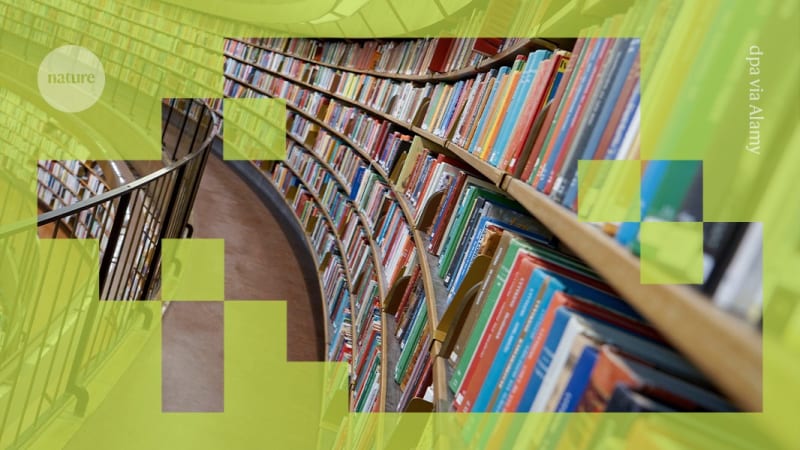
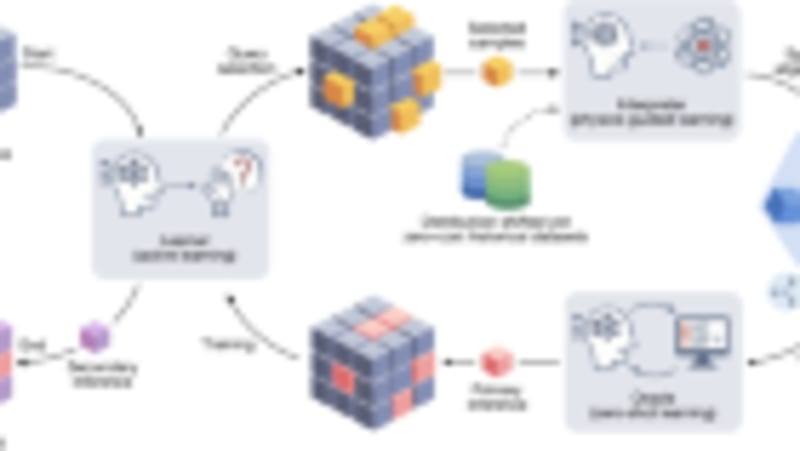
OpenScholar works by connecting a language model to a database of 45 million real, open-access scientific articles. When it generates a summary or answer, it links information directly back to actual published papers. This stops the AI from fabricating citations, a problem so widespread that at least 51 papers accepted to a major machine learning conference in December 2025 contained fake or inaccurate references.
The tool actually outperforms some of the biggest commercial language models at reviewing scientific literature. And unlike expensive proprietary systems, OpenScholar runs at a fraction of the cost of tools like OpenAI's GPT-5 with deep research.
Here's the best part: it's completely open source. Scientists can try OpenScholar for free online, download it to run on their own computers, and even use the method to improve other AI models. This democratizes access to powerful research tools that were previously locked behind expensive paywalls.
The Ripple Effect
Making OpenScholar open source could transform how researchers around the world access scientific knowledge. Mushtaq Bilal, a researcher at the AI firm Silvi, predicts it "can become one of the most popular apps for scientific searches" precisely because it's free and accessible.
The impact extends beyond individual researchers. Graduate students, scientists in underfunded institutions, and scholars in developing countries now have access to literature review capabilities that rival the most expensive commercial tools. That levels the playing field in scientific discovery.
The tool does have limitations. It doesn't always pull up the most relevant papers for every query, and it's constrained by what's in its 45-million-paper database. But co-author Akari Asai emphasizes that because it's open source, other researchers can build on it and improve these weaknesses.
The timing couldn't be better. As AI becomes embedded in research workflows, the citation accuracy problem has grown urgent. OpenScholar offers a solution that's both effective and accessible.
Free tools that actually work are opening new doors for scientists everywhere.
More Images
Based on reporting by Google News - Science
This story was written by BrightWire based on verified news reports.
Spread the positivity!
Share this good news with someone who needs it