Oregon Farm Earns $100K Yearly From 13 Wind Turbines
A wheat-farming couple in Oregon is earning $100,000 a year from 13 wind turbines on their property while still growing crops around them. The arrangement shows how farmers can protect themselves from unpredictable harvests with steady renewable energy income.
Kevin and Kathryn McCullough are proving you can grow wheat and generate clean energy on the same land, and they're thrilled about it.
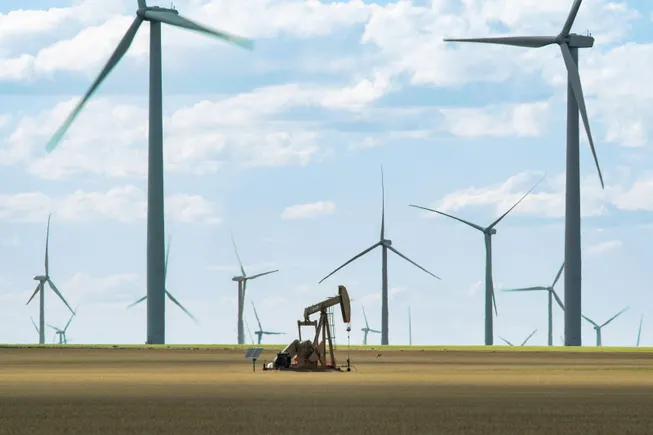
The Oregon couple farms wheat in Sherman County, where 13 massive wind turbines from the Biglow Canyon wind farm stand on their property. While the turbines spin overhead, the McCulloughs continue planting and harvesting wheat right up to the concrete bases of the towers.
"We were ecstatic," Kathryn told The Oregonian when the turbines arrived 15 years ago. "What's not to like? When these things are turning, we're making $100,000 a year."
The turbines occupy only a tiny fraction of their farmland. The concrete bases and access roads leave nearly all the property available for crops, so the family hasn't sacrificed their traditional harvest to make room for clean energy.
For wheat farmers facing unpredictable crop prices and weather challenges, that $100,000 provides crucial financial stability. The turbine payments arrive like clockwork, creating a reliable income stream that helps farming families keep their land sustainable across generations.
The arrangement isn't unique to the McCulloughs. Portland General Electric opened the Biglow Canyon wind farm as part of Oregon's push for renewable energy, and similar partnerships are spreading across rural North America.
The Ripple Effect
Beyond individual farm income, wind projects are transforming rural economies across eastern Oregon. The turbines bring millions in local tax revenue that funds emergency services, public roads, and school districts in areas that desperately need it.
For Sherman County and communities throughout the Columbia River Gorge, renewable energy has become an economic backbone. Families who once relied solely on agriculture now have diversified income that makes farming more viable, not less.
The model does come with risks. In February, a turbine blade broke free at Biglow Canyon, cutting a four-foot trench through a wheat field and scattering heavy bolts across the property. Portland General Electric shut down all 217 turbines for safety inspections before gradually bringing them back online.
"Someone could have been killed or badly injured," Kathryn said after the incident. The close call reminded farming families that working alongside massive industrial equipment requires constant attention to safety.
Despite the challenges, the McCulloughs and their neighbors continue embracing the dual-use model. They're proving that protecting farmland and fighting climate change don't have to be opposing goals.
In Oregon's dry, rolling hills, wheat and wind turbines are growing side by side, giving farming families hope for a more stable future.
More Images

Based on reporting by Google News - Wind Energy
This story was written by BrightWire based on verified news reports.
Play Today’s BrightWire Positive Mini Crossword & Word Game
Keep your mind sharp with our free 5-minute uplifting daily crossword and positivity word puzzle.
Spread the positivity!
Share this good news with someone who needs it