Oregon State Team Watches Alzheimer's Damage Start to Reverse
Scientists at Oregon State University have figured out how to watch and reverse the protein clumping that damages brains in Alzheimer's patients. The breakthrough could lead to treatments that actually undo some of the disease's harm.
Scientists just watched brain damage from Alzheimer's disease reverse in real time, opening a door that millions of families have been waiting for.
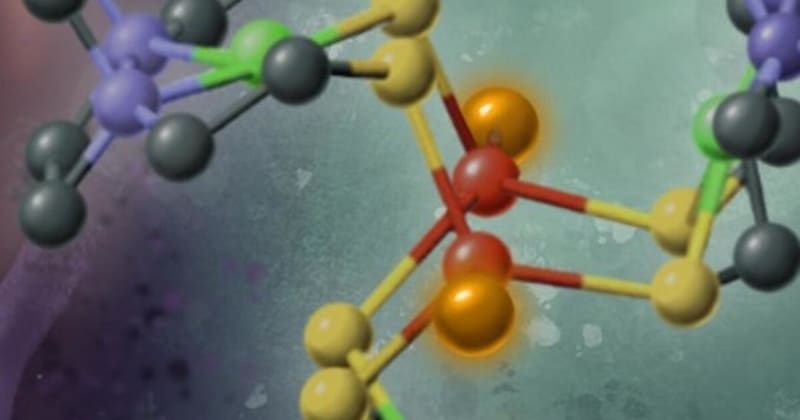
A team at Oregon State University, led by chemistry professor Marilyn Rampersad Mackiewicz and powered by undergraduate students, developed a way to observe exactly how certain metals cause the protein clumps that block brain signals in Alzheimer's patients. More importantly, they watched special molecules called chelators grip those metals and stop the damage.
The research, published in ACS Omega, tackles a problem affecting more than 6 million Americans. Alzheimer's is the sixth leading cause of death for people over 65, and it steals memories and independence from patients while devastating their loved ones.
Here's what makes this different. Scientists have known that too much copper and other metals can trigger amyloid-beta proteins to clump together, blocking brain cells from communicating. But until now, they could only see before and after snapshots, not the actual moment damage happens or reverses.
Mackiewicz's team used a technique called fluorescence anisotropy to watch the process unfold second by second. They tested two types of chelators, molecules that grab onto metal ions like a claw gripping its prey.
One chelator grabbed metals randomly, snatching up helpful and harmful types alike. But the second chelator showed something remarkable: it selectively targeted copper ions, the ones believed to drive Alzheimer's progression, while leaving beneficial metals alone.
"It shifts the question from 'does something work?' to 'how does it work, and when?'" Mackiewicz said. That precision matters because many potential Alzheimer's treatments fail because scientists don't fully understand how the protein clumping actually happens.
The Ripple Effect
This discovery ripples far beyond one laboratory. By understanding exactly when and how brain damage forms, researchers can design smarter drugs that target the right metals at the right time. The finding also reveals why some widely used chemical approaches might not work as expected, potentially saving years of misdirected research.
Five undergraduate students, supported by OSU's SURE Science Program and donors Julie and William Reiersgaard, contributed to the breakthrough. Their involvement means the next generation of scientists is already trained in these cutting-edge techniques.
The team's next step involves testing in more complex biological systems, including cells and preclinical models. Mackiewicz cautions that clinical treatments remain years away, but her words carry genuine hope: "With the correct targeting, some of the brain damage might be reversible."
For families watching loved ones fade away, reversible is a word worth waiting for.
More Images

Based on reporting by Google News - Researchers Find
This story was written by BrightWire based on verified news reports.
Spread the positivity!
Share this good news with someone who needs it