Ostriches Return to Saudi Desert After 100 Years
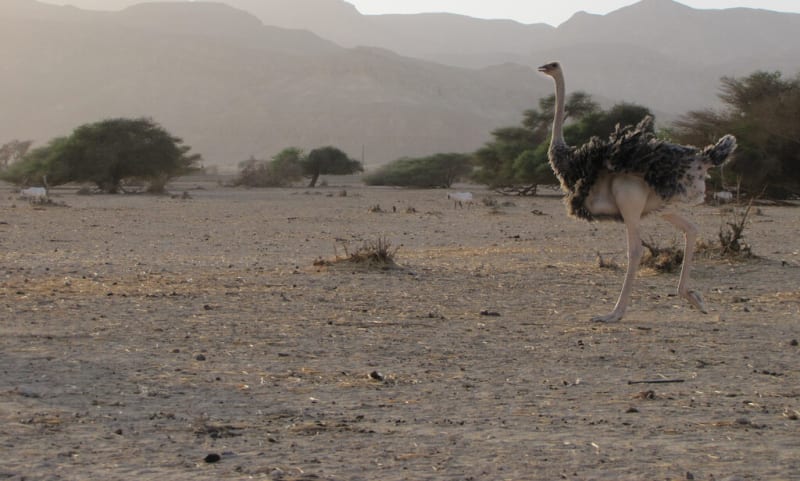
The red-necked ostrich is back in Saudi Arabia after disappearing for a century, marking a major win for one of the world's most ambitious rewilding projects. Five birds now roam a massive desert reserve that's bringing 23 extinct species back home.
After 100 years of silence, the call of the ostrich echoes across Saudi Arabia's desert again.
The red-necked ostrich, once celebrated in ancient Arab poetry as the "camel bird," has been reintroduced to the Prince Mohammed Bin Salman Royal Reserve. This critically endangered bird vanished from the Arabian Peninsula a century ago, erased by hunting and habitat loss.
Five ostriches now explore six million acres of protected desert, chosen because they're the closest living relatives of the extinct Arabian ostrich. These birds can survive brutal desert conditions that would kill most species, making them perfect pioneers for this harsh landscape.
The ostrich is the 12th species returned to the wild under ReWild Arabia, an ambitious program aiming to restore 23 native animals. Leopards, cheetahs, and the Arabian oryx are also on the comeback list.
Andrew Zaloumis, CEO of the reserve, calls the return deeply significant. His team successfully ended another 100-year absence in 2024 when they brought back the Persian onager, a wild desert donkey also beloved in traditional stories.
The timing couldn't be more critical. Only 1,000 red-necked ostriches survive globally, scattered across Africa's unstable Sahel region where poaching and conflict threaten their existence.
The Ripple Effect
The ostriches aren't just symbolic guests. They're ecological engineers who will help rebuild the entire desert ecosystem.
As they wander vast distances, they scatter seeds far from parent plants, boosting plant diversity across the barren landscape. Their foraging stirs up insects for other species to eat, aerates compacted soil, and cycles nutrients through the environment.
Arabia's empty interior offers something rare: millions of acres without human interference. Most Saudis live on the coast or near oases, leaving enormous wild spaces perfect for endangered species that need room to roam.
Ancient rock art throughout the region depicts ostriches alongside other animals the reserve is working to restore. These neolithic drawings prove these creatures belonged here long before modern borders existed.
The reserve's work shows that extinction doesn't have to be forever when we create the right conditions for recovery.
Based on reporting by Good News Network
This story was written by BrightWire based on verified news reports.
Spread the positivity!
Share this good news with someone who needs it