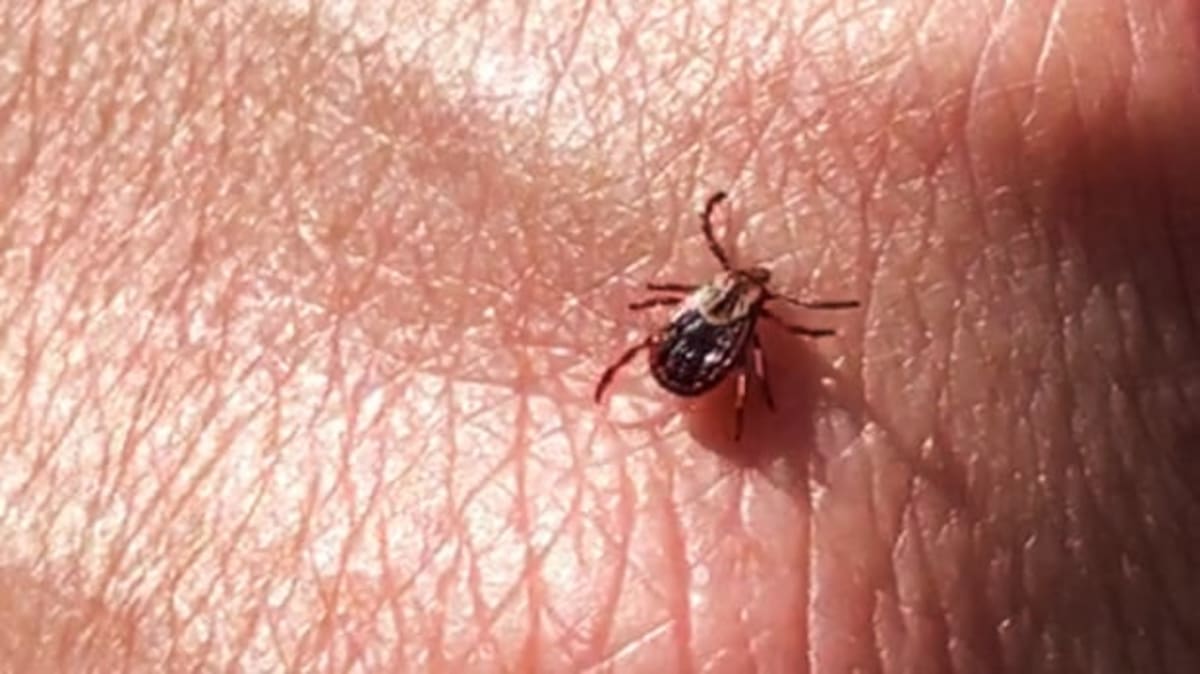
Ottawa Researchers Cut Tick Numbers by Half With Woodchips
A simple trail trick could make walks in the woods safer for everyone. University of Ottawa researchers discovered that spreading woodchips on forest paths cuts tick populations dramatically.
Walking through the woods just got a whole lot safer, thanks to a surprisingly simple solution from Canadian researchers.
Scientists at the University of Ottawa tested a low-tech approach to the growing tick problem: covering forest trails with woodchips. The results exceeded expectations. Untreated woodchips alone reduced tick numbers by 50 percent, while woodchips treated with a pet-safe pesticide slashed populations by 99 percent.
The team tested their method on 20 trail sections in Ottawa's Greenbelt, each spanning 50 meters. They chose locations where ticks were already a known problem for hikers and their pets.
The science behind the solution is elegantly simple. Ticks climb grass and other vegetation to grab onto passing hikers or animals. Woodchips prevent that vegetation from growing on the trail, leaving ticks with nowhere to climb.
"Those really wide, high use trails with high tick density are pretty suitable options for rolling this out on a slightly larger scale," explained researcher Katarina Ost. The method works best on popular paths where people typically stick to established routes.
The treated woodchips use deltamethrin, a pesticide that sticks to surfaces and doesn't transfer to pets' paws. This makes the approach safe for the four-legged trail walkers who might investigate every interesting smell along the path.
The Ripple Effect
This breakthrough comes at exactly the right time. Tick populations have been expanding across North America, bringing Lyme disease risks to areas that never worried about it before. A simple, scalable solution like woodchips could protect countless hikers, trail runners, and families enjoying nature.
The approach mirrors what public health experts recommend for backyards: creating borders of woodchips or gravel around lawns to stop ticks in their tracks. Now that same strategy can protect entire communities using shared trails.
Dr. Christopher Labos, an epidemiologist at McGill University, points out that controlling disease-carrying insects at their source is how we eliminated malaria from North America. The same principle could work for tick-borne illnesses.
The researchers acknowledge that more studies should track whether fewer ticks directly translates to fewer Lyme disease cases. Still, the logic is straightforward: no ticks means no tick bites, which means no Lyme disease transmission.
For now, the findings offer hope that enjoying nature doesn't have to come with invisible health risks hiding in the grass.
More Images



Based on reporting by Google News - Researchers Find
This story was written by BrightWire based on verified news reports.
Spread the positivity!
Share this good news with someone who needs it