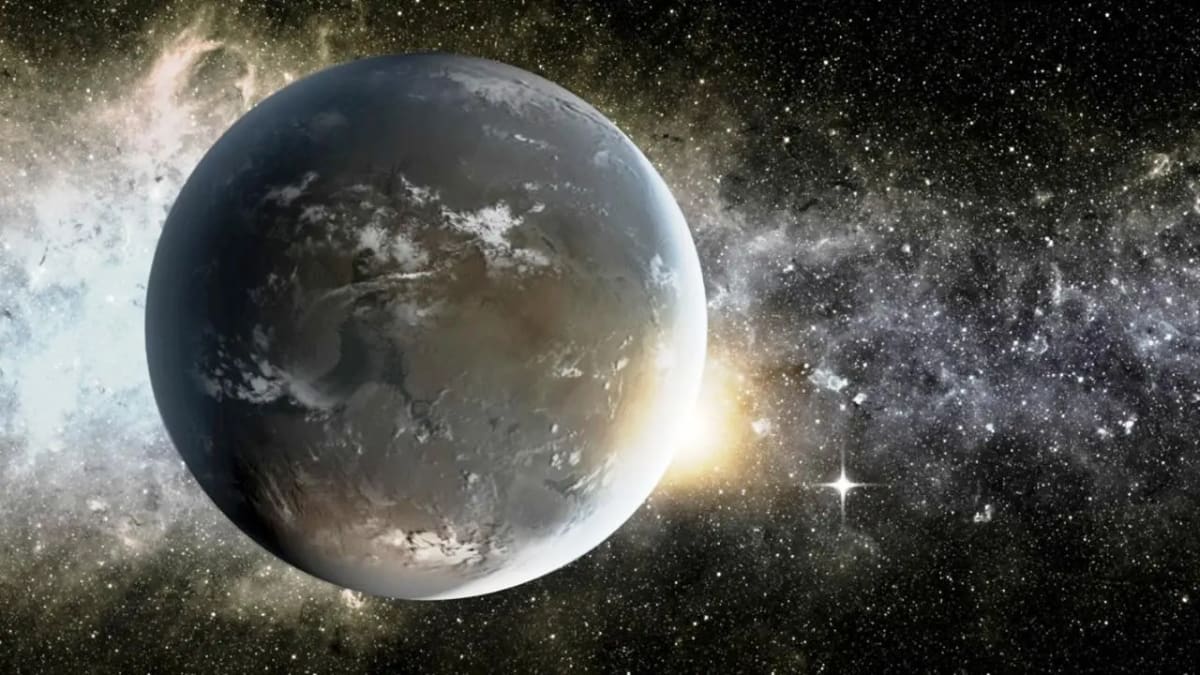
Over 8,000 New Worlds Found Since 1995 Breakthrough
Scientists have discovered more than 8,000 planets beyond our solar system in just three decades, proving that Earth-like worlds might be everywhere in our galaxy. A new web series now brings this revolutionary science to anyone curious about life beyond Earth.
The universe just got a lot less lonely, and now everyone can understand why.
In 1995, Swiss scientists Michel Mayor and Didier Queloz spotted something that changed everything: the first planet orbiting another sun-like star. Before that moment, astronomers thought planetary systems were incredibly rare. They believed Earth might be one of only a handful of worlds in the entire Milky Way galaxy.
Thirty years later, we know the opposite is true. Planetary systems aren't the exception. They're the rule.
Today, over 8,000 exoplanets have been catalogued in our galaxy alone, thanks to breakthrough technologies like the Kepler space telescope. Every month brings new discoveries, and scientists are now hunting for something even more exciting: signs of life in the atmospheres of planets that sit in the "habitable zone" where liquid water could exist.
The discovery rate keeps accelerating. By 2018, scientists had found almost 4,000 exoplanets. That number has doubled in just six years.
Why This Inspires
The French Atomic Energy Commission recently launched a nine-episode web series that makes this cutting-edge science accessible to everyone. No university degree required. The series breaks down complex detection methods like transit spectroscopy and radial velocity tracking into concepts anyone can grasp.
It's the spiritual successor to Carl Sagan's groundbreaking "Cosmos" series from the 1980s, which first invited millions into the universe revealed by science. Today's generation gets to witness something Sagan only dreamed about: proof that billions of other worlds exist, and the real possibility of finding life among them.
The series arrives at the perfect moment. Public fascination with space has never been higher, and people want more than headlines. They want to understand how scientists actually find these distant worlds and analyze their atmospheres for potential biosignatures.
The tools keep getting better too. Multiple techniques now let researchers determine the chemical makeup of an exoplanet's atmosphere, track seasonal changes, and even detect what could be considered alien "weather patterns." Direct imaging, transit methods, and radial velocity measurements have all matured into reliable discovery tools.
The question that once seemed like pure fantasy now sits at the edge of scientific possibility: How many habitable planets exist in our galaxy? Billions, or just one?
The answer appears to be leaning strongly toward billions, and humanity has the tools to find out for sure.
More Images




Based on reporting by Google: scientific discovery
This story was written by BrightWire based on verified news reports.
Spread the positivity!
Share this good news with someone who needs it