Oxford Makes Soft Robots for 10 Cents in 10 Minutes
Engineers at Oxford University just slashed the cost of building soft robots from hundreds of dollars to 10 cents per unit, using nothing more than vacuum-sealed plastic pouches and a laser cutter. The breakthrough could put advanced robotics into the hands of students, startups, and researchers worldwide.
Building a soft robot used to require expensive equipment and hours of specialized labor, but Oxford engineers just changed the game with a technique so simple it costs less than a dime.
Researchers at the University of Oxford developed a method to create soft robotic actuators in under 10 minutes using just three items: commercial vacuum pouches (the kind you'd seal leftovers in), a standard vacuum sealer, and a laser cutter. Each robot component costs less than $0.10 to make.
Soft robots are special because they're made from flexible materials that can bend and grip delicate objects without crushing them. They're already being used in everything from handling fragile items to search-and-rescue missions. The problem? Traditional manufacturing methods rely on expensive silicone molding or specialist 3D printers that can cost thousands of dollars and take hours to produce a single part.
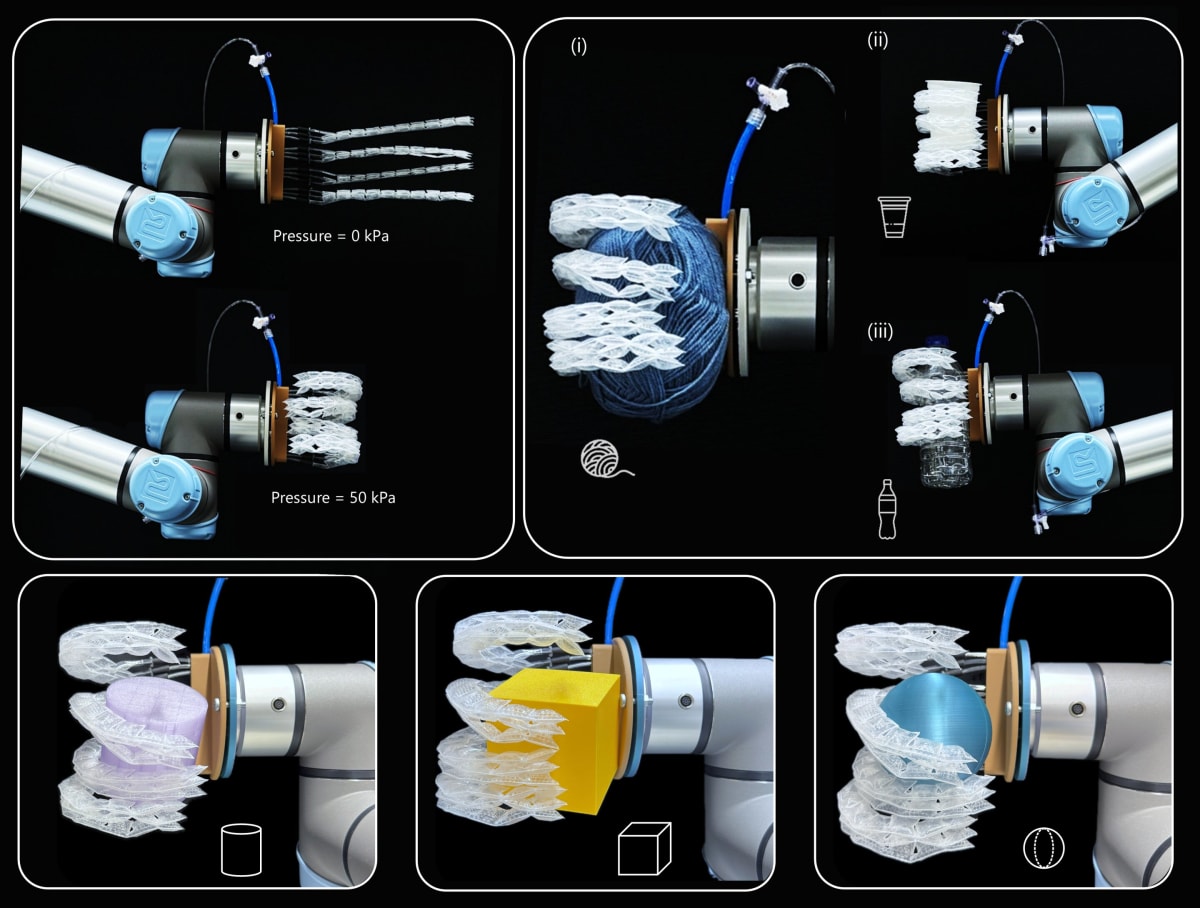
The Oxford team's approach is beautifully straightforward. They seal layers of thermoplastic pouches together using vacuum pressure, then use a laser cutter to shape them into inflatable structures. When air is pumped in, these structures bend and move in predictable, programmable ways.
To prove their method works, the researchers built a soft robotic gripper that can lift 25 times its own weight. They also created tiny crawling and swimming robots, and even made inflatable animals like turtles and cranes to show the creative possibilities for education.
Lead researcher Ashkan Rezanejad says the artistic projects could help attract students to robotics. "By enabling creative and artistic projects, our method could be particularly valuable for education," he explained.
The actuators aren't just cheap and quick to make. They're also durable. During testing, the thermoplastic structures survived 100,000 inflation and deflation cycles without breaking down.
The Ripple Effect
This isn't just about saving money. It's about opening doors. When advanced technology becomes affordable, it stops being locked away in well-funded labs and becomes accessible to high school students, community colleges, and entrepreneurs in developing countries.
Professor Antonio Forte, who led the research, believes this could transform who gets to participate in robotics innovation. "By lowering the financial and technical barriers to fabrication, this advance could significantly democratize and accelerate soft robotics research and prototyping across laboratories, startups, and educational settings," he said.
The team even developed software that lets designers "program" how their actuators will bend by adjusting simple geometric parameters. This means researchers can iterate quickly, testing dozens of designs in a single afternoon instead of waiting weeks for expensive prototypes.
The researchers published their method in the journal Advanced Science and are already exploring next steps, including testing other thermoplastic materials and developing actuators that can twist and move in multiple directions.
A future where soft robots help perform minimally invasive surgeries, assist in disaster zones, or adapt manufacturing tools to new tasks just got a lot more affordable.
More Images


Based on reporting by Phys.org - Technology
This story was written by BrightWire based on verified news reports.
Spread the positivity!
Share this good news with someone who needs it