Ozone Hole Shrinks to Smallest Size in Decades
The protective ozone layer above Earth is healing, now significantly smaller than its 30-year average, thanks to a global ban on harmful chemicals. Climate change may be slowing the recovery, but scientists confirm we're still moving in the right direction.
Thirty-eight years after nations banned the chemicals destroying our atmosphere, the ozone hole is significantly smaller than it's been in decades.
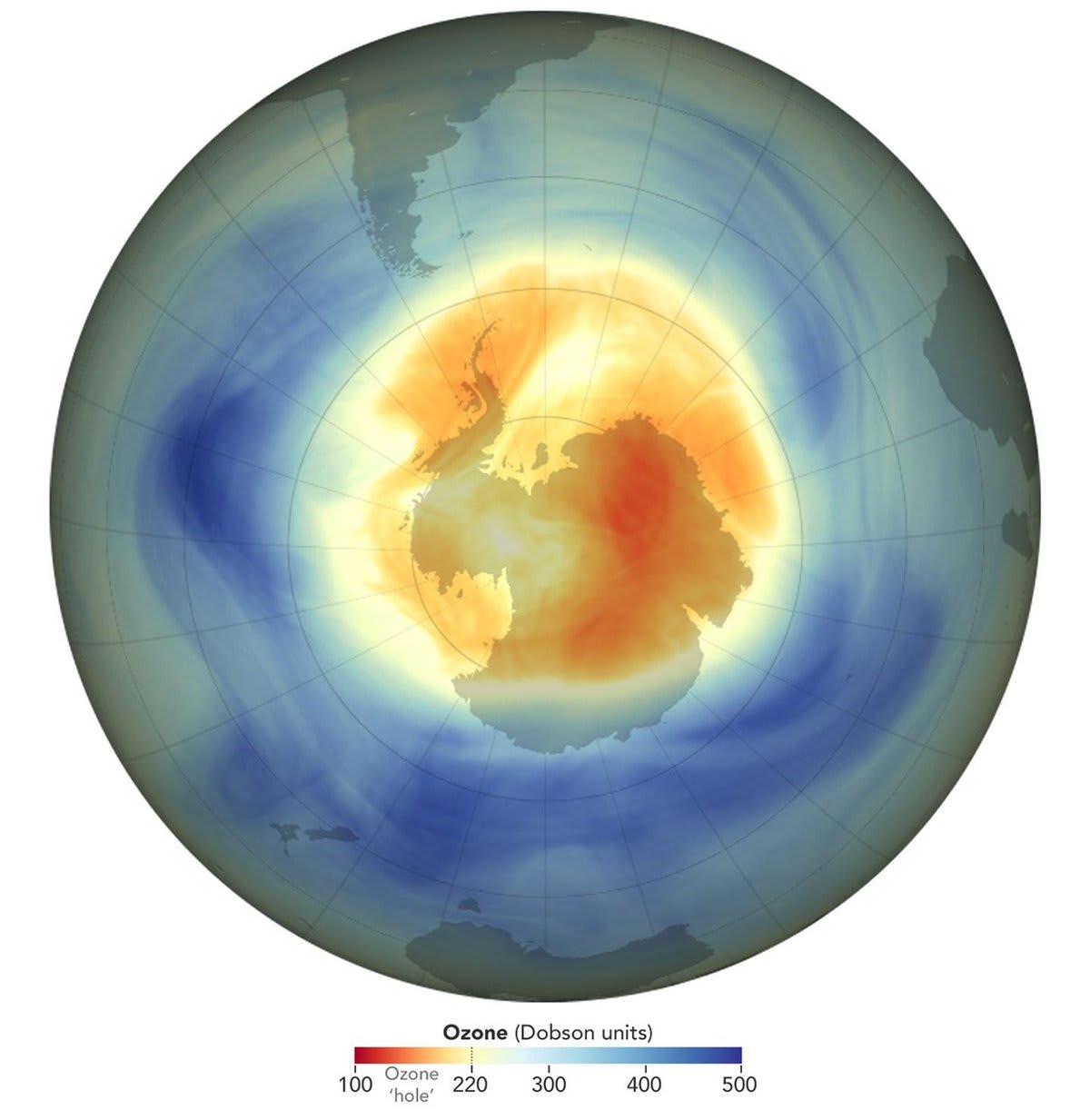
The World Meteorological Organization's latest report confirms what environmental scientists have hoped for: the protective shield above Earth is healing. The ozone hole, discovered in the 1980s over Antarctica, now measures smaller than its average size between 1990 and 2020.
This represents one of humanity's greatest environmental wins. When scientists discovered that human-made chemicals called chlorofluorocarbons were punching a hole in our atmospheric shield, 197 countries came together to sign the Montreal Protocol in 1987. They banned the chemicals used in refrigerators, air conditioners, and aerosol cans that were destroying ozone molecules nine miles above Earth.
The ozone layer protects us from the sun's harmful ultraviolet radiation, which causes skin cancer and other diseases. Without international action, that protection would have continued disappearing.
Professor Suzanne Paulson from UCLA says the healing is happening slower than scientists initially predicted. The hole's size fluctuates naturally throughout the year, making it hard to measure progress from any single year. But the trend remains positive.
The Bright Side
This marks the second consecutive year of detected improvement in the ozone hole. While extreme weather patterns linked to climate change may be creating new challenges for ozone recovery, the overall trajectory shows we're capable of reversing environmental damage when we act together.
The latest report notes some unusual patterns, including lower ozone levels across regions from Greenland to Japan in early 2025. Scientists attribute this to a strong Arctic winter vortex, the kind of extreme weather becoming more common as global temperatures rise.
Paulson warns that climate change could create more of these atmospheric disruptions going forward. As global warming intensifies, scientists expect more weather extremes that might temporarily affect ozone levels in certain regions.
Still, the data proves something remarkable: international cooperation works. Every nation on Earth agreed to phase out ozone-depleting chemicals, and now we're watching our atmosphere heal in real time. The Montreal Protocol stands as proof that when humanity unites around science-based solutions, we can reverse even planetary-scale damage.
The ozone layer won't fully recover overnight, but scientists remain confident it's on track to heal completely by the middle of this century.
More Images

Based on reporting by Scientific American
This story was written by BrightWire based on verified news reports.
Spread the positivity!
Share this good news with someone who needs it