Pacific Fusion Cuts Reactor Costs by $100M With Simple Tweak
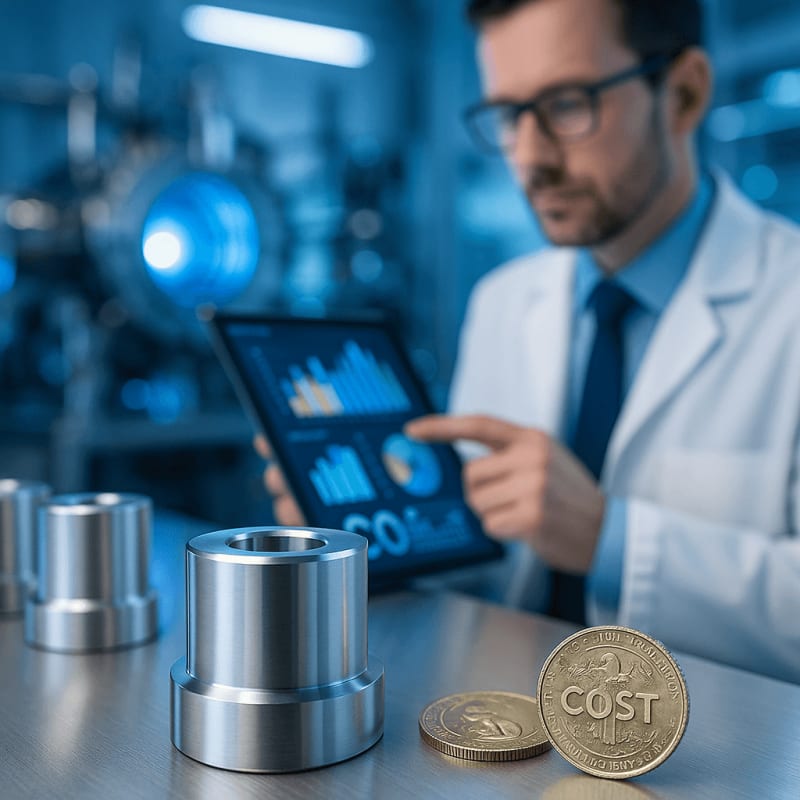
A fusion startup just saved over $100 million on their reactor design by tweaking aluminum casings to eliminate expensive preheating lasers. The breakthrough could finally make clean fusion power affordable enough to compete with fossil fuels.
Pacific Fusion just figured out how to cut $100 million from their fusion reactor by making a tiny change to a metal casing. The California startup discovered they can skip expensive laser systems entirely by adjusting how magnetic fields flow through aluminum wrapped around their fuel pellets.
Fusion energy has always promised clean, limitless power, but building reactors that produce affordable electricity has been the industry's biggest challenge. Most fusion designs require complex laser and magnet systems to preheat fuel before compression, adding massive costs and maintenance headaches that make competitive pricing nearly impossible.
Pacific Fusion's team ran experiments at Sandia National Laboratory's Z Machine, one of the world's most powerful electrical pulse facilities. They discovered that by varying the thickness of aluminum surrounding their fuel pellets, they could let magnetic fields naturally leak through and warm the fuel before the main fusion pulse hits.
The precision needed is surprisingly simple. "It's a process that's been honed and manufactured and perfected over 100 plus years," co-founder Keith LeChien told TechCrunch, comparing it to making .22 caliber bullet casings.
The energy math makes the breakthrough even more impressive. This magnetic leak uses less than 1% of the system's total energy, but eliminates the need for laser systems that cost over $100 million to build and maintain.
The Ripple Effect
This cost engineering could reshape the entire race to commercial fusion power. Commonwealth Fusion Systems has already invested hundreds of millions in their Massachusetts reactor, which won't switch on until 2027, while TAE Technologies has raised over $1.2 billion.
Pacific Fusion's approach uses massive electrical pulses to crush pencil-eraser-sized fuel pellets in under 100 billionths of a second, similar to experiments at the National Ignition Facility that made headlines. The faster the implosion, the hotter the fuel gets and the better fusion works.
The team also validated their computer simulations against real-world results, proving their technology actually works outside the lab. "It's a very different game to simulate something, build it, test it, and have it work," LeChien explained.
Fusion startups are racing toward the early 2030s for commercial power plants that can deliver round-the-clock electricity without carbon emissions or complex fuel supply chains. The technology could provide baseload power that renewable sources like solar and wind can't match, but only if the economics make sense against natural gas and battery storage.
Access to national lab facilities like Sandia's Z Machine has been critical for fusion startups that can't afford billion-dollar test equipment. Pacific Fusion's breakthrough shows how partnerships between private companies and public research facilities can accelerate progress toward clean energy goals.
In a field where capital efficiency might matter as much as scientific breakthroughs, spending $100 million less per reactor could be the difference between fusion remaining a laboratory curiosity and becoming the clean energy source the world desperately needs.
More Images

Based on reporting by Google News - Tech Breakthrough
This story was written by BrightWire based on verified news reports.
Spread the positivity!
Share this good news with someone who needs it