Paint Job Makes Wind Turbines Safer for Birds
Scientists found that painting wind turbine blades with bold warning colors inspired by poisonous animals could dramatically reduce bird deaths. The simple fix could help clean energy expand without harming wildlife.
A simple splash of paint might solve one of wind energy's biggest wildlife problems.
Scientists from the University of Helsinki and University of Exeter discovered that birds avoid wind turbines painted with bold warning colors similar to coral snakes and poison dart frogs. The breakthrough, published in Behavioral Ecology, suggests an affordable way to protect birds while expanding clean energy.
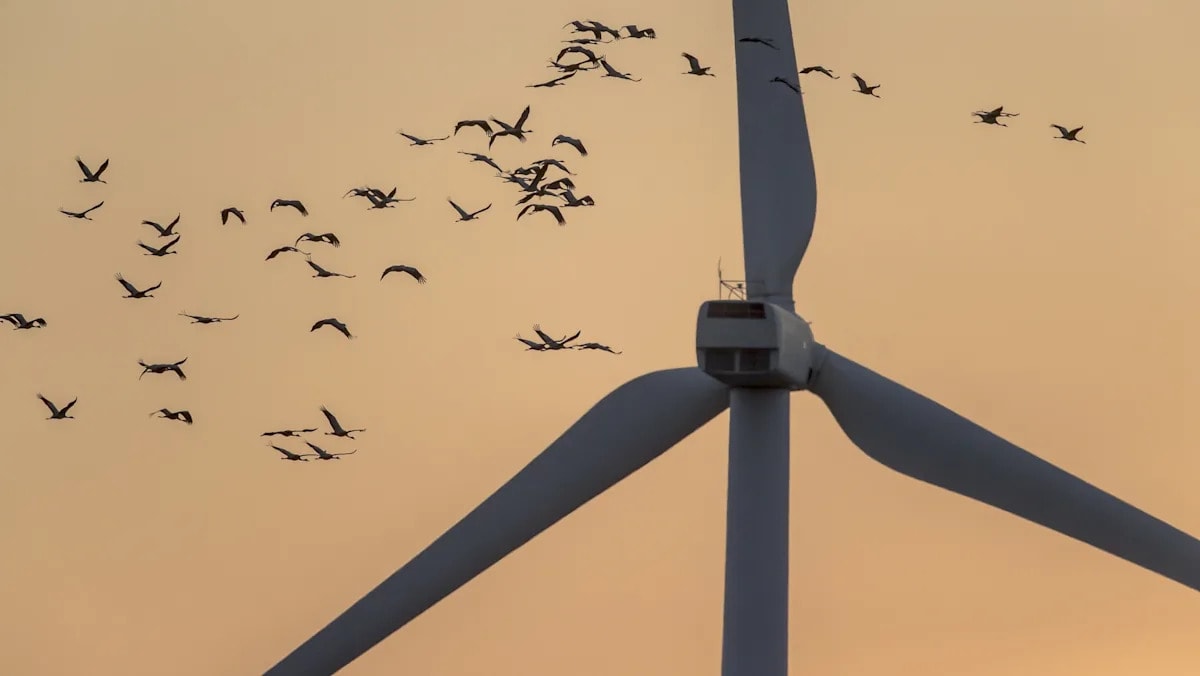
Wind turbines currently kill about two to six birds and four to seven bats per megawatt each year. While these numbers seem small for common species, every loss matters for threatened and endangered animals already fighting for survival.
Researchers tested different blade colors by showing birds videos of spinning turbines on touchscreens. They compared standard white blades against designs with single black blades, red stripes, and a black-red-yellow pattern mimicking poisonous animals.
The results were striking. Birds approached white blades far more often than colored alternatives, making the world's most common turbine design the worst choice for bird safety. The black-red-yellow pattern prompted the strongest avoidance response.
"White blades, which are the most frequently used pattern around the world, turned out to be the worst option for birds," said University of Helsinki environmental scientist Johanna Mappes. "This suggests that a relatively simple visual change could reduce bird mortality in connection with wind power."
University of Exeter ecologist George Hancock called the results remarkable. Scientists have long known birds respond to warning colors, but seeing such a dramatic effect in controlled tests exceeded expectations.
The Ripple Effect
Bird-friendly turbines could strengthen public support for wind projects, making it easier to build renewable energy installations that reduce dependence on polluting fuels. Communities could expand clean electricity with fewer environmental tradeoffs, helping both climate action and wildlife conservation move forward together.
The approach could extend beyond wind turbines. Similar visual warnings might reduce wildlife collisions with power lines and building windows, multiplying the conservation benefits.
The team emphasized that real-world testing is needed before the wind industry adopts these designs. Different bird species in various countries may respond differently than lab conditions suggest.
If field studies confirm the findings, the impact could transform the entire wind power industry with a change as simple as choosing the right paint color.
More Images
Based on reporting by Google News - Wind Energy
This story was written by BrightWire based on verified news reports.
Spread the positivity!
Share this good news with someone who needs it