Pakistan Revives Ancient Ice Grafting to Fight Water Crisis
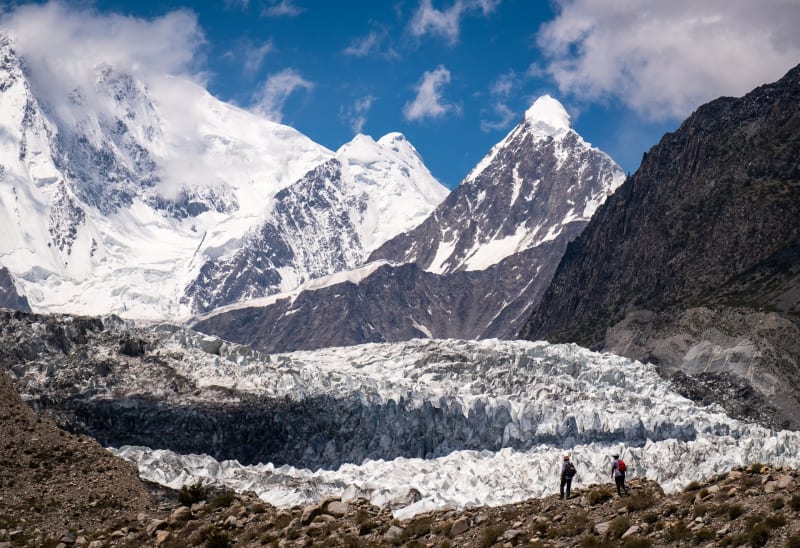
In Pakistan's Himalayas, communities are using a 700-year-old technique called glacier grafting to create artificial glaciers and combat water scarcity. The sacred practice involves collecting ice from different valleys and "planting" it at high altitudes to grow new water sources.
As Pakistan's 13,000 glaciers melt from rising temperatures, mountain villagers are turning to an ancient solution that their ancestors used centuries ago.
In the high-altitude Himalayan region near Skardu, communities are reviving glacier grafting, a traditional technique that creates new artificial glaciers to combat water scarcity. The practice, locally called glacier marriage, dates back to the 14th century when a Sufi saint first used it to block invading armies.
Today, it's saving villages from drought. Volunteers collect around 200 kilograms of ice from two different valleys, traditionally called "male" and "female" ice based on their color and mineral content. Male ice appears black, while female ice is lighter and produces more fertile water for crops.
The process is deeply spiritual. Teams carry the ice through steep mountain passes, never letting it touch the ground and keeping it in constant motion. They avoid plastic, recite prayers, and follow strict codes of conduct including silence near the planting site.
At carefully chosen north-facing slopes protected from avalanches, they dig small trenches and layer the ice pieces with salt, coal, and grass. Water from seven different streams is slowly dripped over the mixture to help it fuse. Male ice goes on the right, female on the left.
Over several months, the pieces merge into a single mass. After surviving three years of seasonal snow cycles, the artificial glacier begins to expand and becomes a reliable water source for surrounding communities.
Professor Zakir Hussain Zakir from the University of Baltistan has studied the practice extensively. He explains that site selection is critical, requiring strong winds, minimal sun exposure, and protection from flowing water.
The technique stands out from modern interventions because of its cultural and environmental respect. During the entire process, volunteers only eat locally produced foods like wheat, barley, and apricots. Music, humor, and harm to any living creature are strictly forbidden.
Why This Inspires
This story shows how traditional knowledge can offer powerful solutions to modern climate challenges. While Pakistan contributes less than one percent of global emissions, it ranks among the top 10 most climate-vulnerable nations.
Communities across the border in India's Ladakh region use similar techniques, including "ice stupas" that spray water in freezing temperatures to create conical ice structures. These innovations prove that indigenous wisdom and climate science can work together.
The revival of glacier grafting demonstrates that sometimes the best path forward means looking back to time-tested solutions that honor both nature and culture.
Based on reporting by Al Jazeera English
This story was written by BrightWire based on verified news reports.
Spread the positivity!
Share this good news with someone who needs it