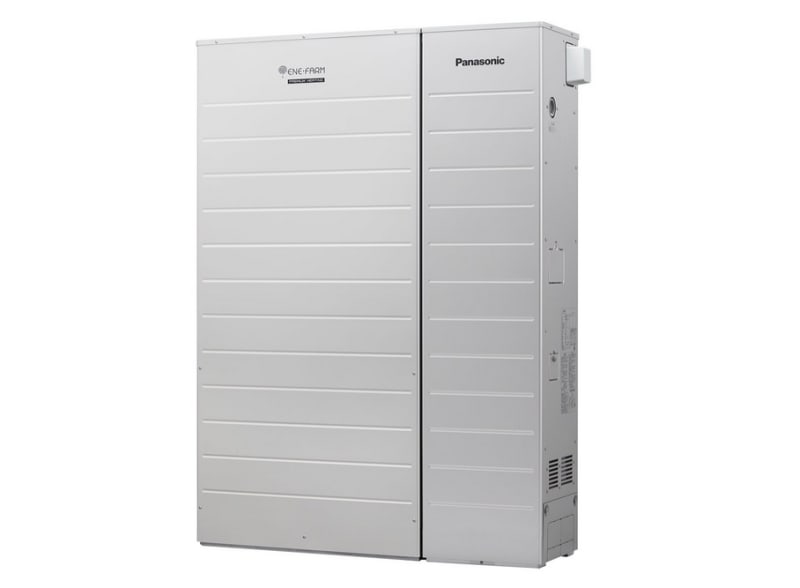
Panasonic's New Home System Cuts Grid Power 88%
Japanese tech giant Panasonic just launched a smart fuel cell system that turns natural gas into electricity and hot water right in your home, working alongside solar panels to slash energy bills. The breakthrough device can power itself during outages and helps stabilize the electrical grid during peak demand.
Imagine a box in your garage that turns ordinary natural gas into electricity for your home while heating your water at the same time. That's exactly what Panasonic just made possible with its latest Ene-farm fuel cell system, launching in Japan this April.
The clever device extracts hydrogen from methane gas and uses it to generate 200 to 700 watts of power through a chemical reaction. But here's the genius part: instead of wasting the heat produced during this process, the system captures it to warm about 26 gallons of water for showers, sinks, and home heating.
The numbers are impressive. The system achieves up to 88.5% overall efficiency with natural gas, meaning almost nine out of every ten energy units get used productively instead of disappearing as waste heat like in traditional power plants.
What makes this launch especially exciting is how the system plays nice with rooftop solar panels. A smart home energy management system predicts when your solar panels will generate more electricity than you need, then schedules the fuel cell to run during those times. This maximizes how much of your own clean energy you actually use instead of sending it back to the grid.
The system also joins Japan's demand response programs, acting like a good neighbor to the electrical grid. When power supply runs tight across the region, it kicks into gear to reduce how much electricity your home pulls from the grid. When there's plenty of power available, it takes a break and lets grid electricity flow in.
Power outages don't leave you in the dark either. The unit automatically provides up to 500 watts of emergency electricity, enough to keep your fridge running, charge phones, and power essential lights.
The Ripple Effect: This technology represents a major step toward homes that generate their own power reliably without relying solely on batteries or the electrical grid. As more houses adopt systems like this, entire neighborhoods could become mini power plants that actually help stabilize the grid instead of straining it during peak hours.
Japan has been running its Ene-farm program for over a decade, with hundreds of thousands of fuel cells already installed in homes across the country. This new version builds on that foundation, adding smarter controls that work seamlessly with the growing number of rooftop solar installations.
Panasonic isn't stopping here. The company recently began testing additional energy management tools that combine solar, batteries, and heat pumps to push self-consumption even higher. They've also updated their heat pump water heaters to run during sunny daytime hours when solar panels produce the most electricity.
Clean energy just got a lot more practical for everyday families.
More Images
Based on reporting by PV Magazine
This story was written by BrightWire based on verified news reports.
Spread the positivity!
Share this good news with someone who needs it