Paralyzed Leopard Walks Again After 7-Month Recovery
A leopard left paralyzed from the waist down after a highway accident in India has made a remarkable recovery, learning to walk again after specialized veterinary care. The big cat's journey from dragging itself with its front legs to standing on all fours shows what's possible when wildlife gets the treatment it deserves.
When rescuers found the leopard on a Gujarat highway in January, the prognosis looked grim. The animal couldn't move its back legs at all and was dragging its body using only its front paws.
The culprit was a spinal fracture so severe that veterinarians at India's GEER Foundation weren't sure the leopard would survive. X-rays revealed the animal had fractured and dislocated its lower spine in the exact spot where nerves control the back legs, tail, and hips.
"The leopard's condition was critical," said B.P. Pati, the foundation's director. Beyond the paralysis, the leopard had also badly injured its jaw and struggled even to eat or drink water.
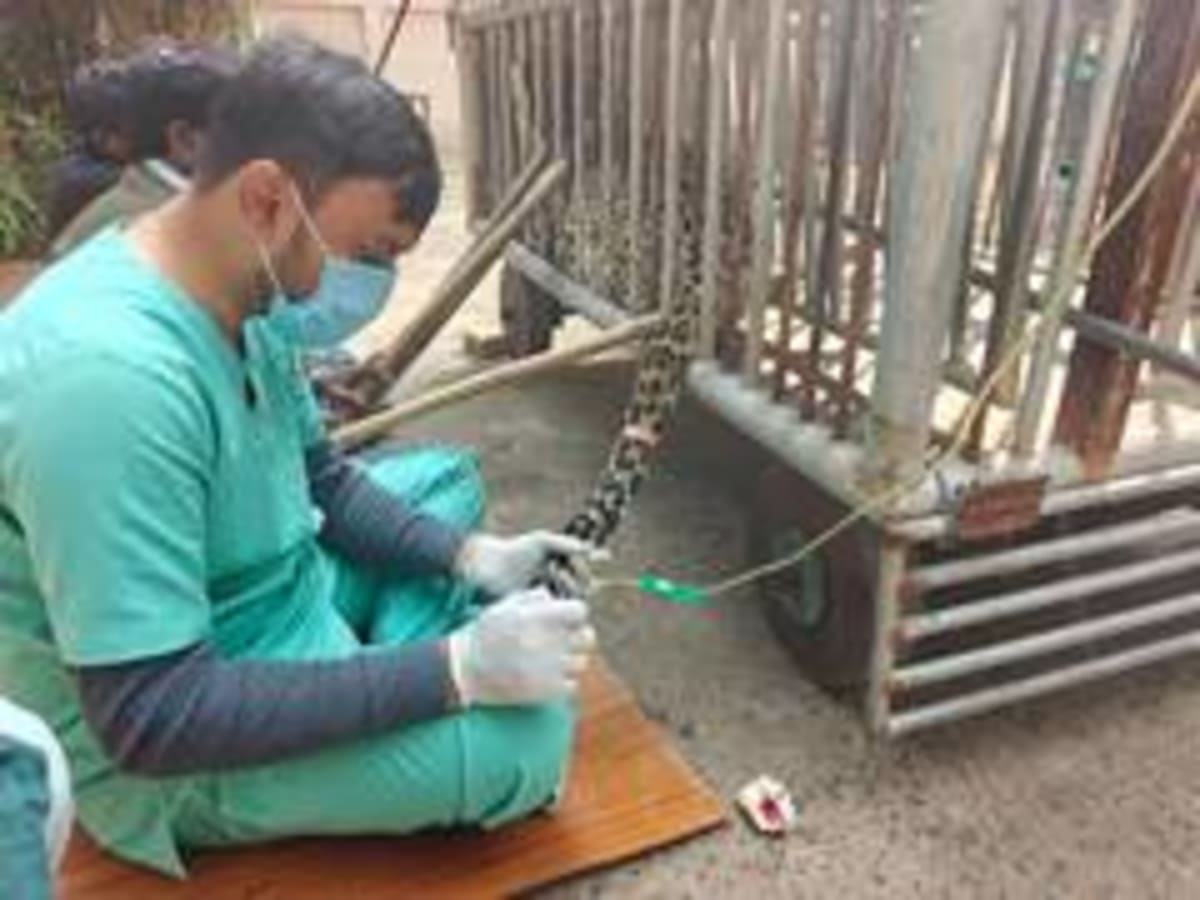
The team moved the big cat to a specially designed treatment cage at Indroda Nature Park in Gandhinagar. They kept human contact minimal, watching from a distance while providing intensive daily care including careful positioning, nutritional support, and restricted movement to protect the injured spine.
Within three days, the leopard started eating and drinking on its own. By day five, normal bodily functions had returned. Within a week, the animal started showing its wild side again, hissing and snarling at approaching staff.
The real breakthrough came around day 20 when the leopard began lifting its body with its front legs. By day 40, it could stand on all four limbs, though the back legs were still weak. At the two-month mark, the leopard took its first wobbly steps.
After seven months of treatment, the animal now walks with a nearly normal gait and healthy posture. The leopard still has a slight droop in its tail and some postural quirks, reminders of the severe injury it survived.
Why This Inspires
This recovery represents more than one leopard beating the odds. The GEER Foundation treated over 10 critical wildlife cases in 2026 alone, including three other adult leopards and two critically ill cubs. They're now building a state-of-the-art wildlife veterinary hospital with digital imaging, an ICU, and specialized rehabilitation facilities.
The new hospital will serve injured and sick wild animals across Gujarat, bringing emergency room-level care to creatures that usually don't get a second chance. It's a model other regions could follow as human development increasingly overlaps with wildlife habitat.
Because of its lingering injuries, this particular leopard won't return to the wild where hunting and defending territory would prove too difficult. Instead, it will live at Indroda Nature Park in a naturalistic setting with ongoing veterinary supervision.
"The case highlights the importance of timely rescue, advanced diagnostic imaging, and prolonged rehabilitation in giving severely injured wild animals a second chance at life," Pati said. Sometimes a second chance is all it takes.
More Images




Based on reporting by Google News - Wildlife Recovery
This story was written by BrightWire based on verified news reports.
Spread the positivity!
Share this good news with someone who needs it
%2Ffile%2Fattachments%2Forphans%2FRC2AWMA9KEZ4_993584.jpg)