Parents Become Therapists: 56,500 Kids Get Autism Support
A chance visit to an autism center turned one accountant's career upside down and created a social enterprise that's putting parents at the heart of therapy. Mom's Belief has now supported over 56,500 children across India by training parents to become co-therapists at home.
When Nitin Bindlish walked into an autism therapy center ten years ago to help a friend with bookkeeping, he had no idea he was about to discover his life's work. That single afternoon sparked an idea that would eventually support tens of thousands of families navigating autism and neurodevelopmental conditions.
Today, his social enterprise Mom's Belief operates 140 centers across 57 Indian cities. The company has already reached over 56,500 children, and it's preparing for a major expansion that could multiply that number tenfold.
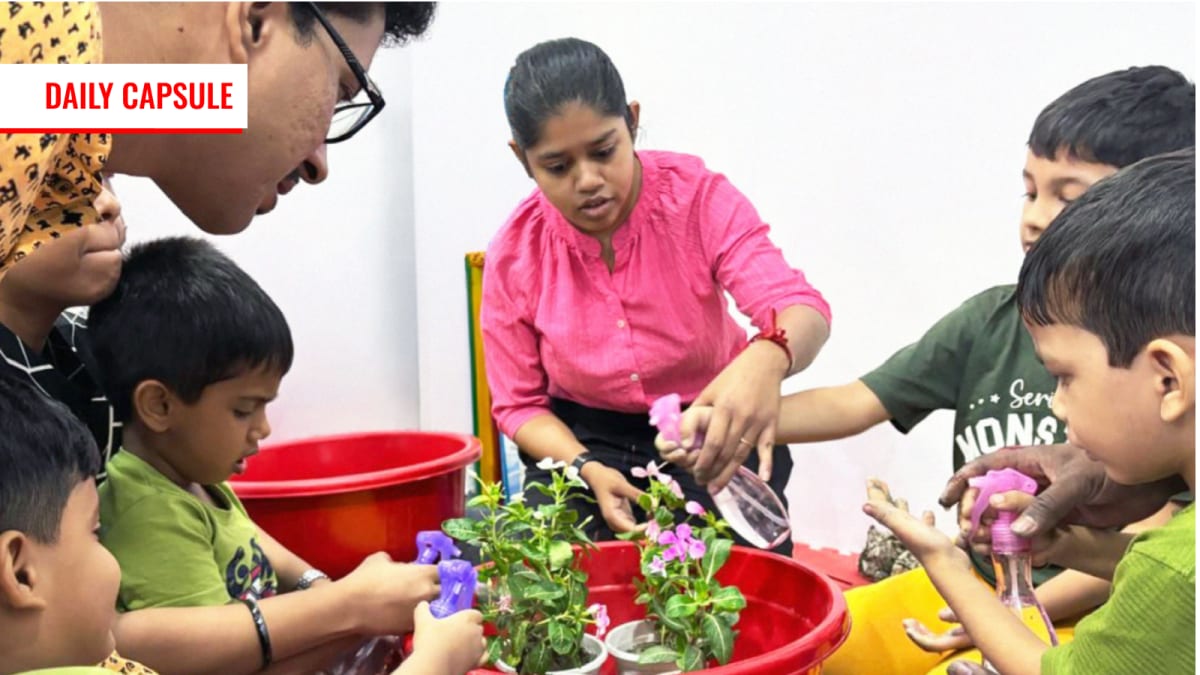
The secret to their success is surprisingly simple. Instead of limiting therapy to clinical sessions, Mom's Belief trains parents to reinforce professional guidance through everyday moments at home.
A parent learns to turn breakfast into a sensory activity. Bath time becomes an opportunity for motor skills practice. Story time transforms into language development.
The approach combines in-person therapy centers with online support, learning kits, and behavioral coaching that families can use anywhere. This makes specialized care accessible even in smaller towns where expert therapists are scarce.
After experimenting with a franchise model, Bindlish pivoted to company-owned centers with a deliberate focus on Tier II and III cities. These are communities where families often struggle to find any neurodevelopmental support, let alone affordable options.
Now the company is preparing for a public stock offering worth up to 140 crore rupees (roughly $16.5 million). The funds will fuel an ambitious expansion to 1,000 centers nationwide.
The Ripple Effect
The impact reaches beyond early childhood intervention. Mom's Belief is expanding into vocational training for teenagers with neurodevelopmental conditions, creating pathways to independence that many families never thought possible.
By empowering parents as co-therapists, the model creates support that extends far beyond clinic walls. Children receive consistent reinforcement throughout their day, not just during appointments. Parents gain confidence and practical skills. Families in underserved areas finally have access to care.
What started as one accountant's curiosity has grown into a nationwide movement proving that the most powerful therapy tool might already be in every home: a parent who knows how to help.
More Images


Based on reporting by YourStory India
This story was written by BrightWire based on verified news reports.
Spread the positivity!
Share this good news with someone who needs it