%2Fhttps%3A%2F%2Ftf-cmsv2-smithsonianmag-media.s3.amazonaws.com%2Ffiler_public%2F22%2Fd8%2F22d844dd-b4e8-4dd7-be37-7215d6e4aa05%2Fkepler-by_ethan_kruse.jpg)
Parking Lot Telescope Discovery Led to 2,700 New Planets
A grad student with a homemade telescope in a Colorado parking lot made a discovery that convinced NASA to launch a mission finding thousands of planets. That 1999 breakthrough changed our understanding of the universe forever.
In September 1999, David Charbonneau was 25 years old, standing in a Colorado parking lot with a four-inch telescope inside a plywood shed, when he spotted something that would change astronomy forever. He had just captured the first clear evidence of a planet passing in front of a distant star.
The discovery sounds simple now, but it was revolutionary. At the time, scientists had only confirmed a handful of planets outside our solar system, all of them massive gas giants detected through indirect methods.
Charbonneau and his adviser Tim Brown were testing a technique called photometry, measuring tiny dips in starlight as planets crossed in front of their stars. Their humble telescope detected a 1 percent brightness drop from a star called HD 209458, located 150 light years away.
"Here was a phenomenon that no one had ever seen before," Charbonneau said recently. "You really do ask yourself, 'Am I delusional?'"
He wasn't. Another team confirmed the same finding two months later.
NASA had been debating whether to fund the Kepler Space Telescope mission, which would use this same photometry technique to hunt for planets. Many scientists doubted it would work. Charbonneau's parking lot discovery turned skepticism into certainty.
NASA approved the mission in 2001. The Kepler Space Telescope launched in March 2009, equipped with instruments sensitive enough to detect brightness changes as tiny as 0.002 percent.
The results exceeded everyone's dreams. Kepler confirmed five new planets in its first six weeks. By 2011, it found the first planet in the habitable zone where life could exist. In 2014, scientists announced the first Earth-sized rocky planet.
The Ripple Effect
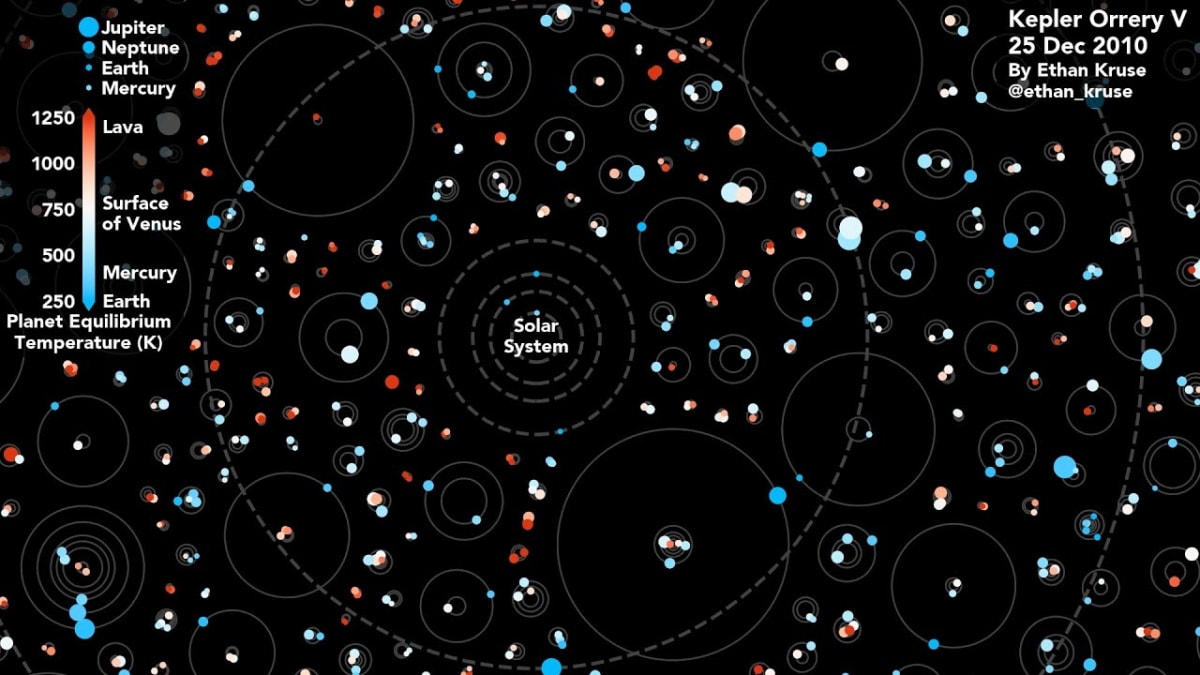
Kepler operated until 2018, monitoring half a million stars and confirming more than 2,700 planets orbiting distant suns. Scientists are still analyzing the data and announcing new discoveries years after the mission ended.
The mission revealed solar systems stranger than science fiction writers imagined. Kepler found planets orbiting two suns like Star Wars' Tatooine. It discovered systems with five planets dancing around a single star. It detected a giant gas planet with the density of a marshmallow.
These discoveries transformed how we understand our place in the universe. Before Kepler, planets seemed rare. Now we know most stars have planets, and Earth-like worlds might number in the billions across our galaxy alone.
NASA's TESS spacecraft continues the search today. The Nancy Grace Roman Telescope will launch within a year, detecting even smaller planets and capturing direct images of distant worlds for the first time.
All of this traces back to one determined graduate student, a homemade telescope, and a parking lot in Colorado where the universe revealed one of its greatest secrets.
More Images
%2Fhttps%3A%2F%2Ftf-cmsv2-smithsonianmag-media.s3.amazonaws.com%2Ffiler_public%2F22%2Fd8%2F22d844dd-b4e8-4dd7-be37-7215d6e4aa05%2Fkepler-by_ethan_kruse.jpg)
%3Afocal(1350x900%3A1351x901)%2Fhttps%3A%2F%2Ftf-cmsv2-smithsonianmag-media.s3.amazonaws.com%2Ffiler_public%2F22%2Fd8%2F22d844dd-b4e8-4dd7-be37-7215d6e4aa05%2Fkepler-by_ethan_kruse.jpg)
%2Fhttps%3A%2F%2Ftf-cmsv2-smithsonianmag-media.s3.amazonaws.com%2Ffiler_public%2F41%2F81%2F41813f88-9653-4da4-863e-1c2099939eb8%2Fmariner_2_and_mariner_4.jpg)
Based on reporting by Smithsonian
This story was written by BrightWire based on verified news reports.
Spread the positivity!
Share this good news with someone who needs it