Penn Engineers Design Space Data Centers to Power AI
University of Pennsylvania engineers have created a solar-powered orbital data center design that could meet growing AI computing demands while easing the burden on Earth's electricity grids and water supplies. The innovative system uses natural forces in space to stay aligned, making large-scale deployment surprisingly realistic.
Imagine AI systems powered by sunlight from space, reducing the strain on our planet's resources while keeping your favorite chatbots running smoothly.
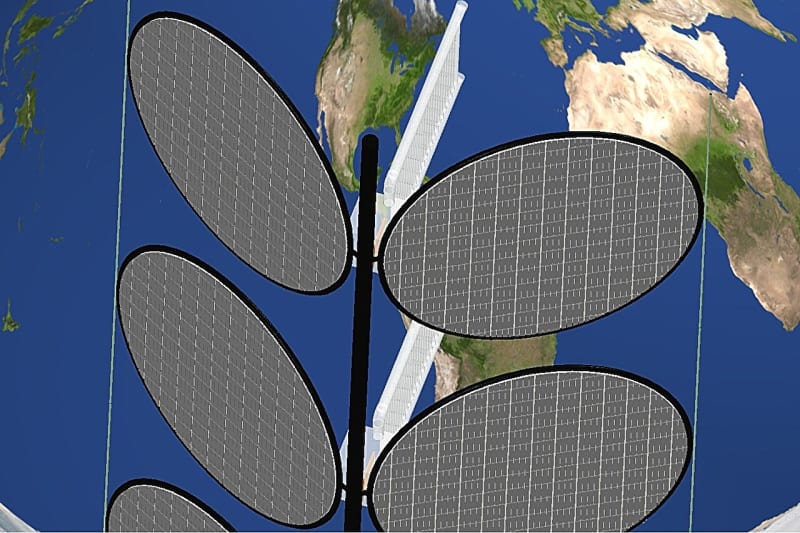
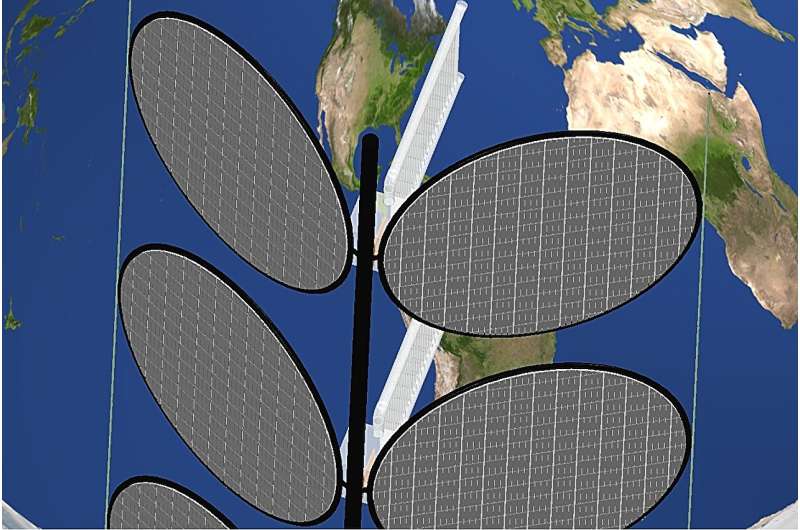
Engineers at the University of Pennsylvania have designed a breakthrough orbital data center that could make this vision real. The system looks like a plant floating in space, with solar panels branching out from long columns filled with computing hardware.
What makes this design special is its elegant simplicity. Unlike other space-based proposals that need constant adjustments to keep solar panels pointed at the sun, this system relies on natural forces to maintain its orientation. The engineers used decades of research on tethers, rope-like cables that automatically align themselves in orbit under competing gravitational and centrifugal forces.
"This is the first design that prioritizes passive orientation at this scale," says Igor Bargatin, Associate Professor in Mechanical Engineering and the lead researcher. The team presented their work at the 2026 American Institute of Aeronautics and Astronautics SciTech Forum.
The design addresses a pressing problem. As AI tools like ChatGPT grow more popular, data centers consume increasing amounts of electricity and water for cooling. These facilities strain local power grids and water supplies, creating environmental concerns.
Previous space data center proposals faced major hurdles. Some required millions of individual satellites flying independently. Others envisioned enormous rigid structures that would be nearly impossible to build and launch with current technology.
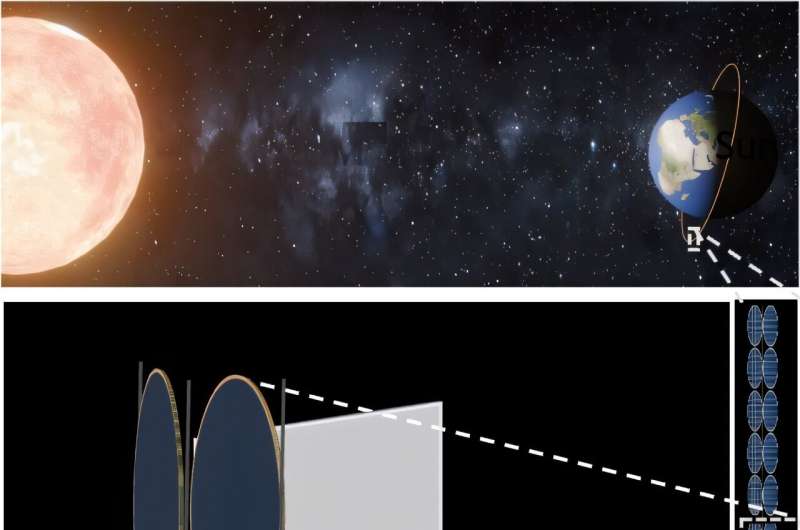
The Penn solution occupies a sweet spot between ambition and practicality. Thousands of identical computing nodes would connect along a tether, forming a long vertical chain in orbit. Each node carries computer chips, solar panels, and cooling hardware in a modular structure.
The system scales beautifully. Just as you can keep adding beads to form a longer necklace, engineers can extend the tethers by adding nodes. A single tethered system could stretch for tens of kilometers, hosting thousands of computing nodes and supporting up to 20 megawatts of power.
Sunlight itself keeps everything aligned. The gentle but constant pressure from sun rays acts like wind on a weather vane, keeping panels oriented without motors or thrusters. The team achieves this by using thin-film materials and slightly angling the panels toward the computing elements.
Data processed in orbit would beam back to Earth using laser-based optical links, technology already proven in satellite communications. While training AI systems in space remains impractical due to transmission delays, the design excels at AI inference, the process of querying already-trained tools like ChatGPT.
The Ripple Effect
The implications extend beyond just moving computers to space. By offloading computing power from Earth, these orbital data centers could significantly reduce pressure on local electricity grids struggling to meet demand. Water-stressed regions that currently host large data centers could see meaningful relief.
The design also democratizes access to space-based infrastructure. Because it uses existing, well-studied tether technology rather than requiring new breakthroughs, deployment becomes far more feasible. This isn't science fiction requiring decades of development.
Bargatin envisions a belt of these systems encircling the planet. Instead of one massive data center, many modular ones would work together, powered continuously by sunlight as they orbit. The distributed approach provides redundancy and reliability.
The modular nature means the system can grow incrementally, starting small and expanding as demand increases and technology improves.
This elegant solution shows how looking to space might help solve Earth's most pressing challenges, one solar-powered computing node at a time.
More Images

Based on reporting by Phys.org - Technology
This story was written by BrightWire based on verified news reports.
Spread the positivity!
Share this good news with someone who needs it