Penn Scientists Power AI With Light, Cut Energy Use
Researchers at the University of Pennsylvania just cracked a major challenge in artificial intelligence: running powerful computations using light instead of electricity. The breakthrough could slash AI's massive energy demands while speeding up processing.
Eighty years after Penn invented the world's first electronic computer, scientists at the same university are reinventing how computers work.
Physicist Bo Zhen and his team have created a hybrid particle that combines light and matter to power AI computations. The innovation could transform how we run artificial intelligence systems, which currently consume enormous amounts of electricity.
The problem with today's computers is simple: they rely on electrons. Those tiny charged particles generate heat and waste energy as they zip through computer chips. As AI systems grow more powerful and process more data, those limitations become harder to ignore.
Light particles called photons seemed like an obvious solution. They travel fast, carry information efficiently, and don't generate much heat. But there's a catch: light doesn't interact well with its environment, making it terrible at the switching operations computers need to make decisions.
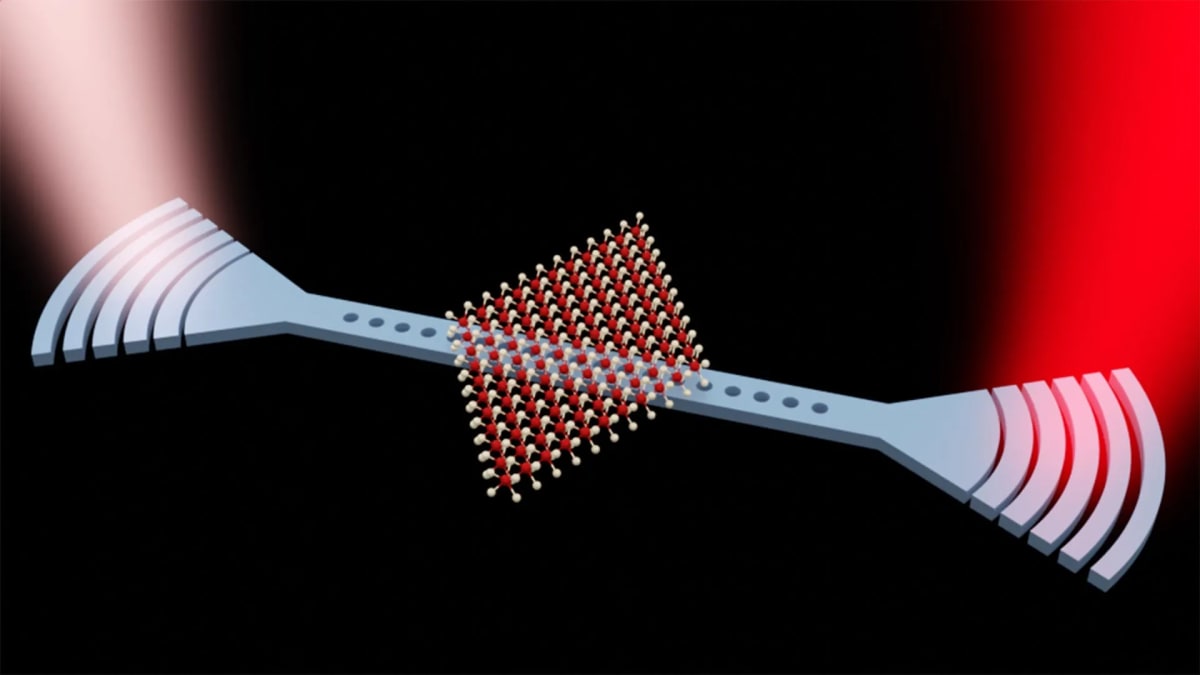
Zhen's team solved that puzzle by creating something called an exciton-polariton. This special particle forms when photons link up with electrons inside an ultra-thin semiconductor material. The combination gives light the ability to interact and switch signals while keeping its speed and efficiency.
The results are stunning. The Penn team demonstrated all-light switching using just 4 quadrillionths of a joule of energy. That's far less power than it takes to briefly light up a tiny LED.
Current photonic AI chips already use light for some calculations. But when they need to make decisions or perform complex operations, they convert light back into electrical signals. That conversion wastes time and energy, undermining the benefits of using light in the first place.
The Ripple Effect
This breakthrough could reshape AI's future in ways that benefit everyone. Processing information directly from cameras without converting between light and electricity would make AI systems faster and more efficient.
The energy savings matter too. Training a single large AI model can consume as much electricity as several American homes use in a year. If this technology scales successfully, it could dramatically reduce AI's environmental footprint while making the technology more accessible.
The research team, supported by the US Office of Naval Research and the Sloan Foundation, believes their approach could eventually support basic quantum computing functions too. That would open even more possibilities for future chips.
From ENIAC's electron-powered calculations in the 1940s to today's light-powered breakthroughs, Penn continues pushing computing forward into brighter, more efficient territory.
Based on reporting by Google News - AI Breakthrough
This story was written by BrightWire based on verified news reports.
Spread the positivity!
Share this good news with someone who needs it