Penn State Finds Brain's Gatekeeper Could Stop Alzheimer's
Scientists discovered a tiny skeleton inside brain cells that controls what enters neurons—and protecting it could prevent Alzheimer's disease. When this protective structure weakens, harmful proteins flood in and trigger brain cell death.
Scientists at Penn State just found a microscopic gatekeeper inside your brain cells that could change how we fight Alzheimer's disease.
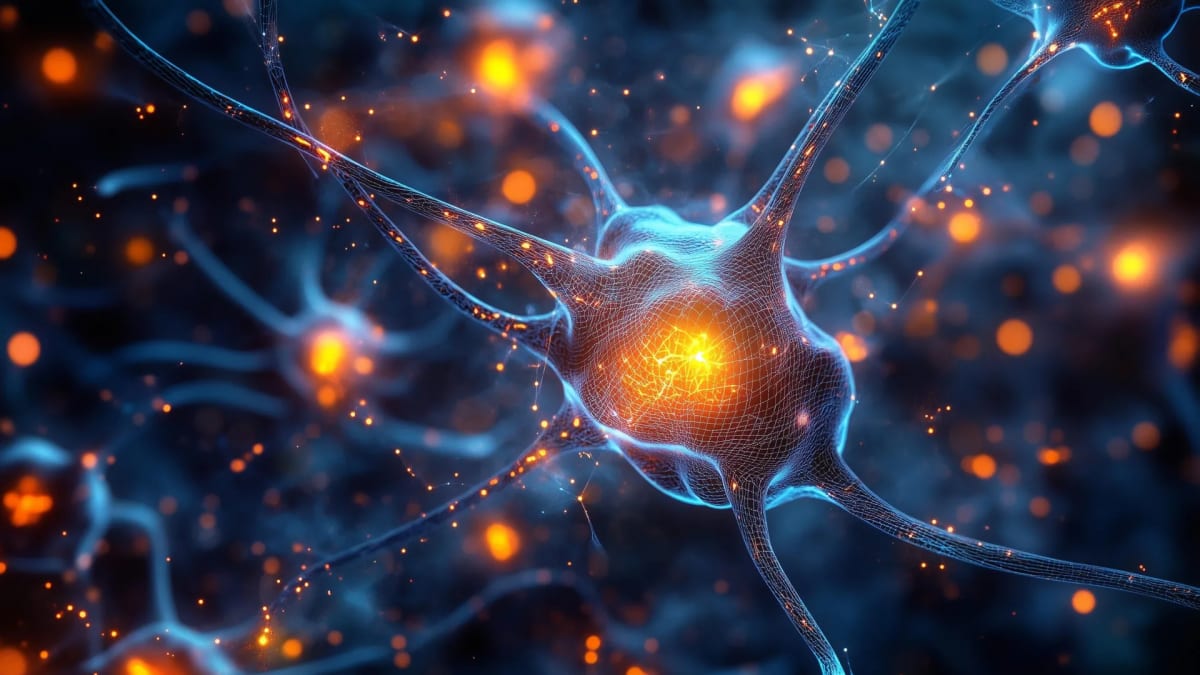
The discovery centers on a lattice of proteins called the membrane-associated periodic skeleton, or MPS. Until now, researchers thought this tiny structure just helped brain cells keep their shape.
The new findings published in Science Advances reveal something far more exciting. This hidden skeleton actually controls what enters neurons and when, acting like a bouncer at the door of every brain cell.
Ruobo Zhou, assistant professor at Penn State, helped discover the MPS back in 2013. His team spent years investigating its true purpose using super-resolution microscopy that can see structures 10,000 times smaller than a human hair.
They watched what happened when neurons absorbed nutrients and proteins through a process called endocytosis. This continuous uptake supports learning, memory, and normal brain maintenance.
The breakthrough came when researchers damaged sections of the MPS in laboratory-grown neurons. Suddenly, cells began absorbing material much faster, revealing that the lattice normally acts as a protective brake.
Even more fascinating, the structure can weaken itself through a feedback loop. When neurons need to respond quickly, increased uptake triggers signals that cut apart sections of the skeleton, opening more entry points for nutrients.
"You can think of it as a gatekeeper, guarding this physical barrier to not allow nutrient uptake to happen," Zhou said. "When a neuron needs to take in a specific nutrient, this gatekeeper will open the gates and let it in."
That flexibility helps healthy neurons. But when the system breaks down, especially during aging, it becomes dangerous.
The team created experiments mimicking early Alzheimer's disease by increasing levels of amyloid precursor protein (APP) in neurons. When they weakened the MPS, cells rapidly absorbed APP and converted it into amyloid-B42, the toxic fragment that builds up in Alzheimer's brains.
Neurons with damaged gatekeepers accumulated more toxic molecules and showed increased signs of cell death. Graduate student Jinyu Fei explained that aging neurons with compromised structures enter a vicious cycle of protein buildup, further structural damage, and eventual death.
The Bright Side
The MPS naturally deteriorates as we age, but knowing its protective role opens exciting treatment possibilities. Scientists can now explore drugs or therapies that stabilize this cellular skeleton before it breaks down.
Protecting the gatekeeper could slow or prevent the toxic protein accumulation that defines Alzheimer's disease. Instead of fighting symptoms after damage occurs, this approach targets the mechanism that allows harm in the first place.
The research transforms our understanding of how neurons protect themselves and points toward prevention strategies that could preserve brain health for millions.
Based on reporting by Health Daily
This story was written by BrightWire based on verified news reports.
Spread the positivity!
Share this good news with someone who needs it