Peru's New Mountain Telescope Will Hunt 'Impossible' Particles
Scientists are building a massive particle detector on a Peruvian mountain face to catch ultra-rare cosmic neutrinos that could reveal the universe's deepest secrets. The discovery of an "impossible" neutrino last year sparked a global race to find more.
A physicist is coming home to Peru with an audacious plan: turn an Andes mountain into a telescope that can see the most mysterious particles in the universe.
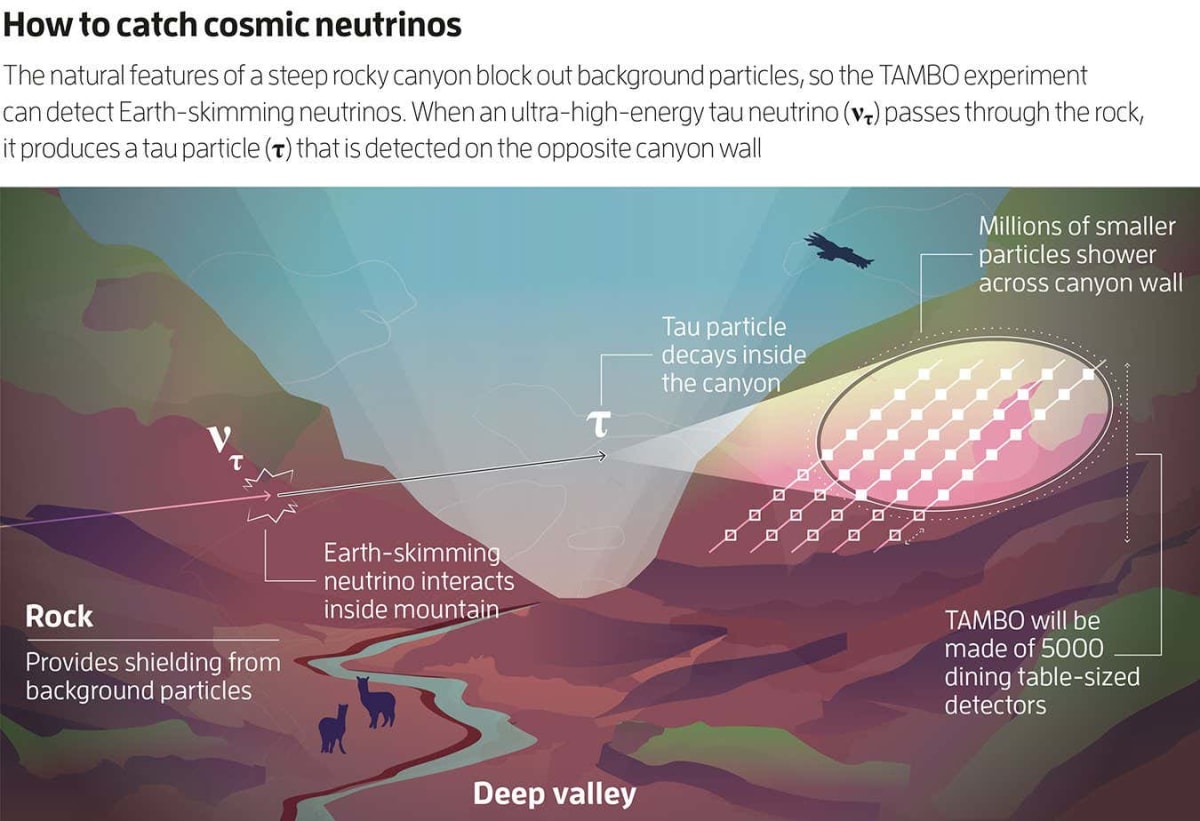
Carlos Argüelles-Delgado spent over a decade hunting neutrinos at the South Pole. Now he's leading construction of TAMBO, a new detector that will cover several square kilometers of near-vertical rock face in the Peruvian Andes with thousands of sensors.
The timing couldn't be better. Last year, scientists detected what seemed impossible: a neutrino so energetic it shouldn't exist. The particle carried thousands of times more energy than anything created at CERN, the world's most powerful particle collider.
"My mind couldn't process the news," Argüelles-Delgado said. "It was like somebody telling me about the existence of a new color."
Neutrinos are ghost particles that pass through everything, barely interacting with matter. Millions stream through Earth every second, but we've only caught a handful of the ultra-high-energy cosmic ones. Scientists think these extreme particles come from supermassive black holes or cosmic processes we've never observed before.
The particle detected last year might be the first "cosmogenic neutrino" ever seen. These are created when cosmic rays collide with ancient light from the Big Bang. Physicists predicted their existence in the 1960s but never found proof until now.
Here's the catch: to confirm that discovery and understand where these particles come from, scientists need to find many more. That requires detectors far larger than anything built before.
Why This Inspires
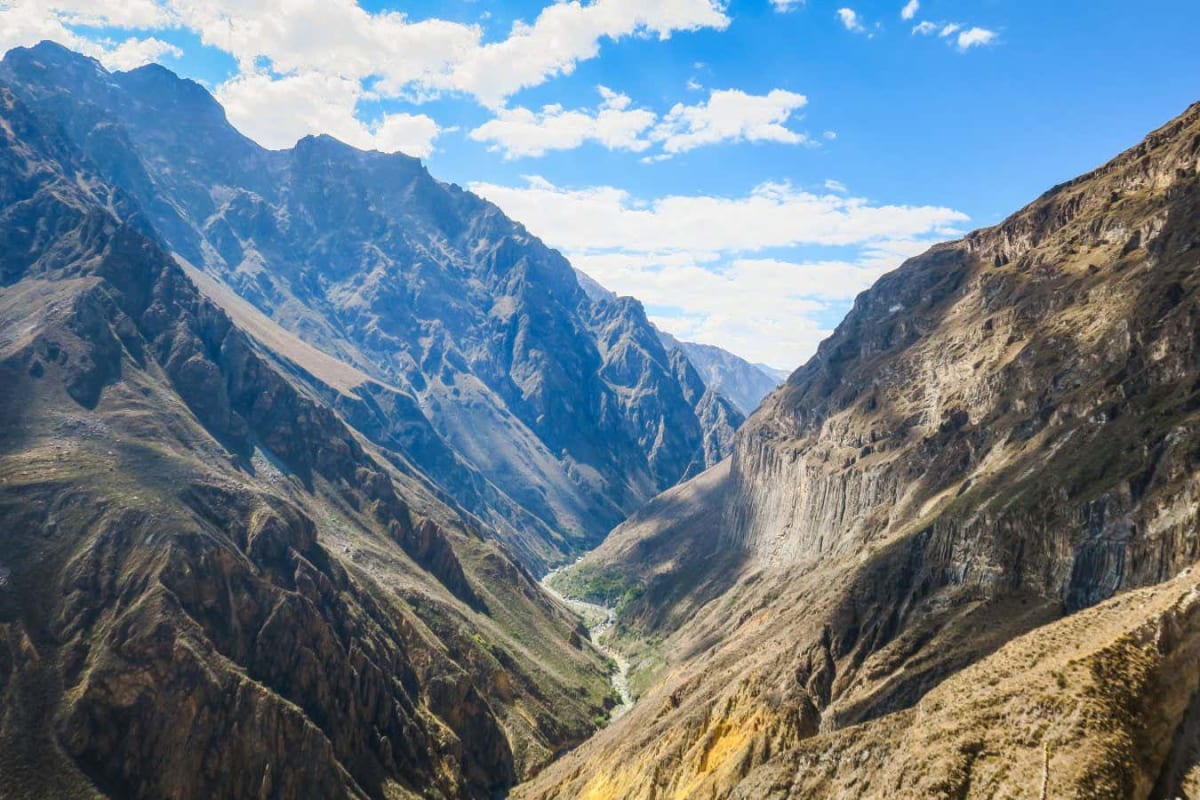
Argüelles-Delgado and his team searched Google Maps for the perfect location. They needed valleys about 4 kilometers deep and 3 to 5 kilometers wide. Only ten places on Earth fit those requirements, mostly in the Himalayas and Andes.
They chose Peru. At 5 kilometers above sea level, the Colca Canyon provides the perfect natural shield against background noise while offering enough space to catch these rare interactions.
The project faces unique challenges. The team must navigate potential landslides and work around nesting condors. But if successful, TAMBO will give scientists their first continuous view of the cosmic neutrino sky.
These particles carry encoded information about the universe's evolution. Finding more could solve the 100-year-old mystery of where cosmic rays come from and reveal cosmic accelerators we've never seen before.
What started as an "impossible" discovery is now opening a new window into the deepest layers of reality, and it's bringing cutting-edge physics home to the Andes.
More Images

Based on reporting by New Scientist
This story was written by BrightWire based on verified news reports.
Spread the positivity!
Share this good news with someone who needs it