Photographer Captures All 6 Planets in One Stunning Shot
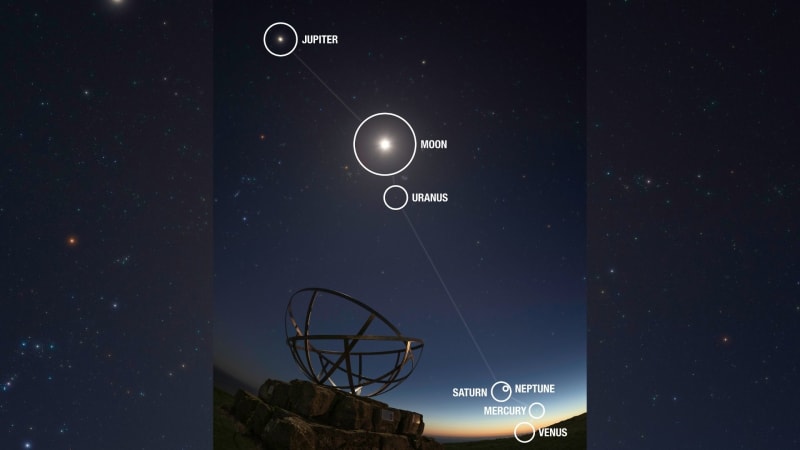
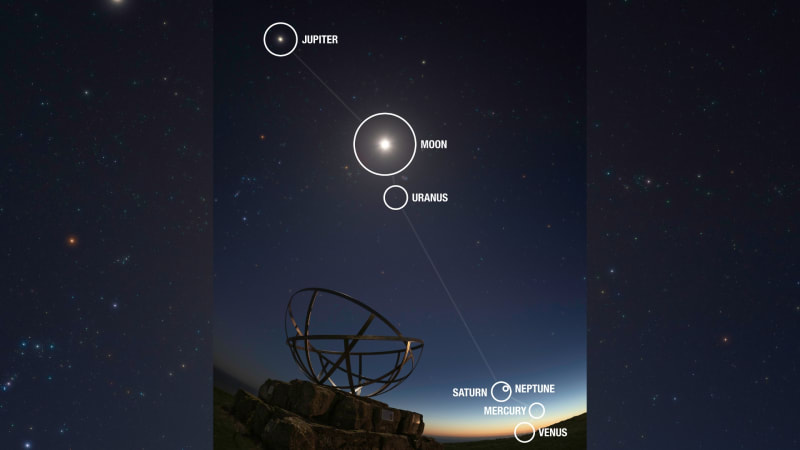
Award-winning photographer Josh Dury captured a rare six-planet parade stretching across nearly 180 degrees of sky from England's southern coast. The cosmic lineup, visible through February 28, includes Mercury, Venus, Jupiter, Saturn, Uranus, and Neptune in one breathtaking image.
Six of our solar system's planets lined up in a spectacular display this week, and one photographer managed to freeze the rare moment in a single, stunning shot.
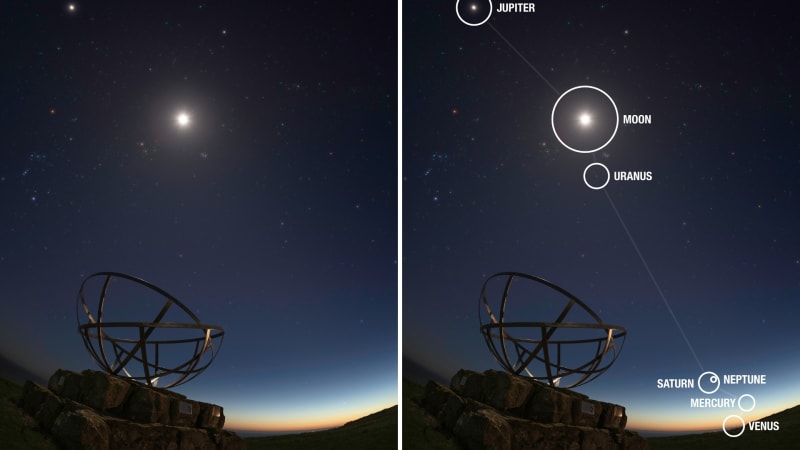
Josh Dury captured the cosmic parade from England's southern coast on Tuesday evening, just after sunset. Using an ultra-wide fisheye lens, he documented Mercury, Venus, Jupiter, Saturn, Uranus, and Neptune all at once, a feat that required capturing nearly 180 degrees of sky.
"As the light faded and with clear skies overhead, it was a veritable joy to witness the planetary parade," Dury told Space.com. Only Mars missed the celestial roll call, sitting on the opposite side of the Sun at dawn.
The challenge wasn't just technical. Dury had to wait for twilight to fade enough to reveal the fainter planets while working against a first-quarter moon's brightness. He used a special diffuse filter to boost the surface brightness of the distant worlds, making Neptune and Uranus visible alongside their brighter neighbors.
Venus appeared first after sunset, followed by Mercury and Saturn. Jupiter shone brightly in the southeast, with Uranus nestled near the famous Pleiades star cluster. The moon hung among them, a familiar companion to the planetary family portrait.
Why This Inspires
This rare alignment reminds us that wonder still exists above our heads, even when we're not looking up. While we rush through our daily routines, planets millions of miles away are performing an ancient dance that occasionally creates these perfect moments of cosmic choreography.
You don't need expensive equipment to witness it either. Through February 28, anyone with clear western skies can spot at least some of these planets with their own eyes during the half-hour window after sunset. Binoculars or a small telescope will reveal the fainter members of the parade.
Dury included a telecommunications memorial in his composition, creating what he calls "a narrative of the search for life on other planets." It's a poetic touch that connects our earthbound technology with the vast possibilities hanging in space above us.
The photographer noted this alignment differs from last year's even rarer event, when all seven naked-eye planets were visible simultaneously. But this year's show still offers something special: a reminder that our solar system occasionally lines up to put on a free show for anyone willing to step outside and look up.
More Images

Based on reporting by Space.com
This story was written by BrightWire based on verified news reports.
Spread the positivity!
Share this good news with someone who needs it