Photon From Brightest Cosmic Explosion Defied Physics
A particle of light from the biggest cosmic explosion since the Big Bang traveled 2 billion light years to Earth when physics says it should have been destroyed. Scientists may have solved the mystery using new physics that could unlock secrets of the universe.
Scientists just figured out how a photon did the impossible, and it might rewrite our understanding of how the universe works.
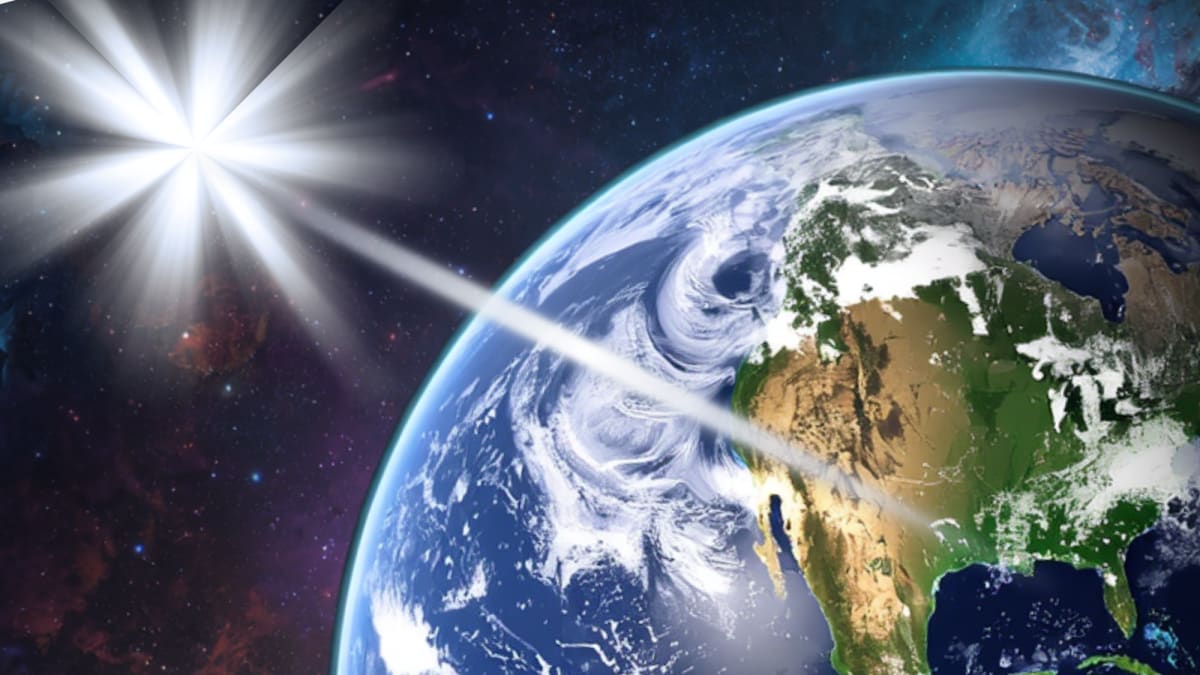
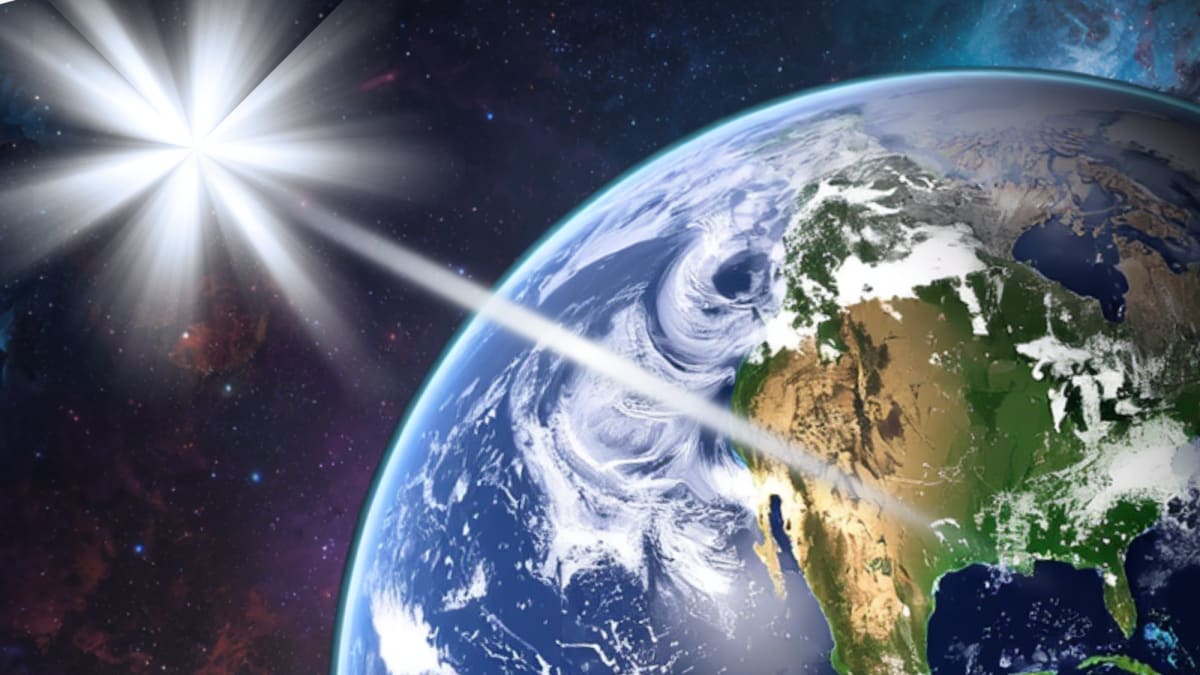
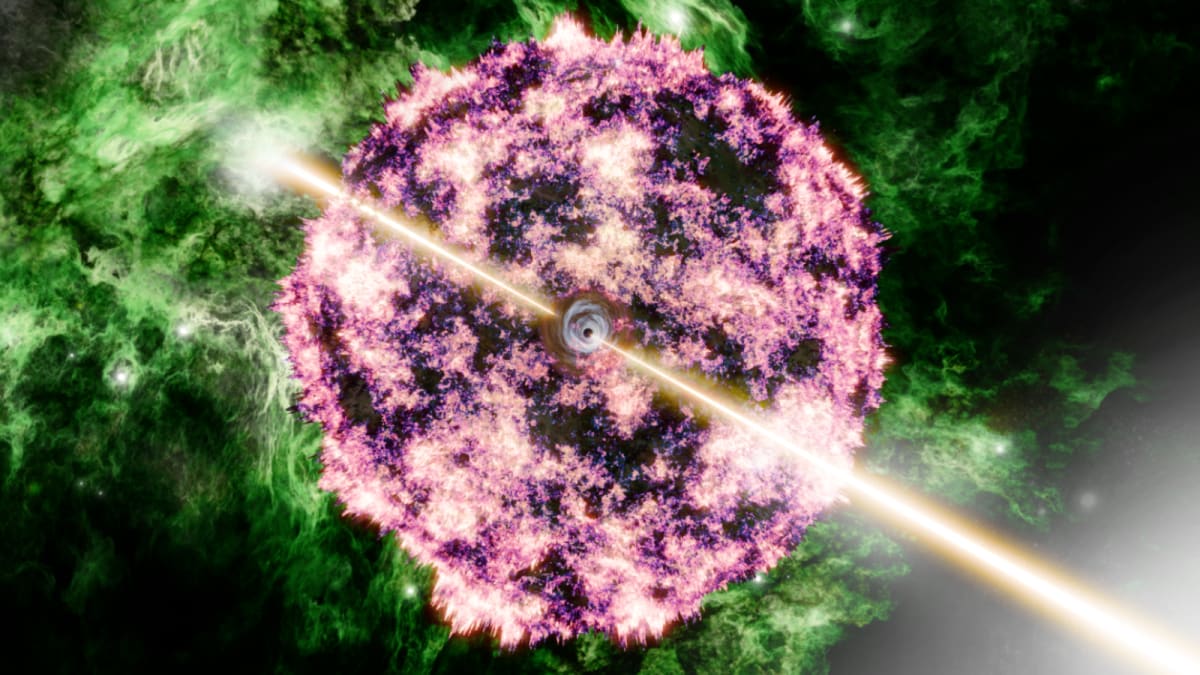
In October 2022, detectors captured the highest-energy photon ever recorded from a gamma-ray burst. The cosmic explosion, nicknamed "the BOAT" (brightest of all time), happened more than 2 billion light years away.
Here's the problem: that photon should never have made it to Earth. Space is filled with leftover radiation from the Big Bang called the cosmic microwave background. Any high-energy photon traveling that far should have bumped into these fossil photons and been destroyed long before reaching our planet.
"We started from a very simple question: how did this photon survive a journey that, according to known physics, should have destroyed it?" said Giorgio Galanti, lead researcher from the Italian National Institute for Astrophysics.
The team proposed a fascinating solution. They combined two cutting-edge physics ideas: tiny hypothetical particles called axion-like particles and a twist on Einstein's theory of special relativity.
In their model, the photon transformed into these special particles as it traveled through space, then converted back into a photon as it approached the Milky Way. At the highest energies, the photon essentially took a "fast lane" through a transparent universe, dodging the physics that would normally destroy it.
The Bright Side
The theory made a prediction: the highest-energy photons should arrive about one hour after lower-energy light from the same explosion. That's exactly what happened with the BOAT.
This breakthrough turns the entire universe into a natural laboratory. Scientists can now study quantum gravity at energies far beyond anything we can create in particle accelerators on Earth.
"If future observations confirmed this scenario, the universe would become a natural laboratory for studying quantum gravity at energies enormously higher than those achievable by any accelerator built on Earth," said team member Marco Roncadelli.
The research brings together two ideas that scientists had been exploring separately, creating a new framework for understanding how light behaves across cosmic distances. It suggests that at extreme energies, the rules of physics work differently than we thought.
Sometimes the universe shows us we still have so much to learn, and that's the most exciting discovery of all.
More Images

Based on reporting by Space.com
This story was written by BrightWire based on verified news reports.
Spread the positivity!
Share this good news with someone who needs it