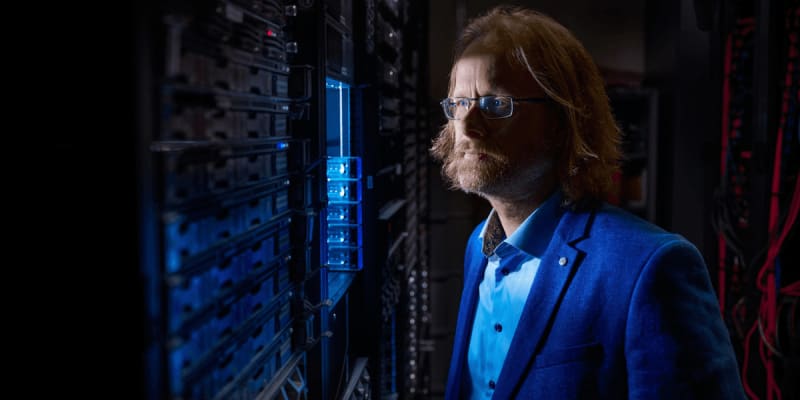
Physicist's Free Software Secures Half the Internet
A former nuclear physicist accidentally built the authentication software that helps half the world get online safely every day. His open-source project started as a hobby and became essential internet infrastructure.
When Alan DeKok wakes up each morning, roughly half the people on Earth will use his software to connect to the internet without even knowing it.
The former physicist never planned to revolutionize internet security. He just didn't want to lose the coding skills he'd picked up at work.
In 1999, DeKok started tinkering with authentication software in his spare time. He'd been working with RADIUS servers, the gatekeepers that verify your identity and password when you connect to a network. When he switched jobs, he wanted to keep practicing those skills.
So he created FreeRADIUS as a weekend project. The timing was perfect. No one else was actively developing open-source authentication servers, and companies needed exactly what he was building.
"Almost by accident, I became one of the more senior people in the space," DeKok says. What started as a hobby gradually consumed his life.
Today, FreeRADIUS authenticates users for most major internet providers, global banks, university Wi-Fi networks, and Fortune 50 companies. By 2008, when DeKok founded InkBridge Networks to support the software, 100 million people were already using it daily.
DeKok's path to internet security started on a strawberry farm outside Ottawa. Bored by tractors and heat, he gravitated toward computers and eventually studied nuclear physics at Carleton University.
During his master's degree, he worked at the Sudbury Neutrino Observatory, descending two kilometers into a nickel mine at dawn to purify water in one of the world's deepest clean rooms. His team achieved one atom of impurity per cubic meter of water.
But DeKok noticed something about the physics PhD students around him. They were fanatical about the field in ways he wasn't. So he pivoted to computing, bringing problem-solving skills from physics that gave him an edge.
"Methods are more important than knowledge," he explains. Physics taught him to break complex problems into manageable pieces, a skill that helped him catch up quickly in the tech industry.
The Ripple Effect
Being open source turned out to be FreeRADIUS's secret weapon. With little funding, DeKok couldn't compete with bigger companies on marketing or sales. But by making the software free and transparent, he built something that could stand on technical merit alone.
Now FreeRADIUS supports secure connections for billions of people across continents. When you log into your bank, connect to campus Wi-Fi, or authenticate with your internet provider, there's a good chance DeKok's code is working quietly in the background.
His advice for aspiring technologists? Prepare yourself for luck. "It's about being open to opportunities and having the skills to capitalize on them when they appear."
Most foundational technology remains invisible to the people it serves, much like nuclear physics. But DeKok's accidental career proves that sometimes the most important innovations start as simple side projects on quiet evenings.
More Images
Based on reporting by IEEE Spectrum
This story was written by BrightWire based on verified news reports.
Spread the positivity!
Share this good news with someone who needs it

%2Ffilters%3Aformat(webp)%2Fenglish-betterindia%2Fmedia%2Fmedia_files%2F2026%2F08%2F18%2Fbribefyi-2026-08-18-13-38-11.png)
