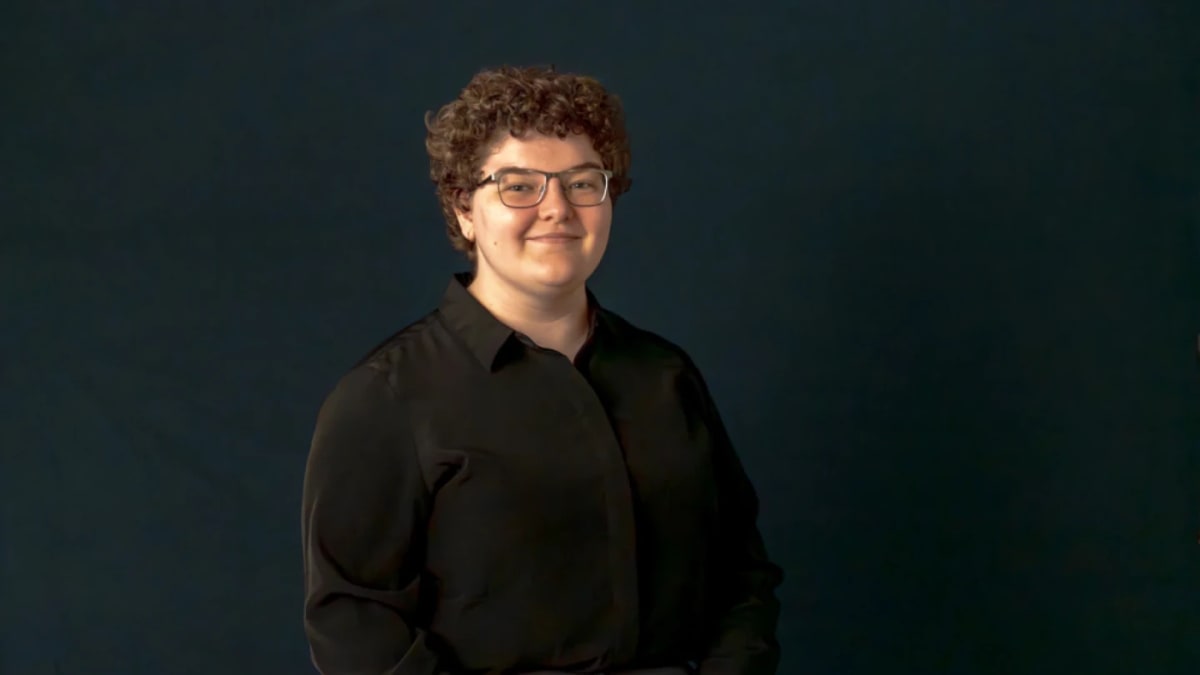
Physics Student Maps Galaxies Billions of Light-Years Away
A summer internship took MJ Keller from classroom theory to analyzing real data from galaxies in the early universe. Their work revealed important insights about how we measure star formation across cosmic time.
When MJ Keller looked at data from galaxies billions of light-years away, they weren't just completing an assignment. They were discovering how the tools scientists use to understand the universe can sometimes tell different stories.
Through the Society of Physics Students summer internship program, MJ spent 2025 at the Space Telescope Science Institute studying how galaxies formed in the early universe. Working with mentor Dr. Nimisha Kumari, they analyzed observations from the powerful Atacama Large Millimeter Array in Chile.
The work involved comparing different methods scientists use to calculate how quickly galaxies are forming new stars. MJ found something unexpected: one measurement technique produced clear, consistent patterns while another gave confusing results.
That discovery matters because understanding star formation rates helps scientists piece together the story of how the universe evolved. When measurement methods disagree, it highlights where our tools need improvement and reminds researchers to cross-check their findings.
Beyond the research desk, MJ connected with scientists working on related cosmic mysteries, from the epoch when the first stars lit up the universe to how we measure distances across space. The summer balanced intense scientific work with exploring Washington DC's museums and catching live orchestra performances.
Why This Inspires
The SPS internship program does something crucial for science's future. It takes students who've only experienced physics in textbooks and drops them into real research where answers aren't in the back of the chapter.
MJ gained hands-on experience with professional telescopes, learned to spot inconsistencies in data, and discovered what it feels like when classroom equations connect to actual galaxies. They also found mentorship and community that helps students see themselves as future scientists.
Programs like this ensure physics doesn't just stay in academia but reaches students ready to ask new questions and challenge existing methods. Every summer, dozens of undergraduate physicists get their first taste of discovery.
MJ's work on measuring star formation might seem distant from daily life, but understanding our cosmic origins connects us all to something vast and wondrous. One student spent a summer looking at ancient starlight and came back with insights that advance how we read the universe's history.
More Images
Based on reporting by Google: scientific discovery
This story was written by BrightWire based on verified news reports.
Spread the positivity!
Share this good news with someone who needs it