Plant Protein Discovery Opens Door to Cancer Treatment
Scientists at UC Davis have mapped the complete structure of augmin, a protein that shapes both plant cells and plays a role in human cancer and infertility. The breakthrough could lead to new medical treatments and stronger crop varieties.
Scientists have cracked the code of a tiny protein that connects banana curves to cancer treatment.
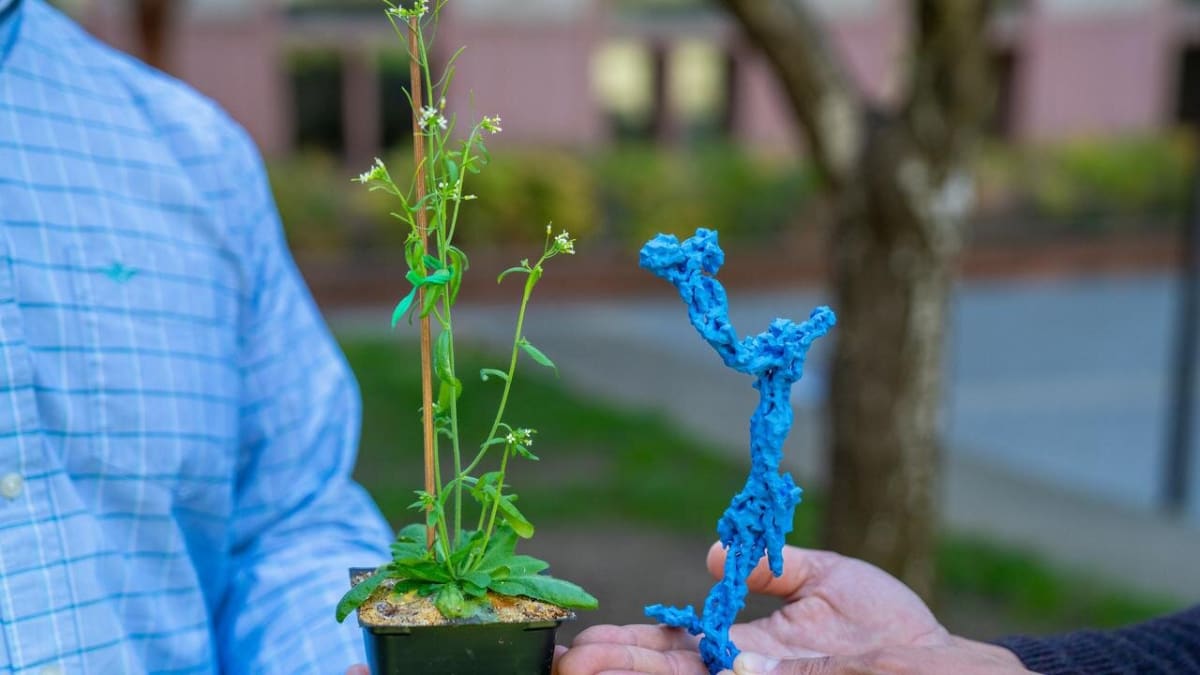
Researchers at the University of California, Davis, spent years mapping the structure of augmin, a protein complex that acts like a cellular skeleton in both plants and animals. Their detailed blueprint, published in Nature Communications, reveals how this microscopic structure controls everything from the shape of rice grains to the behavior of cancer cells.
Professor Jawdat Al-Bassam and Professor Bo Liu led the team that pieced together augmin's mystery. Using an electron microscope at temperatures colder than outer space, they discovered the protein looks like a tiny pitchfork. This shape helps it grab onto microtubules, the scaffolding inside cells that gives them structure and helps them divide.
The discovery matters because augmin defects cause infertility in humans. Some parts of augmin also show up in high amounts in cancer cells. Understanding exactly how this protein works could help scientists design new treatments for both conditions.
But augmin doesn't just affect human health. In plants, it controls how cells grow and stretch. When Liu reduced augmin in plant cells, their internal scaffolding became weak and disorganized.
This matters for farmers too. Cotton fibers start the size of a red blood cell and then stretch thousands of times longer, all guided by augmin and microtubules. Long grain rice gets its shape the same way. Even the juice sacs in oranges balloon up because of these protein structures.
Why This Inspires
What started as curiosity about plant shapes turned into a discovery that bridges two worlds. Most scientists thought augmin only existed in animals until Liu found eight augmin genes in a mustard plant back in 2011.
Now his collaboration with Al-Bassam shows that understanding plants can unlock answers about human disease. The same protein that helps cotton grow could point the way to cancer therapies.
The team's work also highlights how basic science leads to unexpected breakthroughs. By studying how plant cells maintain their shape, they've created a roadmap that medical researchers can use to target diseases.
The research opens doors in multiple directions at once: better crops that feed more people and new approaches to treating diseases that affect millions.
More Images
Based on reporting by Phys.org
This story was written by BrightWire based on verified news reports.
Spread the positivity!
Share this good news with someone who needs it

%2Fhttps%3A%2F%2Ftf-cmsv2-smithsonianmag-media.s3.amazonaws.com%2Ffiler_public%2Fcf%2F4d%2Fcf4d3176-9efd-4c9f-b643-2bc4f16839b6%2Fscripps_oceanography_geoscientist_lisa_tauxe_inserts_samples_i-32fad9c82902379b111b3658ab9c8a35.jpeg)