Poland Turns Old Factories Into Thriving City Destinations
Poland has transformed forgotten factories, breweries, and industrial sites into vibrant mixed-use neighborhoods that are now teaching the world a new way to rebuild cities. Six Polish cities rank among Europe's 15 fastest-growing urban economies, proving the model works.
Over the past two decades, Poland quietly perfected something remarkable: turning abandoned industrial ruins into places where half a million people want to spend their time each month.
Warsaw's Fabryka Norblina shows how it's done. The 19th-century metalworks now welcomes close to 500,000 visitors monthly, with its original factory layout still guiding how people move through restaurants, shops, offices, and public squares. Fifty industrial machines remain on display, connecting the past to a bustling present.
The transformation isn't just happening in one city. Across Poland, developers discovered massive industrial sites sitting empty near city centers—textile mills, breweries, shipyards—that Western Europe had already bulldozed or bypassed decades ago. Instead of demolition, Polish developers saw opportunity.
In Łódź, the sprawling Manufaktura project restored 62 acres of the former Poznański textile empire at a cost of $228 million. Nearly a million square feet of historic interiors came back to life, preserving the original sequence of halls and courtyards while adding modern uses.
What makes these projects special isn't just the pretty brick buildings. Each combines at least four different uses—typically food, retail, leisure, offices, homes, and culture—creating places that stay active morning to night, weekdays and weekends. They function like actual neighborhoods, not shopping centers pretending to be streets.
The Ripple Effect
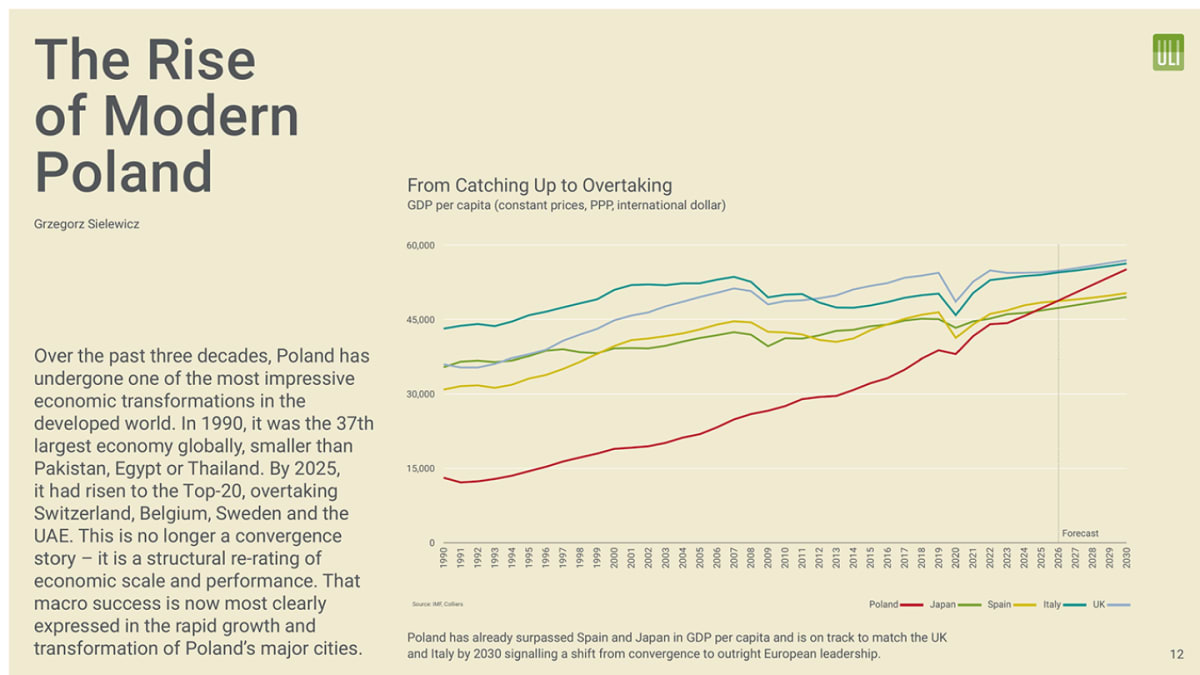
Poland's success is turning heads far beyond its borders. The country recently crossed the trillion-dollar GDP threshold and joined the G20 as the first Central and Eastern European nation in the group. Its GDP per capita already exceeds Spain's and Japan's, with the UK and Italy projected to be matched by 2030.
The development model emerged from unique circumstances but created something transferable. Almost every European city has underused industrial land near its center. Central and Eastern European cities especially face the same choice Poland did twenty years ago.
The formula works because it prioritizes complexity over simplicity. At Browary Warszawskie, a converted Warsaw brewery completed in 2021, networks of courtyards and internal streets create the permeability of historic European neighborhoods within a modern development. Public space isn't decoration—it's load-bearing infrastructure.
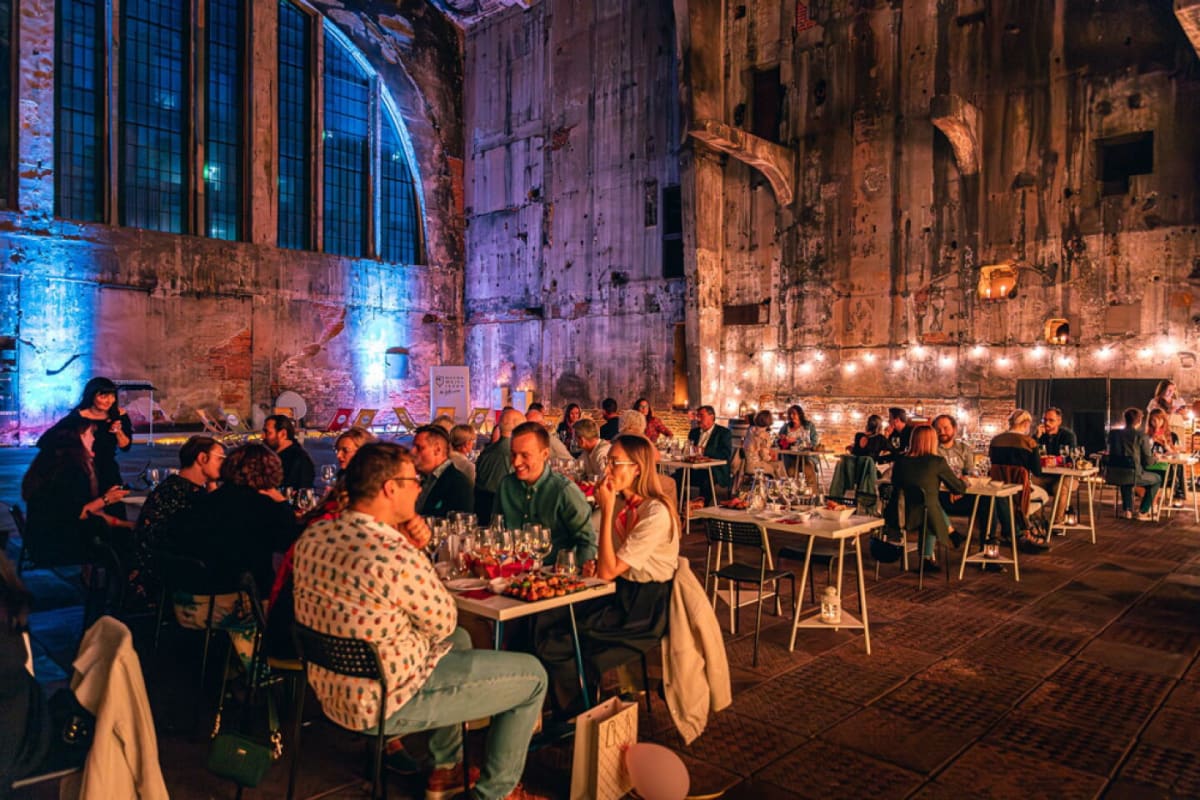
These aren't museums frozen in time. They're working pieces of cities where preserved factory machinery shares space with coffee shops, where winter ice rinks pop up in plazas framed by restored red brick, where year-round programming keeps communities engaged beyond their immediate needs.
Poland proved that old industrial bones can support vibrant new urban life, and now the rest of Europe is paying attention.
More Images


Based on reporting by Regional: poland development (PL)
This story was written by BrightWire based on verified news reports.
Spread the positivity!
Share this good news with someone who needs it