Polar Bear Cubs Emerge After 4 Months in Arctic Den
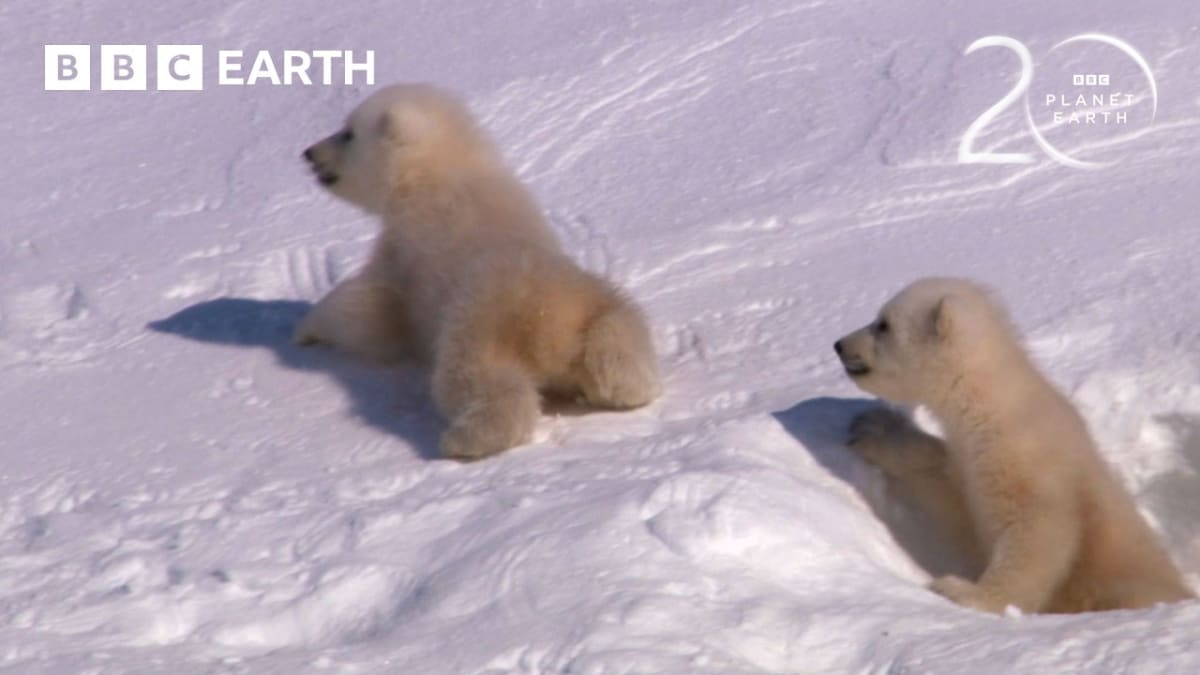
After four months in complete darkness, a polar bear mother and her newborn cubs have emerged from their winter den. BBC Earth captured the tiny cubs taking their very first wobbly steps into the world.
Deep in the Arctic, a polar bear family is stirring after spending an entire winter underground in total darkness.
BBC Earth's cameras were there to witness an incredible moment: two tiny polar bear cubs taking their very first steps outside their den. The footage is part of the network's celebration of 20 years of the groundbreaking Planet Earth series.
For four months, the mother bear stayed in the den nursing her cubs, born during the long Arctic winter. The cubs arrived hairless and blind, each weighing just over a pound.
Now, as spring arrives in the Arctic, the cubs are ready for their big debut. The footage shows them stumbling and tumbling in the snow, building strength in their legs for the first time.
This emergence is perfectly timed. The Arctic ice is returning, and the mother bear needs to get back to hunting seals to regain the weight she lost during her months of fasting. She hasn't eaten anything since entering the den last fall.
The cubs will stay close to their mother for the next two years, learning essential survival skills. She'll teach them how to hunt, how to navigate the ice, and how to survive in one of Earth's harshest environments.
Why This Inspires
These first wobbly steps represent pure resilience. The mother bear's ability to survive months without food while nursing her cubs showcases nature's remarkable adaptations to extreme conditions.
The timing of BBC Earth's release also reminds us of something important. For 20 years, Planet Earth has brought the natural world into our homes, helping millions of people connect with wildlife they might never see in person.
Every polar bear cub that survives those crucial early months is a small victory for the species. These babies represent hope and the continuation of life in one of the planet's most challenging habitats.
Based on reporting by BBC Earth
This story was written by BrightWire based on verified news reports.
Spread the positivity!
Share this good news with someone who needs it