Political Rivals Unite Against AI's Hidden Energy Crisis
Political opposites Bernie Sanders and Ron DeSantis unite to challenge AI data center expansion, revealing critical concerns about electricity infrastructure and potential economic disruption.
In an extraordinary moment of political alignment, Democratic Socialist Bernie Sanders and Republican Ron DeSantis have found unexpected common ground in challenging the rapid expansion of artificial intelligence data centers across the United States.
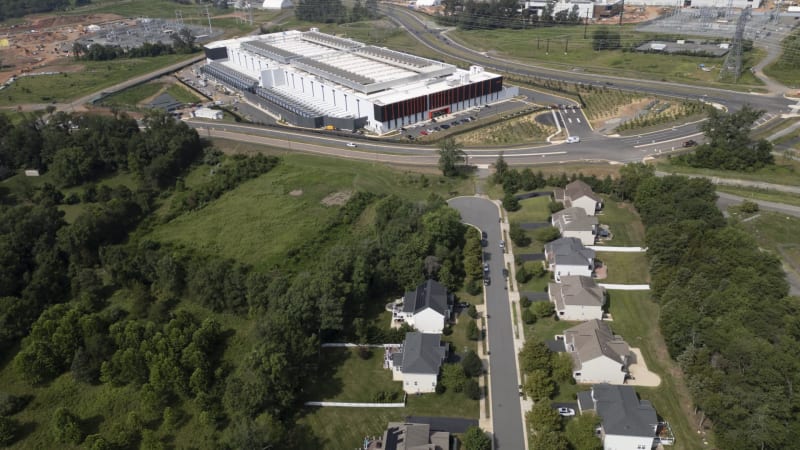
The unlikely partnership signals a potential turning point in how Americans view the technological revolution sweeping through their communities. Sanders, representing Vermont, and DeSantis, leading Florida, have both voiced serious concerns about the enormous electricity demands and potential economic disruptions posed by massive data center construction.
Sanders pulled no punches in a December 28th interview with CNN, calling for a national moratorium on data center development. 'Frankly, I think you've got to slow this process down,' he declared, questioning the tech industry's narrative of inevitable progress. 'What are they talking about? They're going to guarantee healthcare to all people? What are they going to do when people have no jobs?'
DeSantis, meanwhile, introduced an unprecedented AI bill of rights on December 4th that would empower local communities to block data center construction. His proposal directly challenges the White House's aggressive push to scale up AI infrastructure, potentially setting the stage for a significant political confrontation.
The concerns extend far beyond political rhetoric. According to the Energy Information Administration, residential electricity prices are projected to rise 4% nationwide in 2026, following a 5% increase in 2025. Energy experts like Abe Silverman, former general counsel for New Jersey's public utility board, warn that the current grid simply cannot support the massive energy demands of expanding data centers.
The crisis is most acute in the PJM Interconnection grid, which serves 65 million people across 13 states. By 2027, this critical infrastructure will be six gigawatts short of its reliability requirement—equivalent to Philadelphia's entire electricity demand. Joe Bowring, president of Monitoring Analytics, starkly describes the situation as 'at a crisis stage' and unprecedented in the grid's history.
With rising utility bills becoming a central political issue, the data center debate could significantly influence upcoming elections. The recent Virginia gubernatorial race, where Democrat Abigail Spanberger won decisively amid discussions of electricity costs, demonstrates how deeply these infrastructure challenges resonate with voters.
As Sanders and DeSantis demonstrate, the AI revolution's potential risks are transcending traditional political divides, forcing a crucial national conversation about technological progress, energy sustainability, and community impact.
Based on reporting by CNBC
This story was written by BrightWire based on verified news reports.
Spread the positivity! 🌟
Share this good news with someone who needs it