Porpoises Can 'Turn Down' Their Hearing to Block Ship Noise
Scientists discovered that harbor porpoises possess a natural defense against the ocean's growing noise pollution: they can dial down their hearing sensitivity when loud sounds approach. This biological superpower helps protect one of their most vital senses in an increasingly noisy marine world.
Porpoises just revealed an unexpected superpower that could help them survive in our noisy oceans.
Researchers at Aarhus University in Denmark discovered that harbor porpoises can actively reduce their hearing sensitivity when they sense incoming noise. It's like having built-in noise-canceling headphones that kick in right when you need them most.
This matters because porpoises depend entirely on their hearing to survive. They navigate, hunt, and communicate by emitting rapid click sounds and listening for returning echoes, much like a natural sonar system.
The ocean has become a challenging place for these animals. Ship engines create underwater noise that drowns out the sharp, brief clicks porpoises use to "see" their world. When a speedboat roars past, a porpoise might lose track of the fish it was chasing or fail to detect a fishing net in its path.
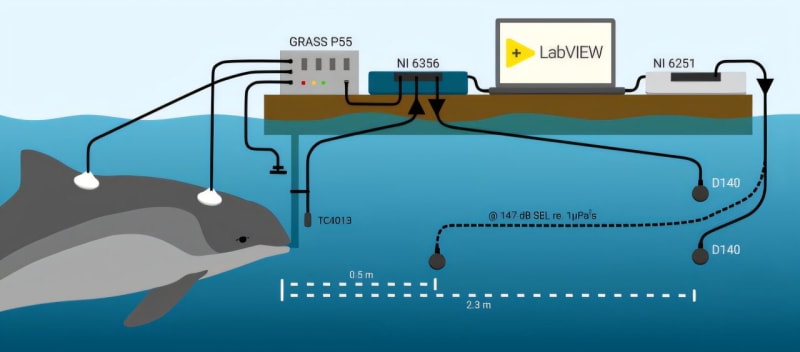
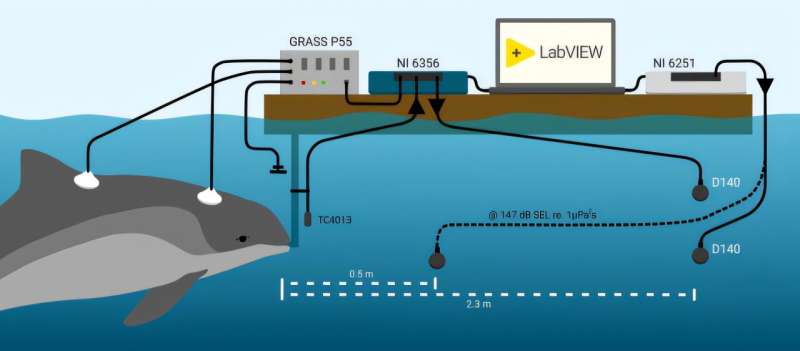
The research team worked with Freja, a harbor porpoise at Denmark's Fjord & Bælt research center. Using small electrodes attached to her back, scientists measured her brain's response to clicks and noise in real time. Freja was trained to stay still during the tests, allowing researchers to capture precise data about how her auditory system responds to different sound levels.
The results surprised everyone. Even when exposed to noise levels reaching 147 decibels (similar to standing just tens of meters from a passing vessel), Freja showed no hearing damage. Her hearing actually appeared slightly better immediately after the noise stopped.
Why This Inspires
This discovery offers real hope for marine mammals facing increasing ocean traffic. While ship noise can mask porpoise clicks at distances of several hundred meters, their ability to protect their hearing means temporary encounters with vessels may be less harmful than scientists previously feared.
Lead author Kristian Beedholm, a biologist at Aarhus University, explains that porpoises likely only stay near noise sources briefly. Combined with their natural hearing protection mechanism, this gives them a fighting chance in busier waters.
The research team still needs to understand exactly how this protection works inside the porpoise's inner ear. Looking deep into a living animal's hearing system is complicated, but the initial findings published in The Journal of the Acoustical Society of America provide a crucial foundation.
Understanding this natural defense mechanism could help scientists develop better guidelines for protecting marine life from underwater noise pollution. It shows that even in our increasingly loud oceans, nature has equipped some of its most vulnerable creatures with remarkable tools for survival.
More Images


Based on reporting by Phys.org
This story was written by BrightWire based on verified news reports.
Spread the positivity!
Share this good news with someone who needs it