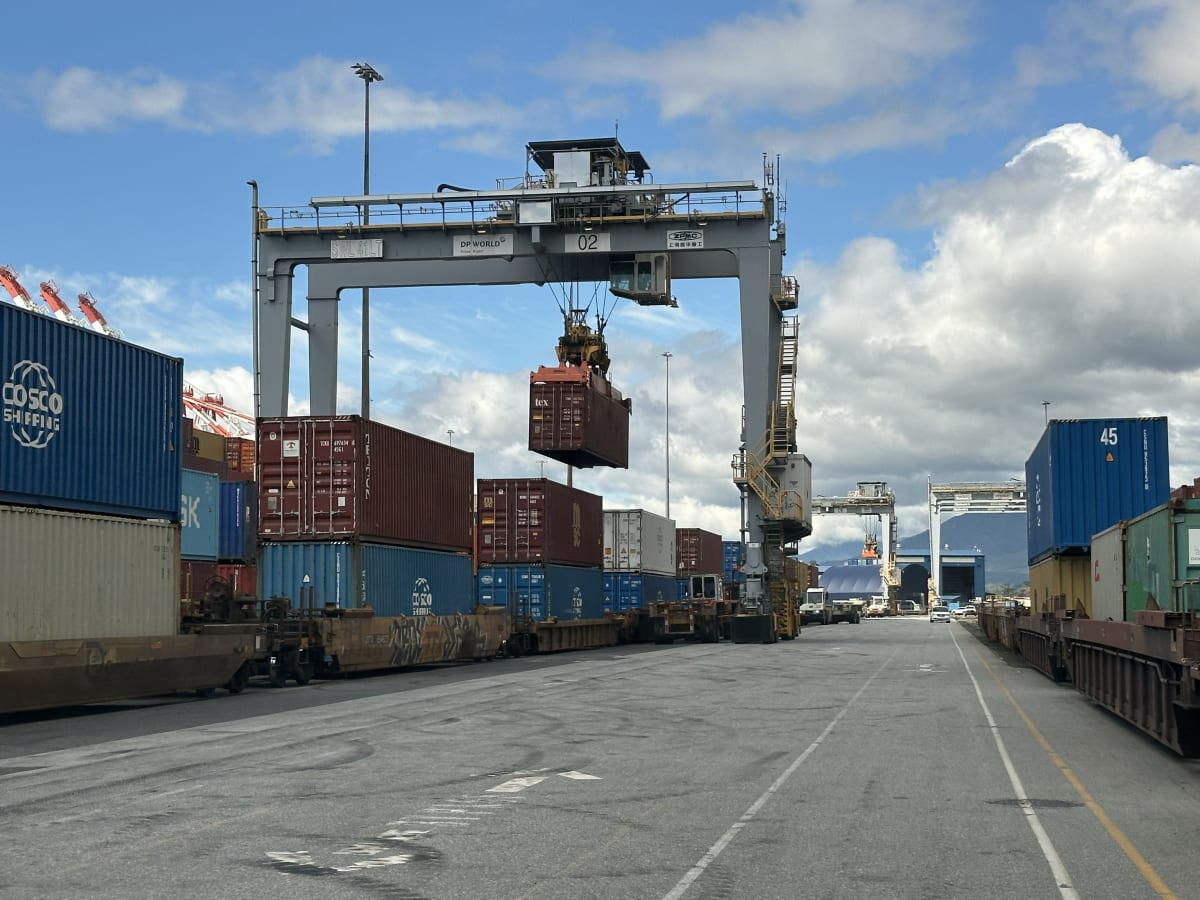
Port Crane Slashes Fuel Use 60% With Hybrid Retrofit
A Canadian port just proved you don't need to scrap old equipment to go green. DP World's first hybrid crane conversion is cutting diesel use by over 60% while keeping productivity high.
A massive cargo crane in Prince Rupert, British Columbia, is now running on 60% less fuel after a retrofit that proves older equipment can get a serious green upgrade.
DP World converted one of its diesel-powered rubber-tired gantry cranes into a hybrid diesel-electric system this June, avoiding an estimated 100 tonnes of carbon emissions annually. The conversion swaps the large diesel engine for a smaller 80 kW generator that charges onboard batteries as needed.
The system gets even smarter by capturing energy when containers are lowered and feeding it back into the battery. This regenerative technology, similar to what hybrid cars use, makes every lift and lower more efficient.
Unlike fully electric cranes that need external charging stations, this hybrid runs independently while delivering meaningful environmental benefits. That flexibility matters at busy ports where downtime costs money and delays shipments.
Doug Smith, CEO of DP World in Canada, called the retrofit "a practical example" of advancing decarbonization without sacrificing performance. The hybrid crane maintains the same productivity and reliability customers expect while dramatically reducing its environmental footprint.
The upgrade also brings bonus benefits beyond emissions. Maintenance costs are expected to drop thanks to the smaller engine, and overall crane reliability should improve with the modern hybrid system.
The Ripple Effect
This single crane conversion is just the start of something bigger. DP World operates six rubber-tired gantry cranes at Prince Rupert, with additional hybrid retrofits planned in coming years as part of a broader equipment modernization strategy.
The company is simultaneously testing a hydrogen-powered crane at the Port of Vancouver, exploring multiple pathways to cleaner port operations. Together, these projects demonstrate how different technologies can work across various port settings and operational needs.
The retrofit approach offers a blueprint for ports worldwide facing a common challenge: how to reduce emissions from existing equipment without replacing entire fleets. By proving that conversions work at scale while maintaining operations, DP World is showing that the path to cleaner ports doesn't require starting from scratch.
Ports handle about 80% of global trade, making them critical players in supply chain decarbonization. When one of the world's largest port operators successfully retrofits equipment with proven results, it signals that practical solutions exist today, not just in future planning documents.
This hybrid crane in Prince Rupert is moving containers with 60% less fuel, proving that progress and productivity can work hand in hand.
More Images

Based on reporting by Google News - Emissions Reduction
This story was written by BrightWire based on verified news reports.
Spread the positivity!
Share this good news with someone who needs it