£3.1M Funds AI Hunt for Antibiotics That Beat Superbugs
Scientists at Imperial College London just won £3.1 million to crack one of medicine's toughest puzzles: how to outsmart drug-resistant bacteria that kill millions. Their secret weapon combines artificial intelligence with chemistry to design antibiotics that can break through bacterial defenses.
A team of scientists just secured major funding to solve a problem that threatens to make common infections deadly again.
Researchers at Imperial College London received £3.1 million from The Gates Foundation, Novo Nordisk Foundation, and Wellcome to tackle antimicrobial resistance. Drug-resistant bacteria now kill people from simple urinary tract infections and pneumonia that antibiotics used to cure easily.
The team is focusing on Klebsiella, a sneaky bacteria that causes infections in hospitals and has learned to resist most antibiotics we have. Think of it as a fortress with incredibly strong walls that keep medicines from getting inside where they need to work.
Dr. Andrew Edwards from Imperial's Department of Infectious Disease explains the urgency simply: "We urgently need new antimicrobials to tackle the growing threat of drug-resistant infections. Klebsiella is a common cause of healthcare infections, and is frequently resistant to antibiotics."
The project brings together experts in chemistry, infectious disease, and machine learning to create what they call a "rulebook" for antibiotic discovery. Instead of randomly testing thousands of molecules hoping one works, they're using AI to predict which compounds can break through bacterial cell walls and destroy the bugs from inside.
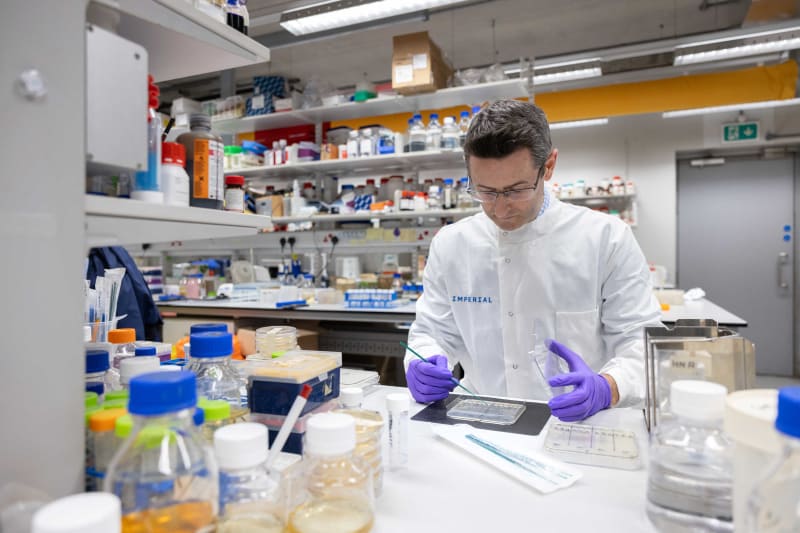
This work happens through the Fleming Initiative, a partnership between Imperial College London and Imperial College Healthcare NHS Trust. The team combines cutting-edge facilities like the Imperial Drug Discovery Hub and London BioFoundry with powerful computers that can test millions of possibilities virtually.
Professor Ed Tate from Imperial's Department of Chemistry emphasizes they're not hunting for one miracle drug. They're changing how the entire field discovers antibiotics, creating tools and datasets that researchers worldwide can use freely.
The Ripple Effect
The £3.1 million is part of a $60 million global effort supporting 18 research teams across 17 countries. Every breakthrough one team makes gets shared openly, multiplying the chances that someone somewhere will find the next generation of life-saving antibiotics.
Imperial's project will create an open blueprint showing researchers exactly where to aim their drug molecules and how to design them to reach their targets. Dr. Matthew Child from the Department of Life Sciences calls it "a team of diverse scientists converging on a challenge faced by humanity."
GSK, the pharmaceutical partner supporting this work, notes that the project is already attracting additional funding and interest from around the world. What started as one grand challenge is becoming a coordinated global push against one of medicine's biggest threats.
The collaboration proves that when foundations, universities, hospitals, and pharmaceutical companies pool their resources and share their findings freely, scientific progress accelerates for everyone.
This investment means researchers worldwide will soon have powerful new tools to design antibiotics that can outsmart even the trickiest superbugs.
Based on reporting by Google News - Breakthrough Discovery
This story was written by BrightWire based on verified news reports.
Spread the positivity!
Share this good news with someone who needs it