Princeton Robot Moves Like Origami Using Only Heat
Engineers just created a soft robot that moves without motors or gears, using only heat and origami-inspired folding patterns. The breakthrough could lead to tiny medical robots that deliver drugs inside the human body.
Imagine a robot so flexible it could fold itself into a paper crane and flap its wings, all without a single motor or gear inside.
Engineers at Princeton University just made that vision real. Their new soft robot moves using nothing but heat and the ancient art of origami, ditching the bulky mechanical parts that usually make robots rigid and heavy.
Here's how it works. The team used a special material called liquid crystal elastomer that has an ordered molecular structure inside. They 3D printed it zone by zone, programming each area to respond differently when heated.
These zones act like built-in hinges. When specific areas warm up, they contract in predictable patterns, causing the robot to fold and unfold exactly as designed.
The clever part is the control system. The researchers embedded flexible circuit boards with heating elements directly into the material during printing. Temperature sensors track the movement and adjust for tiny errors, keeping the robot accurate even after hundreds of folds.
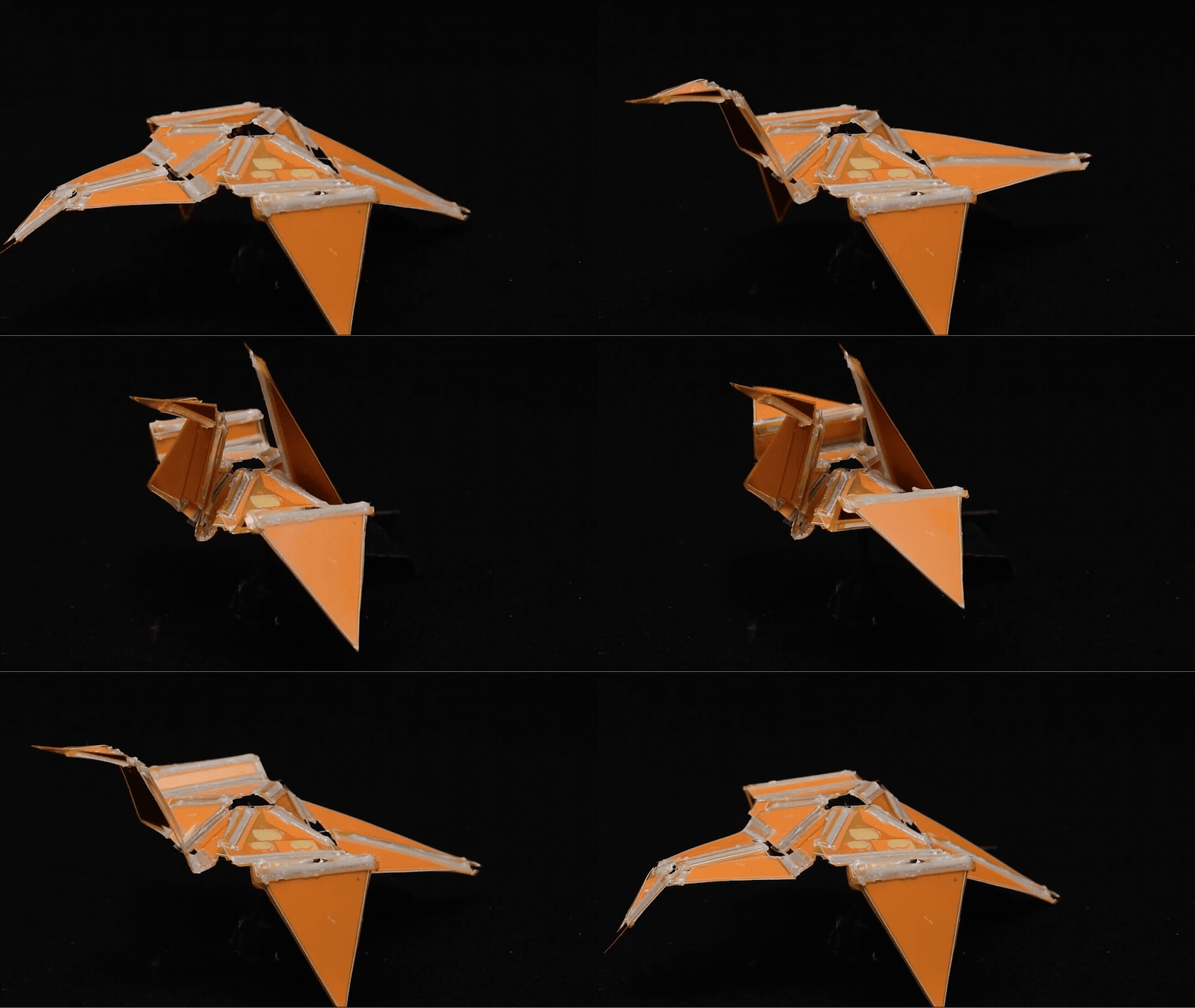
To prove it works, they built a robotic crane that flaps its wings on command. The origami bird moved repeatedly with no wear or distortion, returning perfectly to its starting shape every time.
Why This Inspires
Soft robots have always promised to revolutionize medicine and manufacturing, but traditional motors kept them bulky. This breakthrough changes that equation completely.
Without rigid mechanical parts, these robots could squeeze through tight spaces that current machines can't reach. They could handle delicate objects without crushing them or navigate inside the human body to deliver medicine exactly where it's needed.
David Bershadsky, one of the researchers, points out the real innovation: "We showed integration of a complex system where we have local heating control. We can control activation depending on where we heat."
The system still lives in the lab for now, but the team designed it with real-world production in mind. They used commercially available materials and printing methods that could scale up easily.
The flapping crane might seem simple, but it proves something profound: robots don't need hard parts to do hard jobs. Sometimes the softest approach opens the most possibilities.
More Images


Based on reporting by New Atlas
This story was written by BrightWire based on verified news reports.
Spread the positivity!
Share this good news with someone who needs it