Printed Artificial Neurons Talk to Real Brain Cells
Scientists have created tiny, printed artificial neurons that can communicate with living mouse brain cells, opening doors to smarter brain implants and energy-efficient AI. The breakthrough could help people control prosthetic limbs with their thoughts and may one day restore function lost to diseases like Alzheimer's.
Engineers just built artificial neurons that speak the same language as your brain, and the implications are stunning.
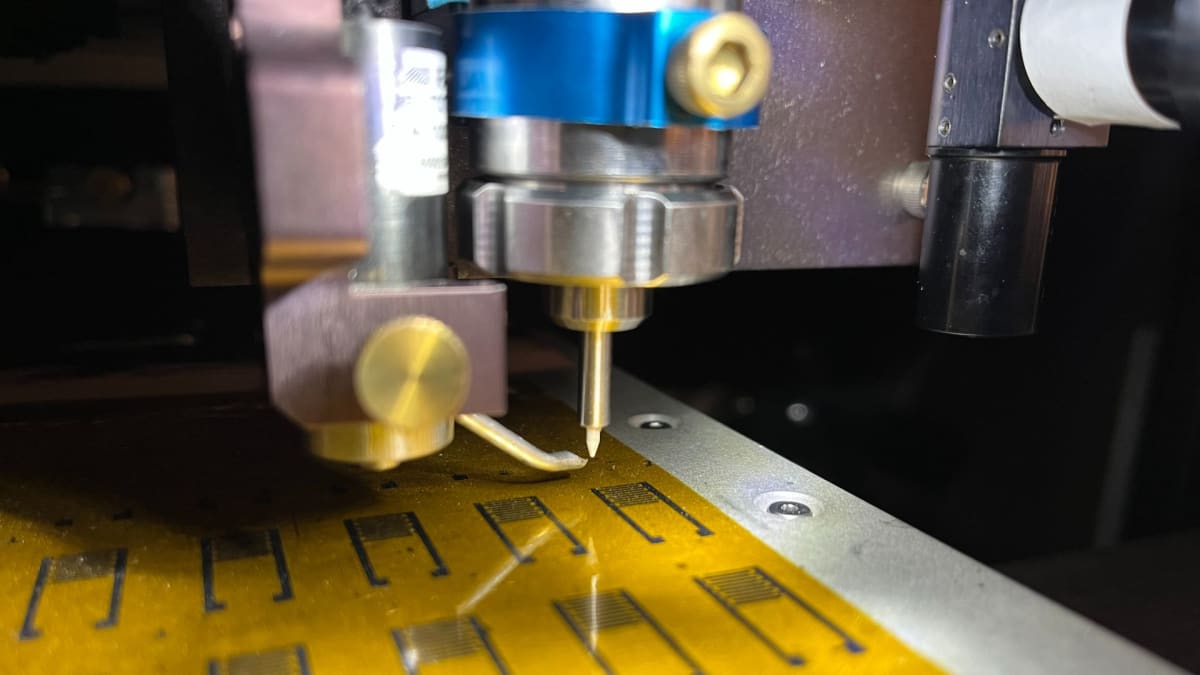
A team at Northwestern University used a special printer to create tiny artificial neurons on flexible material. These lab-made brain cells can actually communicate with real mouse neurons, mimicking the complex patterns of how brain cells naturally fire.
The innovation solves a problem scientists have wrestled with for years. Traditional silicon chips are rigid and communicate in simple on-off signals, nothing like the nuanced conversations happening between real neurons. Previous artificial neurons were either too slow or too fast to match natural brain activity.
The secret ingredient turned out to be something researchers used to consider a nuisance. The team printed their neurons using special inks containing molybdenum disulfide and graphene onto a flexible polymer base. When they carefully heated the polymer, it created tiny energy pathways that release electricity in bursts, just like real neurons spiking.
"We are trying to mimic the brain as faithfully as possible," said study co-author Mark Hersam, a professor of materials science and engineering at Northwestern. By adjusting how the polymer breaks down, the team can create different firing patterns, from single spikes to rapid bursts.
The Ripple Effect spreads in two exciting directions. First, this could revolutionize brain-computer interfaces. People with paralysis could control prosthetic limbs or communication devices more naturally because the artificial neurons speak the brain's native language. The flexible, responsive materials slot into brain tissue far more seamlessly than current rigid implants.
Second, the technology points toward neuromorphic computers that think more like brains than calculators. These computers could handle massive amounts of data while using far less energy than current AI systems. As artificial intelligence demands grow, brain-inspired computing offers a sustainable path forward.
The research team published their findings April 15 in the journal Nature Nanotechnology. Down the road, scientists hope artificial neurons might even replace damaged nerve cells or restore memory and function in degenerative diseases.
The breakthrough reminds us that sometimes the biggest leaps forward come from working with nature instead of against it.
More Images


Based on reporting by Live Science
This story was written by BrightWire based on verified news reports.
Spread the positivity!
Share this good news with someone who needs it