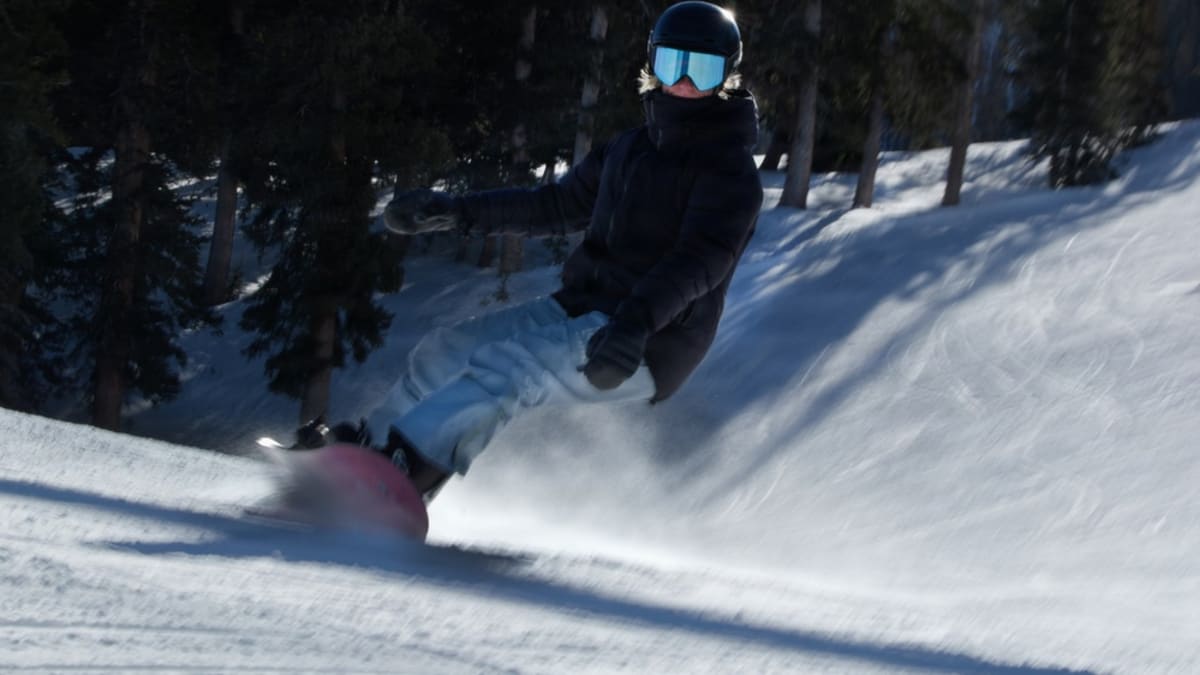
Public Lands Shaped America's First Olympic Snowboarder
Shannon Dunn-Downing won America's first Olympic snowboarding medal in 1998, training not in private facilities but on public lands in Colorado. Her story reveals how 116 ski resorts on U.S. Forest Service land create champions while staying open to everyone.
America's first Olympic snowboarding medalist didn't train at an elite facility. She learned to fly down mountains that belong to all of us.
Shannon Dunn-Downing made history in 1998 when she became the first American to win an Olympic medal in snowboarding at the Nagano Games. That year marked snowboarding's Olympic debut, when the sport was still considered counterculture and fighting for legitimacy.
Her path to that podium started in the most democratic way possible. After moving from suburban Chicago to Steamboat Springs, Colorado as a child, Dunn-Downing found her playground in the mountains managed by the U.S. Forest Service.
During the 1980s and 1990s, many popular ski resorts banned snowboarding entirely. But public lands offered something private clubs couldn't: unrestricted access to anyone willing to hike up and ride down.
"Every Olympian that I know has started with humble beginnings," Dunn-Downing said. "You just go up with your family because your family likes to be in the outdoors, and you just learn how to ski or snowboard."
Those public mountains became her training ground. The trails and backcountry slopes didn't require memberships or fees, just determination and a willingness to show up.
The Ripple Effect
Today, 116 active ski resorts operate on National Forest System land, accounting for more than 60% of America's skiable terrain. These resorts function through special use permits that allow private operators to build infrastructure while keeping the land publicly owned.
This partnership creates a remarkable outcome. World-class athletes train on the same mountains where families take their first runs, where kids discover their passion, where the next generation of Olympians might be learning right now.
"They live in these communities, they train in these communities, and they dream of Olympic gold in these communities," said Roger Poirier, Recreation Staff Officer in the White River National Forest. "The Forest Service is the backdrop to all of it."
The system supports local economies built around recreation and tourism while maintaining conservation standards. It keeps land accessible to everyone, not just those who can afford exclusive memberships.
For Dunn-Downing, the mountains remain essential to her life beyond competition. She now brings her own family outdoors, creating connections that strengthen in the absence of screens and distractions.
"When we're outdoors in the elements, we're pushing our bodies and our minds," she said. "We're doing something together away from our phones and are completely disconnected. Because of that disconnection, we are completely connected."
Her Olympic medal represents more than athletic achievement. It proves that champions can emerge from anywhere when access remains open, when public lands stay public, and when mountains welcome everyone who shows up ready to climb.
Based on reporting by Google News - Olympic Medal
This story was written by BrightWire based on verified news reports.
Spread the positivity!
Share this good news with someone who needs it