Pulitzer Winner Reveals Animals' Hidden Sensory Worlds
A Pulitzer Prize-winning science journalist is opening people's eyes to how animals experience reality in ways humans can't even imagine. His Earth Day discussion explores the extraordinary sensory abilities that let creatures perceive a completely different world than we do.
📺 Watch the full story above
Imagine living in a world where you could see ultraviolet light, sense electrical fields, or navigate using Earth's magnetic poles. That's everyday reality for countless animals sharing our planet.
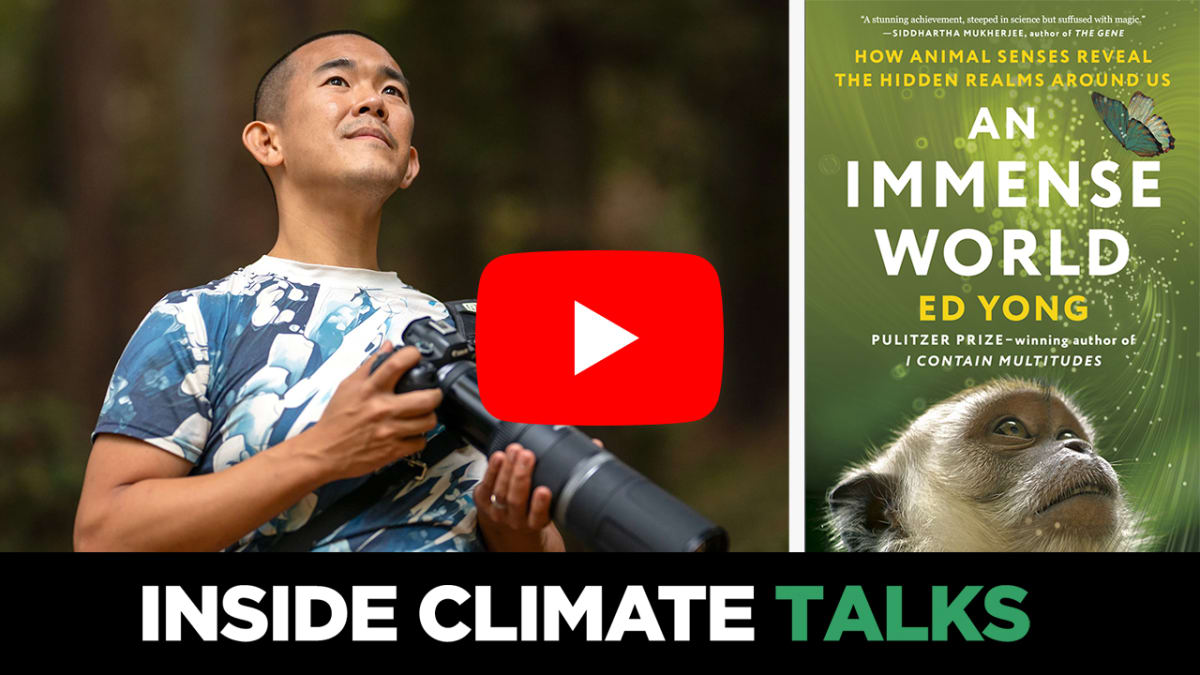
Ed Yong, the Pulitzer Prize-winning science journalist behind "An Immense World," recently sat down for an Earth Day conversation about the extraordinary sensory experiences of animals. His work explores a concept called "Umwelt," the unique parts of reality each species can perceive and experience.
The idea is beautifully simple yet mind-expanding. Every animal lives in its own sensory bubble, tuned to detect exactly what it needs to survive. While humans rely heavily on sight and sound, other creatures have unlocked entirely different channels of information.
Consider the star-nosed mole, which touches the world faster than we can see, or the elephant seal, which can sense a fish's heartbeat from across a murky ocean. Bees view flowers in ultraviolet patterns invisible to us, while snakes detect the heat signatures of their prey in total darkness.
Yong's exploration helps us understand that our human experience represents just one tiny slice of reality. We're essentially walking around with only a few channels tuned in, while nature's full broadcast includes hundreds of stations we can't access.
Why This Inspires
This perspective shift does more than satisfy curiosity. It deepens our connection to the natural world by revealing just how much complexity and wonder surrounds us every day.
When we recognize that a humble bumblebee experiences flowers as electric fields and UV roadmaps, or that a dog lives in a universe of scents we'll never know, it transforms how we see our fellow creatures. They're not simpler versions of us but rather sophisticated beings perfectly adapted to their own rich realities.
Understanding these sensory worlds also helps scientists develop better conservation strategies. Recognizing that sea turtles navigate by magnetic fields, for instance, has helped researchers understand how coastal development disrupts their ancient migration routes.
The discussion is part of a series honoring Earth Day by exploring humanity's relationship with nature. It reminds us that protecting biodiversity isn't just about saving species, it's about preserving entire universes of perception we're only beginning to understand.
As human activity increasingly reshapes the planet, learning to see through other creatures' senses helps us recognize impacts we might otherwise miss. Light pollution doesn't just bother us, it disrupts the navigation systems of migrating birds and the hunting abilities of nocturnal predators.
The more we understand about animal perception, the more we realize how much we share this planet with brilliant specialists, each exquisitely tuned to their ecological niche.
Yong's work invites us into a more generous and curious relationship with the living world, one creature's extraordinary perception at a time.
Based on reporting by Inside Climate News
This story was written by BrightWire based on verified news reports.
Spread the positivity!
Share this good news with someone who needs it