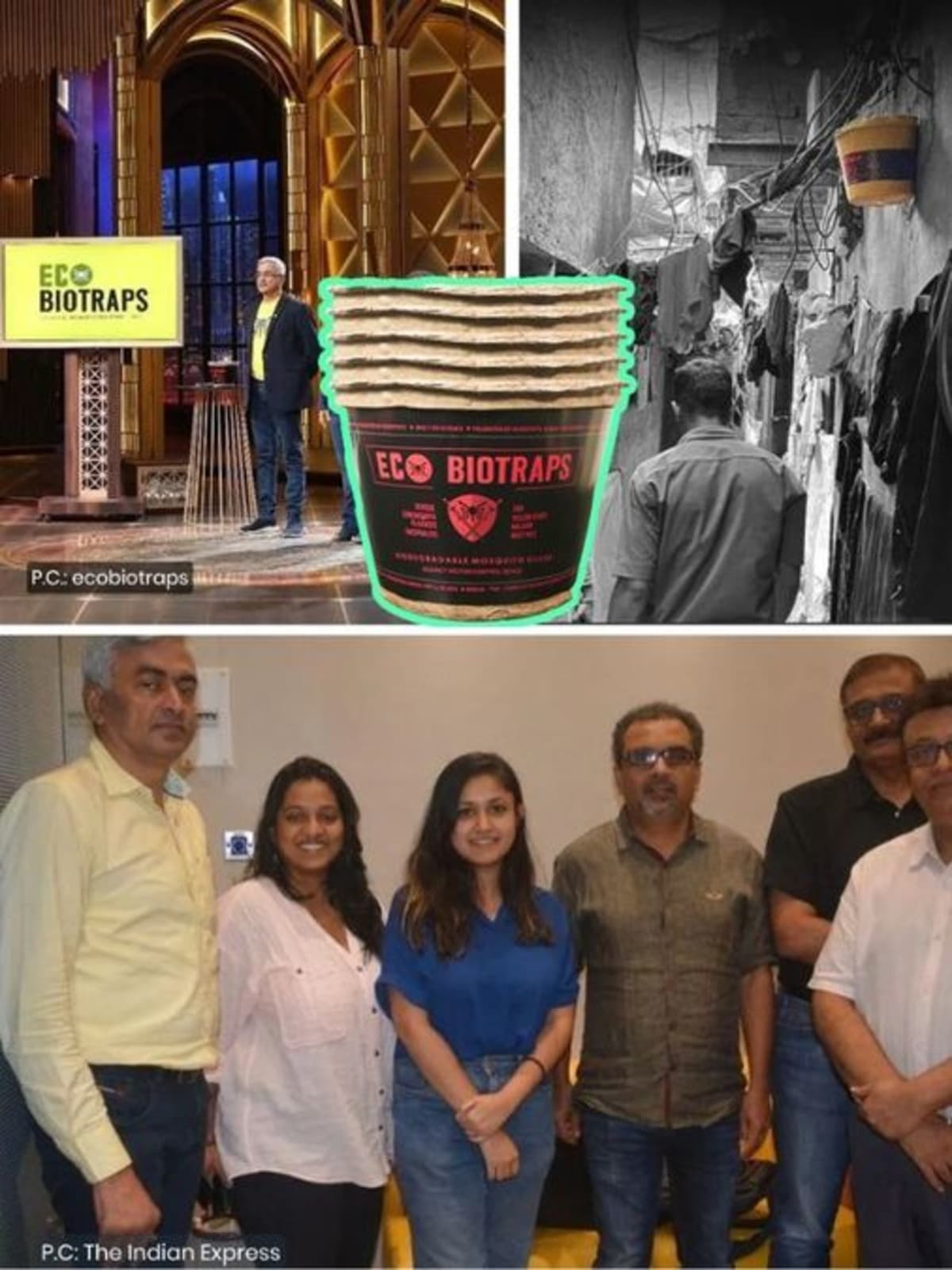
Pune Engineer's $6 Mosquito Trap Stops Dengue at Source
A simple cardboard trap costing just 500 rupees is breaking the malaria and dengue cycle by stopping mosquitoes before they hatch. After seven years of development, it's already protecting 80,000 people in Mumbai with zero electricity needed.
Prasad Phadke walked away from his corporate career to solve a problem that kills hundreds of thousands of people each year: mosquito-borne diseases.
His solution doesn't zap or poison adult mosquitoes. It stops them from ever being born.
The Eco BioTrap looks deceptively simple. Made from recycled cardboard, plant-based attractant, and a growth regulator, it costs around 500 rupees (about $6) and holds two liters of water for up to six weeks. Female mosquitoes think they've found the perfect nursery for their eggs, but the larvae inside never reach adulthood.
The breakthrough came after a frustrating encounter with mosquito swarms in San Francisco. Phadke and his team asked themselves why, despite all our technological advances, we still can't control these tiny killers. Their answer was to interrupt the breeding cycle itself.
Making biodegradable cardboard hold water for over a month turned out to be the hardest part. It took seven years, five different versions, and patents in more than 50 countries to crack the formula.
Then came the real test: Dharavi, one of Mumbai's most densely populated areas. Working with the city's municipal corporation and ICICI Foundation, the team deployed 3,000 traps monthly across neighborhoods housing 80,000 people. The pilot ran for eight months, covering roughly 10,000 households.
Scientists reported strong results. The trap worked without electricity, posed no environmental risk, and required minimal user training. Each unit covers about 400 square feet and can be fully recycled after use.
The Ripple Effect
The impact goes beyond killing mosquitoes. Every trap that stops larvae from maturing prevents hundreds of disease-carrying adults from entering homes, schools, and public spaces. In areas where dengue and malaria burden healthcare systems and keep children out of school, breaking the breeding cycle means fewer infections, fewer hospital visits, and fewer lives disrupted.
The technology is now protected by patents across 50 countries, opening doors for similar pilots worldwide. Other mosquito-dense regions could adapt this low-cost, electricity-free approach to their own public health challenges.
What started as frustration with buzzing insects became a scalable solution that puts prevention ahead of reaction. Sometimes the most powerful innovations are the ones that stop problems before they start.
Based on reporting by The Better India
This story was written by BrightWire based on verified news reports.
Spread the positivity!
Share this good news with someone who needs it


