Quadriplegic Man Flies Drones With His Head
Christopher Hills dreamed of flying since childhood, but cerebral palsy left him unable to use his arms or legs. Now the 29-year-old video editor has invented an app that lets him pilot drones using only head movements.
Christopher Hills spent his childhood in Queensland schoolyards imagining himself weaving through trees in a small plane. For a quadriplegic boy with cerebral palsy, it seemed impossible.
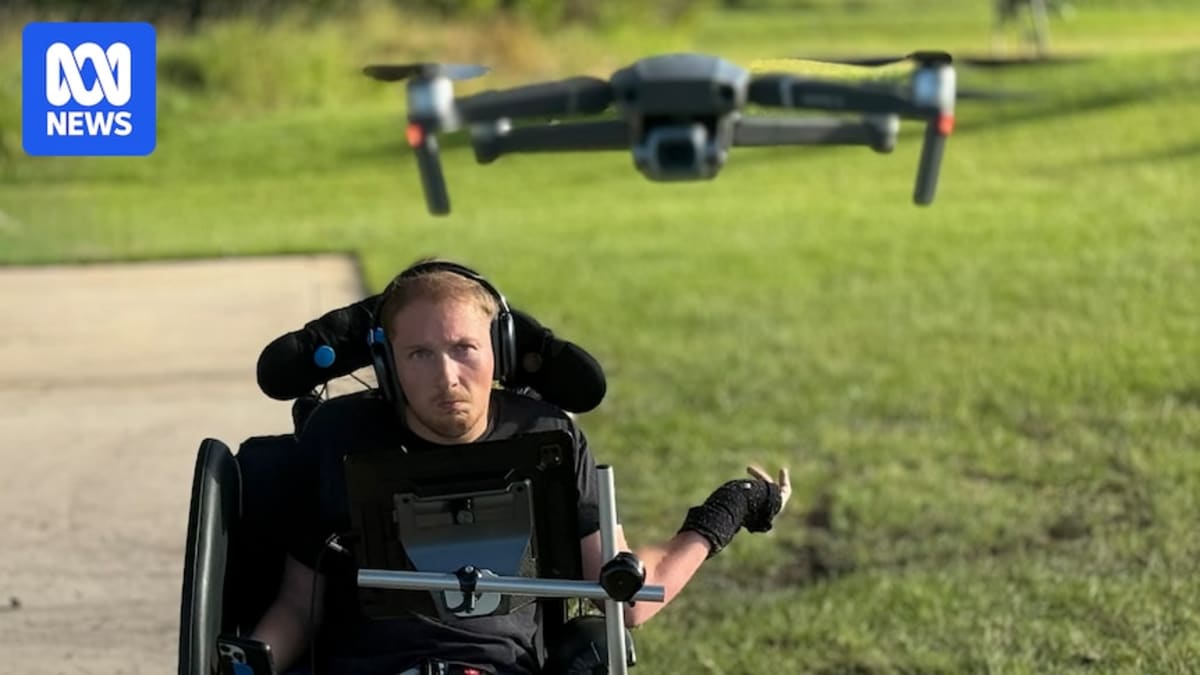
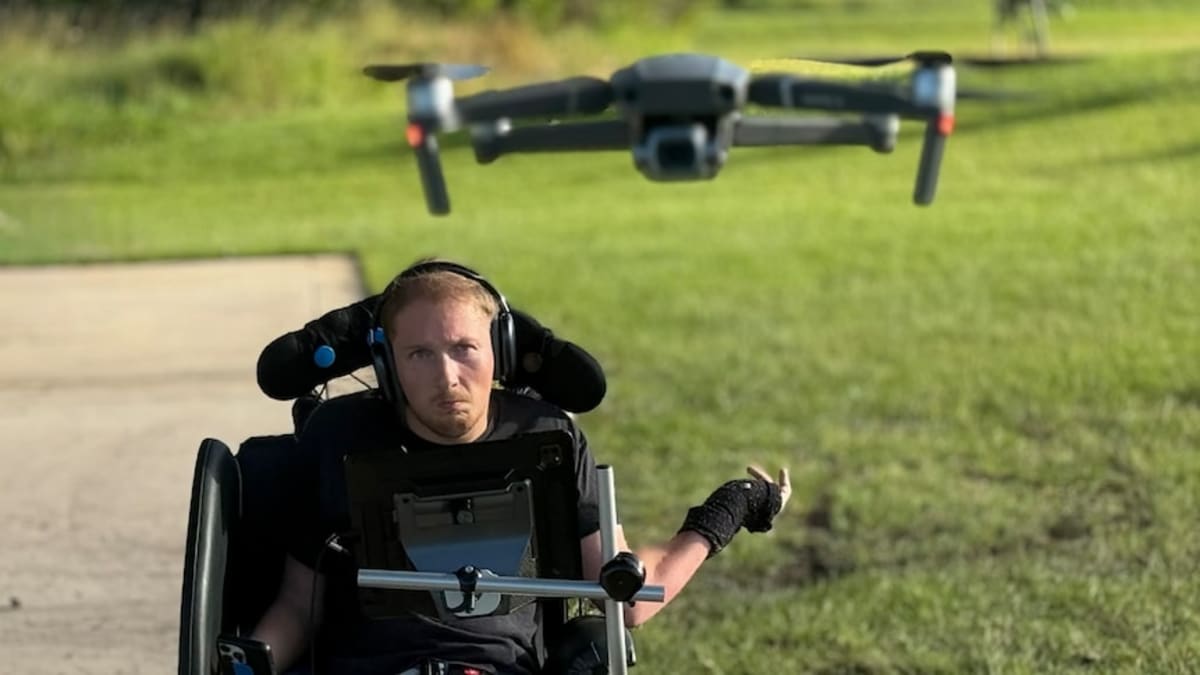
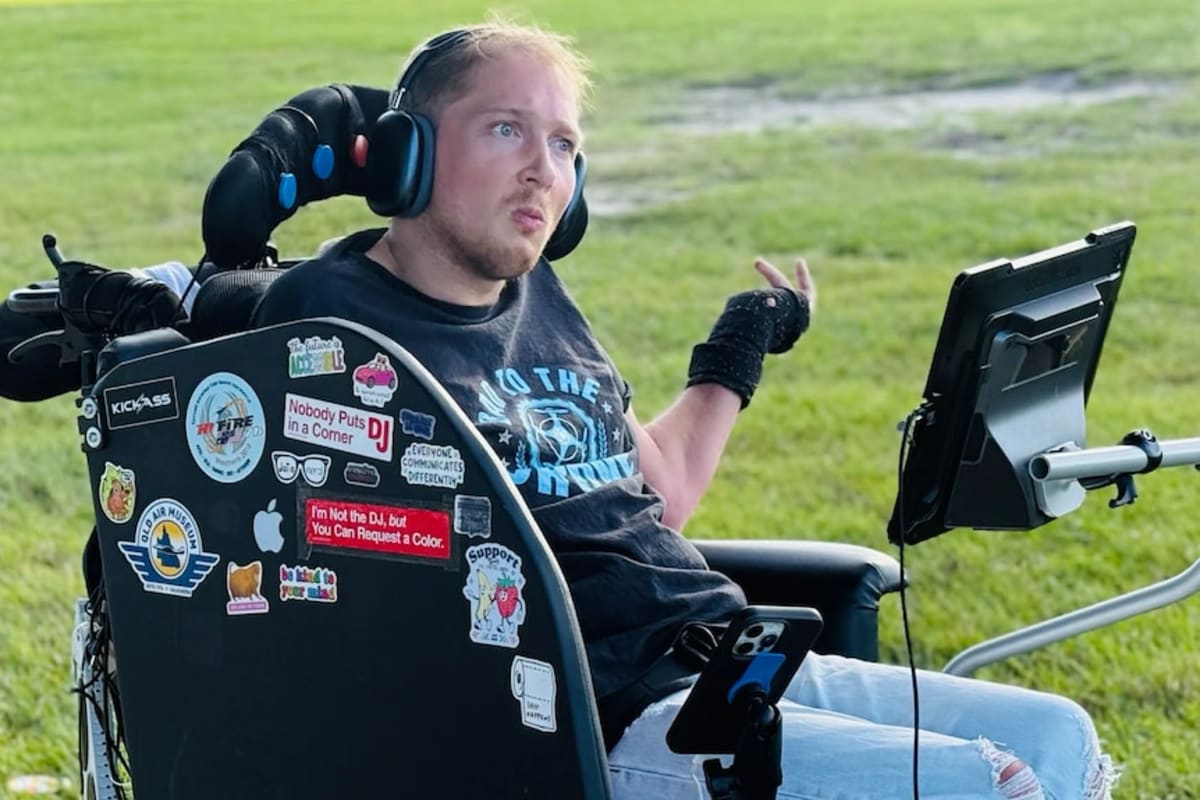
Today, the 29-year-old is living that dream from his wheelchair. Hills has developed an app that allows him to fly drones hands-free, using facial recognition technology and head movements mapped to an iPad.
"The sky isn't even my limit," Hills said. "Technology helps me play, live and work on the same playing field as everyone else."
Hills combined Apple technology with a Microsoft Xbox adaptive controller to operate DJI drones. The system works by tracking facial movements and accelerometer data on his iPad, translating his head tilts and turns into drone controls.
"As someone with cerebral palsy, traditional drone controllers are completely unusable for me," he said. "The best I can do with a conventional controller is knock it off a table."
The passionate photographer spent six years perfecting the technology. He's now field testing with a quadriplegic farmer in New South Wales who uses the system to monitor his property, and a TAFE student with cerebral palsy completing her filmmaking course.
Both testers have helped refine the app, suggesting features like compatibility with adaptive gaming joysticks. Hills is actively seeking more people with disabilities to trial the technology.
The Ripple Effect
Leah Barclay, a senior lecturer in design at the University of the Sunshine Coast, calls Hills's invention "game-changing for many people across the world." She's been supporting the project and teaching Hills advanced drone techniques.
"I remember the first time Christopher said he wanted to fly like a black cockatoo and be a drone cinematographer," Barclay said. "He's a better drone pilot than I am."
Hills has already earned his remote pilot license, despite an instructor initially telling him he couldn't complete the course. He's now working to get his system approved by Australia's Civil Aviation Safety Authority and operates under special permits.
The aerial photos Hills captures are stunning. Mount Coonowrin in the Glass House Mountains, sweeping ocean vistas. Each image represents freedom he once could only imagine.
His goal extends beyond personal achievement to creating pathways for others with disabilities to enter the drone industry and commercial aviation fields.
"Everyone has the right to learn to fly," Hills said.
More Images


Based on reporting by ABC Australia
This story was written by BrightWire based on verified news reports.
Spread the positivity!
Share this good news with someone who needs it