Quantum Computers Could Arrive Within 10 Years
Scientists have slashed the timeline for practical quantum computers from decades to just 10 years, thanks to breakthrough fixes for the technology's biggest problem: errors. Four major teams proved that quantum error correction actually works, opening the door to machines that could revolutionize chemistry, medicine, and security.
The impossible just got a deadline. Quantum computers powerful enough to crack encrypted codes and predict complex chemical reactions could arrive within the next decade, thanks to dramatic breakthroughs that have stunned even the scientists working on them.
Just a few years ago, most researchers believed such machines were still 30 or 40 years away. But a wave of recent advances has sparked what Princeton physicist Nathalie de Leon calls a "vibe shift" in the field.
The progress centers on solving quantum computing's biggest headache: errors. Unlike regular computer bits that are either 0 or 1, quantum bits (qubits) can be both at once, which gives them incredible power but also makes them incredibly finicky. They drift randomly, lose information quickly, and every operation on them introduces mistakes.
Four teams have now proven that a technique called quantum error correction actually works in practice. Google's Quantum AI lab in California, the company Quantinuum in Colorado, Harvard University with startup QuEra in Massachusetts, and the University of Science and Technology of China all demonstrated the breakthrough in the past year.
The technique spreads one unit of quantum information across several physical qubits. By checking specific qubits midway through a calculation, the machine detects when information has degraded and fixes it on the fly.
Computer scientist Dorit Aharonov at Hebrew University says crossing this threshold changes everything. "At this point, I am much more certain that quantum computation will be realized, and that the timeline is much shorter than people thought," she explains. "We've entered a new era."
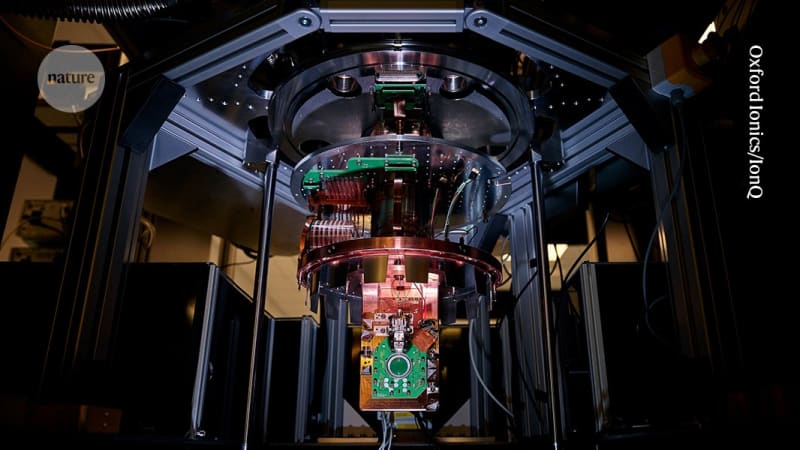
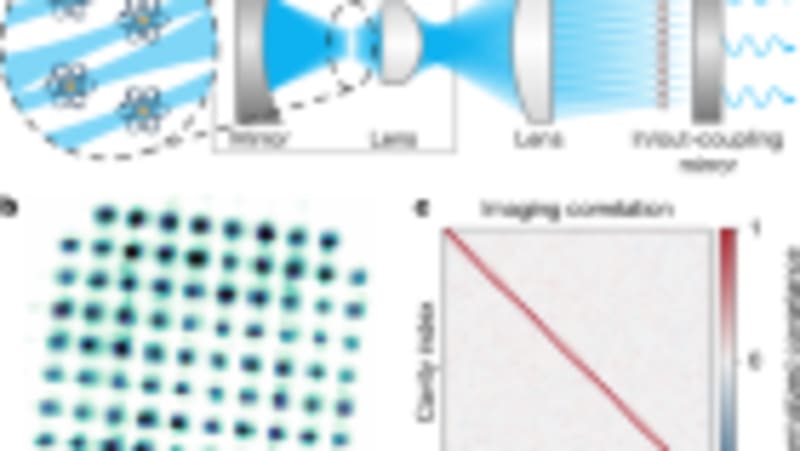
The teams used different physical systems to achieve their results. Google and the Chinese team encoded information in supercooled electrons circulating inside superconducting loops. Quantinuum trapped individual ions with electromagnets. QuEra confined neutral atoms using beams of light as "optical tweezers."
Why This Inspires
This isn't just a lab curiosity. Practical quantum computers could help scientists design new medicines by accurately predicting how molecules interact. They could create better batteries and solar panels by modeling complex materials. They could even help tackle climate change by optimizing everything from traffic patterns to power grids.
The breakthrough matters because it proves the math works in the real world. Back in the 1990s, Aharonov and others calculated that repeated error correction could reduce mistakes as much as needed, but only if each correction step stayed below a certain error threshold. These four teams showed their systems can actually meet that requirement.
Challenges remain. Current quantum computers have just a few thousand qubits, and estimates suggest billions might eventually be needed for the most complex tasks. Manufacturing improved components and refining control techniques will take time.
But the path forward is now clear, and the scientists working on it sound genuinely excited about reaching the finish line in their lifetimes.
More Images



Based on reporting by Nature News
This story was written by BrightWire based on verified news reports.
Spread the positivity!
Share this good news with someone who needs it